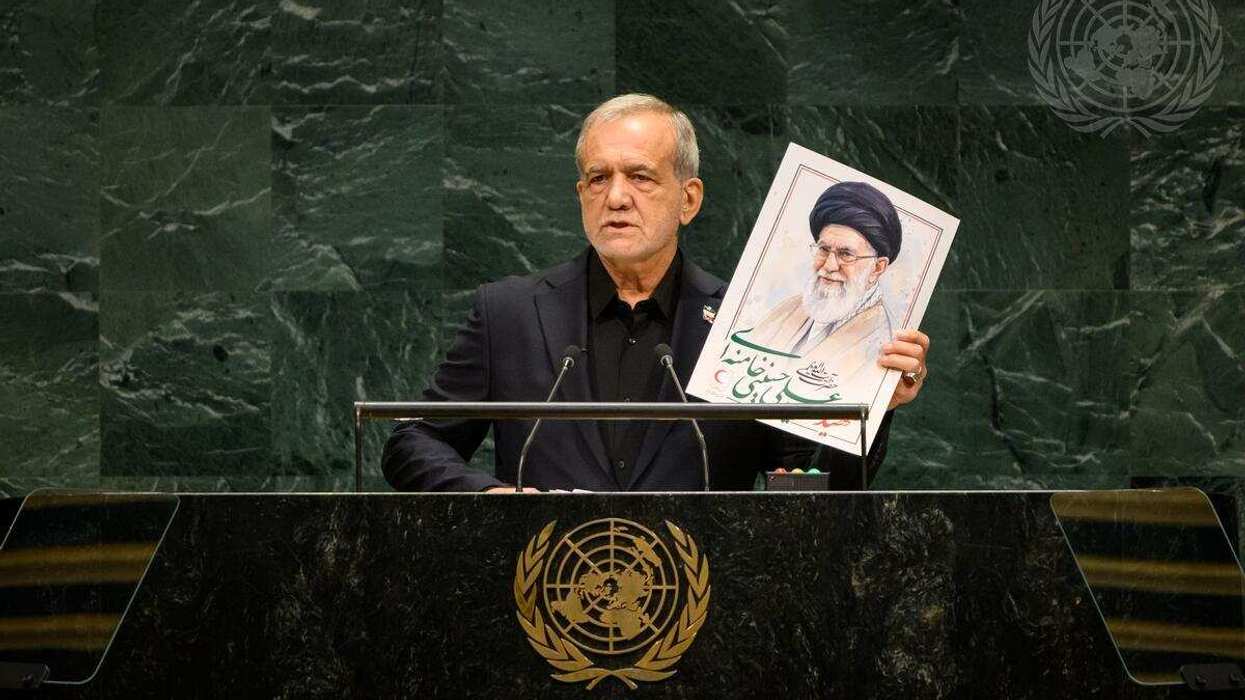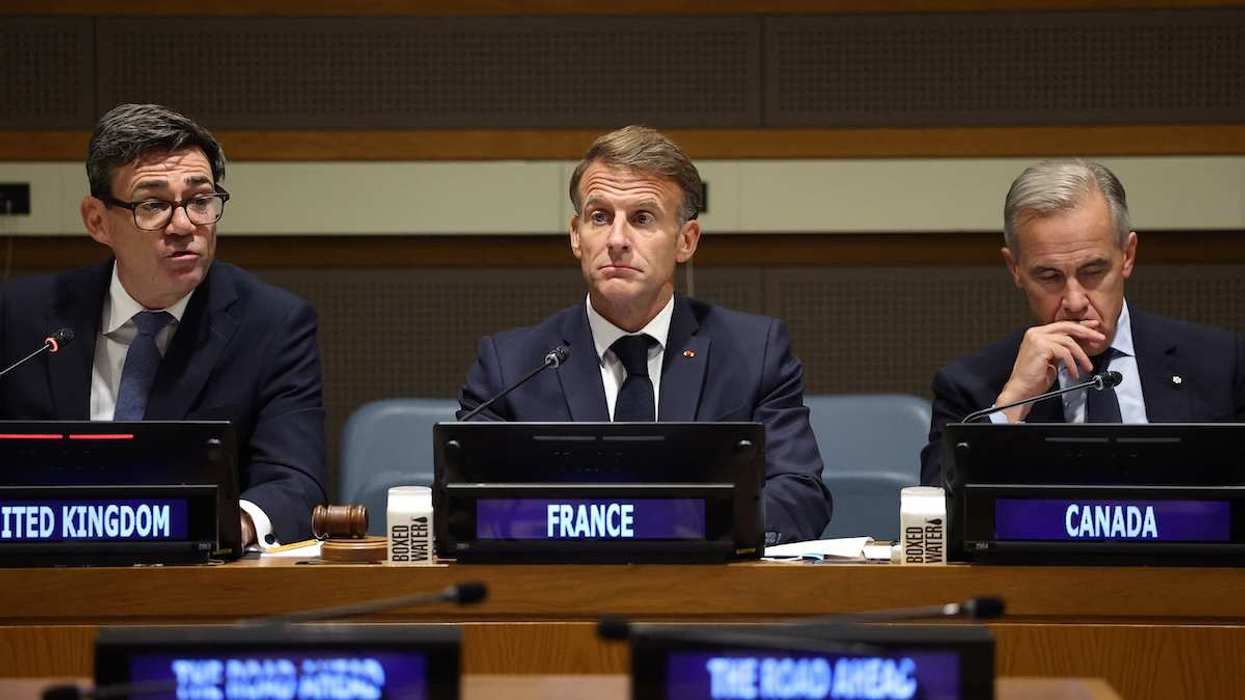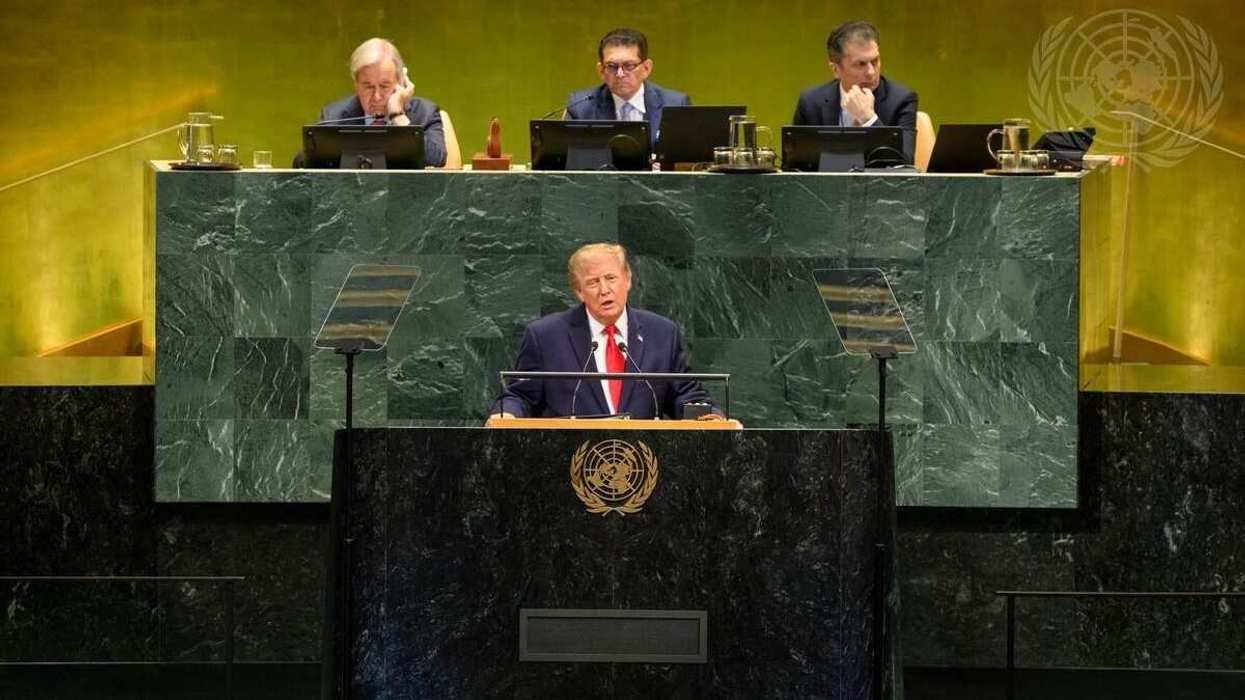
As another round of talks takes place today, preparations are also well underway for non-diplomatic pathways. A second US carrier group is swiftly approaching the region, suggesting that some form of military collision with Iran is increasingly inescapable.
What fresh US strikes on Iran may mean for the Middle East remains open-ended. The consequences could be limited, or they could be far-reaching and reorient the region’s trajectory. As President Donald Trump continues to hold his cards close to the vest, his State of the Union remarks were pointed, “I will never allow the world’s number one sponsor of terror – which they are by far – to have a nuclear weapon.”
Even still, one development playing out elsewhere, in the vast expanse of the Indian Ocean, has been revealing. The US has found itself in a dust-up with the United Kingdom over the use of a shared military base on the island of Diego Garcia for any forthcoming operation targeting Iran. Trump has seesawed on whether to back the UK’s transfer control of the Chagos Islands – a colonial era possession that includes Diego Garcia – to Mauritius. Last week, Trump urged UK Prime Minister Keir Starmer not to “give away” the Chagos Islands, arguing the US may need its strategic base if talks with Iran collapse.
The back and forth is indicative of a pattern of Trump era geopolitics: the US is moving forward on its own terms, with its own agenda, however it likes, whether traditional allies are on board or not.
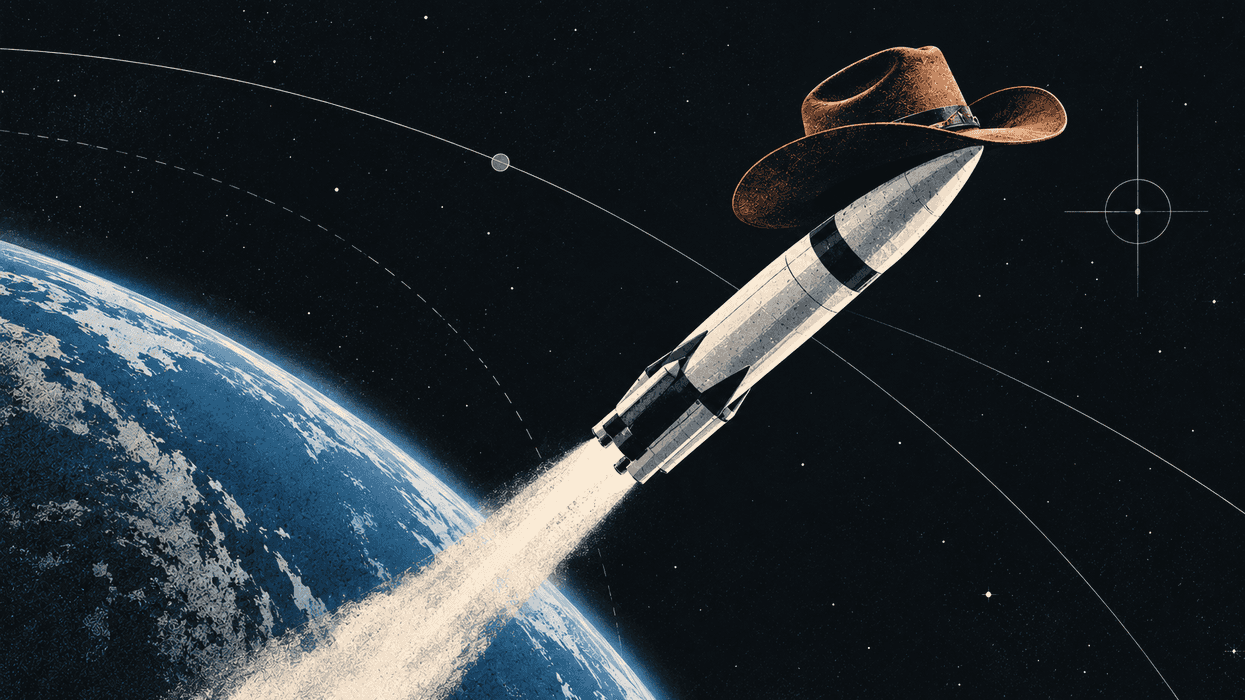
An association of one. Under Trump, the days of the US building a “coalition of the willing” are gone. This is not an administration that seeks support first and acts under the guise of shared responsibility. This is an administration that acts first and does not bother with seeking forgiveness later.
Last fall, the US undertook a concerted pressure campaign on Venezuela. What began as targeted strikes on alleged narcotraffickers operating in and around the Caribbean expanded into strikes in the eastern Pacific and later to oil tanker seizures off the coast of Venezuela. All the while, a ring of sanctions and tariffs tightened on Caracas’s leadership, alleged narcotraffickers and countries importing Venezuelan oil. In the early hours of Jan. 3, US military forces raided the compound of Venezuelan President Nicolás Maduro and extradited him to New York to face US federal charges on allegations of narco-trafficking and corruption.
No widespread reporting of the operation has indicated that the US administration conducted consultations with regional actors before moving on Maduro. This was a solo extraction mission conducted by US intelligence and military forces under the banner of US national security.
Many have pointed to the administration’s recent National Security Strategy, as evidence of US desire for supremacy over the Western Hemisphere. In this view, the Trump administration’s actions in Venezuela – and now, efforts to squeeze the Cuban regime – reflect an intention to create a sphere of influence in its neighborhood. The US is acting autonomously within its region out of special interest.
But Trump 2.0’s foreign policy ambitions stretch beyond the Americas. From strikes in Nigeria to Syria, and now a hospital boat for Greenland, the US administration is pursuing its agenda invited, accompanied, or otherwise across the globe.
Long live unilateralism. If there is one space where the US continues to engage in some form of multilateral dialogue, it is European security. Yet even there, one does not need to scratch too far below the surface to find that on the major issue atop Europe’s list of anxieties – Russia’s regional ambitions – the US is pursuing an America First strategy.
Two years after the US established the Ukraine Defense Contact Group under the Biden administration, Washington opted to remain an unaffiliated non-participant in the 2025 European-led Coalition of the Willing, a group of countries who’ve agreed to deploy troops to Ukraine to ensure any future peace deal.
As Europe holds conversation after conversation about how to continue funding Ukraine’s war efforts, the US is steadfast that more military aid will not be forthcoming. Instead, the White House is pursuing a course of critical-mineral agreements, bilateral talks with Ukrainian and Russian leadership, and peace negotiations that emphasize what Trump wants: a quick end to the conflict, and a deal for future economic influence and resources.
Which brings us back to Iran.
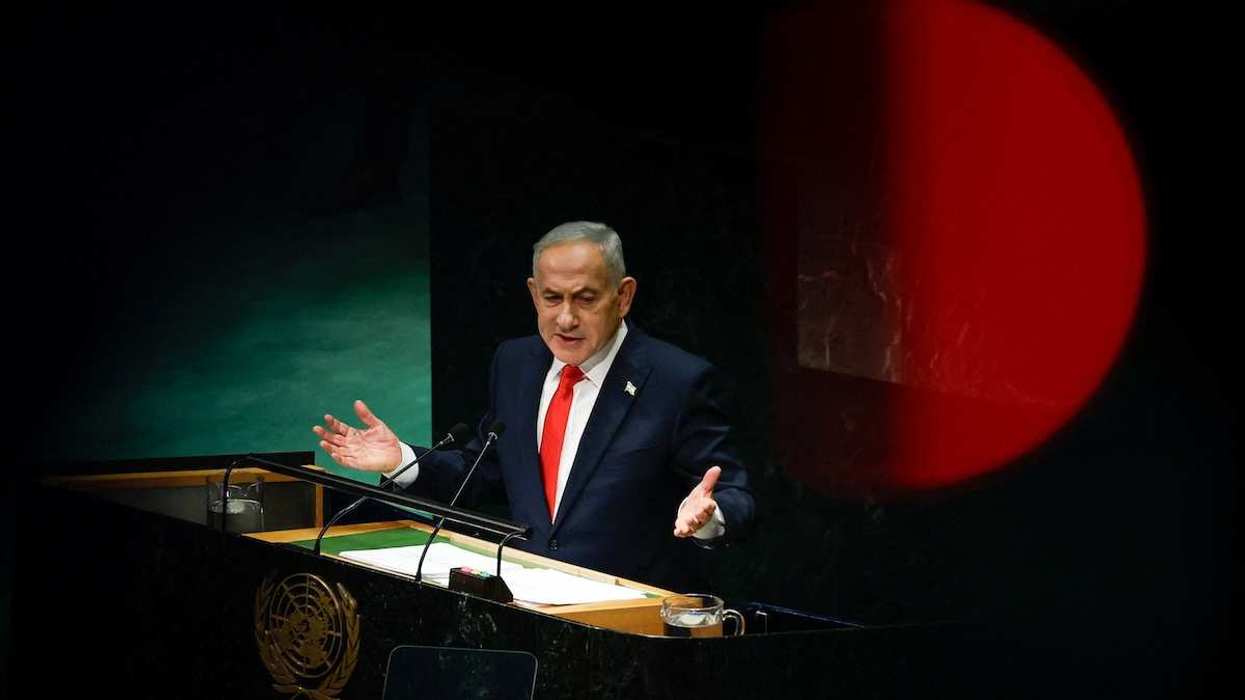
As the US undertakes the largest military build-up in the Middle East since 2003, the administration is considering its options. While Trump recently hosted Israel’s Prime Minister Benjamin Netanyahu and is reportedly speaking with a select group of regional leaders, the consultancy largely stops there.
This is something Trump’s domestic critics miss when they say he should be focusing on the affordability crisis at home and not adventurism abroad. Trump likes that he has expansive foreign policy-making authority. It is much harder to move the US economy and make eggs and milk cost less than moving a carrier group or two.
If Trump ultimately greenlights action against Iran, the decision will almost certainly rest on his administration’s calculus alone – a mix of real and perceived national security threats as well as a healthy dose of the US president’s own worldview of how the situation should unfold. Whether military escalation fits the image of Trump as a peacemaker and unifier is part of that equation.
Earlier this month at the Munich Security Conference, US Secretary of State Marco Rubio captured this administration’s posture to the world bluntly. “We in America have no interest in being polite and orderly caretakers of the West’s managed decline,” he said.
The message was a clear warning to European allies, framed as an opportunity: join this fight, or stand aside. Either way, the US’s engagement with the world will be on its own terms.