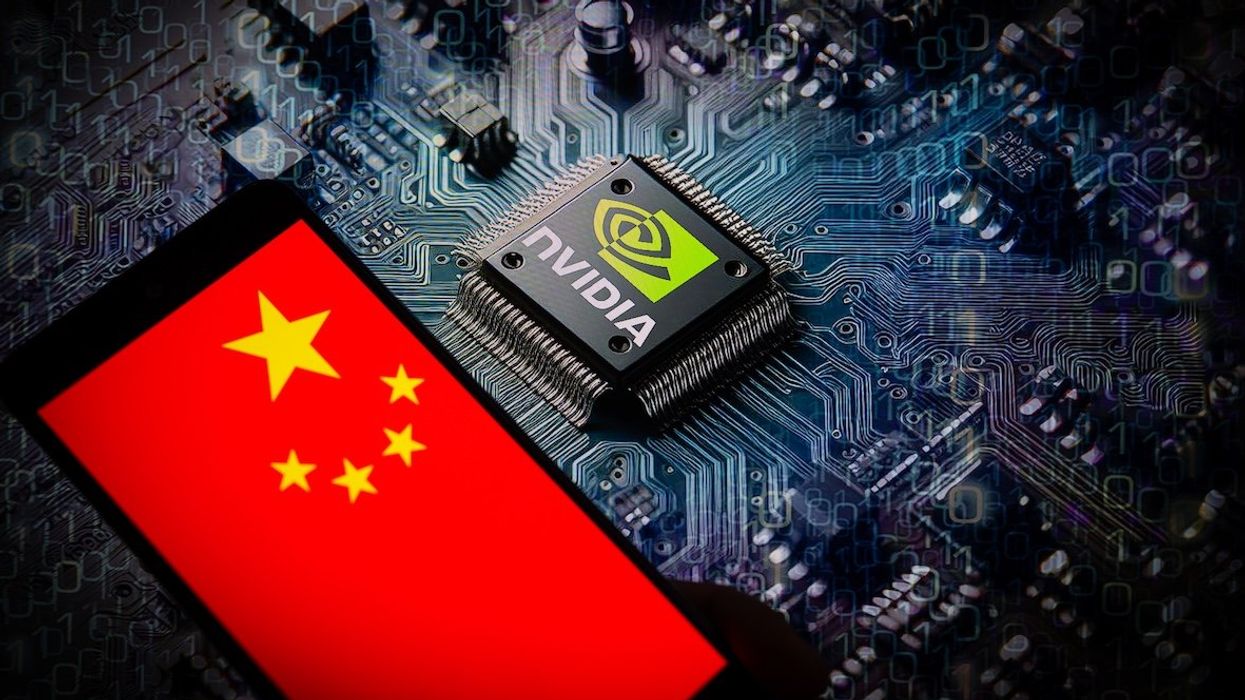
Throughout Joe Biden’s presidency, the Commerce Department has gradually tightened its chokehold on China’s access to semiconductors needed to access, train, and build artificial intelligence. On Dec. 2, Commerce Secretary Gina Raimondo announced what she told reporters amounted to the “strongest controls ever” meant to restrict China’s access to AI for military applications. Today, China responded with its own new restrictions, sending a strong signal to the incoming US president.
The new US controls announced Monday, the third order in as many years, apply to 24 types of semiconductor manufacturing equipment, three types of software tools, and high-bandwidth memory, or HBM, an interface often used in producing AI chips. The department also added 140 Chinese companies to its Entity List, which requires regulatory approval should a US company wish to sell to a member of the list. “By adding key semiconductor fabrication facilities, equipment manufacturers, and investment companies to the Entity List, we are directly impeding the PRC’s military modernization, WMD programs, and ability to repress human rights,” said Matthew Axelrod, assistant secretary for export enforcement at the Commerce Department.
In response, on Dec. 3, China banned shipments of certain materials using gallium, germanium, and antimony to the US, as well as super-hard materials such as diamonds. These items can be used both for military and semiconductor applications. “China firmly opposes the US overstretching the concept of national security, abuse of export control measures, and illegal unilateral sanctions and long-arm jurisdiction against Chinese companies,” said Lin Jian, a Chinese Foreign Ministry spokesperson.
Jacob Feldgoise, an analyst at Georgetown University’s Center for Security and Emerging Technology, said the new US order plugged holes in the previous year’s rules. It requires a license for many more exported tools, focuses on high-bandwidth memory “because HBM is used by nearly all of the most capable AI chips” and strengthens the US’s grasp beyond its borders. “Notably, this set of controls is newly extraterritorial: It will impose licensing requirements on certain foreign-produced tools so long as they contain US technology,” Feldgoise said.
Xiaomeng Lu, director of Eurasia Group's geo-technology practice, noted that the US excluded the Chinese semiconductor company ChangXin Memory Technologies from the Entity List to appease the Japanese government. CXMT has been buying materials from Japanese suppliers to make its memory chips. “With the Trump administration on its way, they are expected to take a more unilateral approach and will be less likely to make concessions per requests of allies,” she said.
Jeremy Mark, a nonresident senior fellow at the Atlantic Council's GeoEconomics Center, said it’s difficult to judge how significant these new rules are because of the looming change of guard in the White House. Had they come ahead of the transition to a Kamala Harris administration, “they would continue making life complicated for Chinese semiconductor companies and US companies that rely on the China market for a significant portion of their sales.” However, Mark said that Donald Trump could strengthen or weaken export controls when he takes office, so it’s “impossible to say” what the legacy of this final move will be.
For Biden, it marks the end of an era of success: While his restrictions on China could have been tighter or less porous, he leaves office with China still searching for AI breakthroughs. The US, at least under Biden’s watch, is still on top.
But China’s next-day retaliation shows that it is ready to play hardball ahead of the incoming Trump administration. Beijing understands that diplomacy alone might not do the trick, and that to succeed in getting America to the bargaining table it needs to safeguard its own crucial resources. “This is a step up in China’s reaction to US technology sanctions,” Lu said. “China is very frustrated with the lack of communication channels with the incoming administration. They are trying to send a shot across the bow to get attention from the Trump team.”