Skip to content
Search

Latest Stories

GZERO AI

South Korea halts downloads of DeepSeek

South Korea halts downloads of DeepSeek

In this photo illustration, a DeepSeek logo is seen displayed on a smartphone with a South Korea Flag in the background.

Avishek Das/SOPA Images via Reuters Connect
On Monday, the South Korean government became the latest to ban downloads of DeepSeek — at least until further notice. The Chinese AI company’s apps, at the time of writing, were unavailable for download in Apple and Google’s mobile app marketplaces, though its website was still accessible.

South Korea’s Personal Information Protection Commission, the data privacy authority in the country, said the app “lacked transparency about third-party data transfers and potentially collected excessive personal information.” It’s unclear whether the third party in question is the Chinese government.

The government said the ban will only be lifted after DeepSeek adheres to the country’s privacy and security laws, which are considered among the world’s most stringent. While DeepSeek’s R1 model has quickly become one of the foremost large language models, it’s the first such one to hail from China — and thus, privacy advocates and global regulators have criticized its privacy policy, which states that the company will share data with China. “We store the information we collect in secure servers located in the People's Republic of China,” the policy says. The Chinese Foreign Ministry urged South Korea not to “politicize” trade issues and said Chinese companies comply with local laws where they operate.

Italy already banned DeepSeek nationwide over privacy concerns, while Taiwan and Australia each banned the app on government devices. In the United States, there’s no federal prohibition on government devices, but legislation was introduced earlier this month to do just that. Meanwhile, New York, North Carolina, Texas, and Virginia have all banned DeepSeek on state-owned devices.

Software is difficult to ban — especially since virtual private networks can mask one’s location — but countries concerned by Chinese access to their citizens’ data are trying their best.


More For You

What we learned from a week of AI-generated cartoons
Courtesy of ChatGPT
Last week, OpenAI released its GPT-4o image-generation model, which is billed as more responsive to prompts, more capable of accurately rendering text, and better at producing higher-fidelity images than previous AI image generators. Within hours, ChatGPT users flooded social media with cartoons they made using the model in the style of the [...]
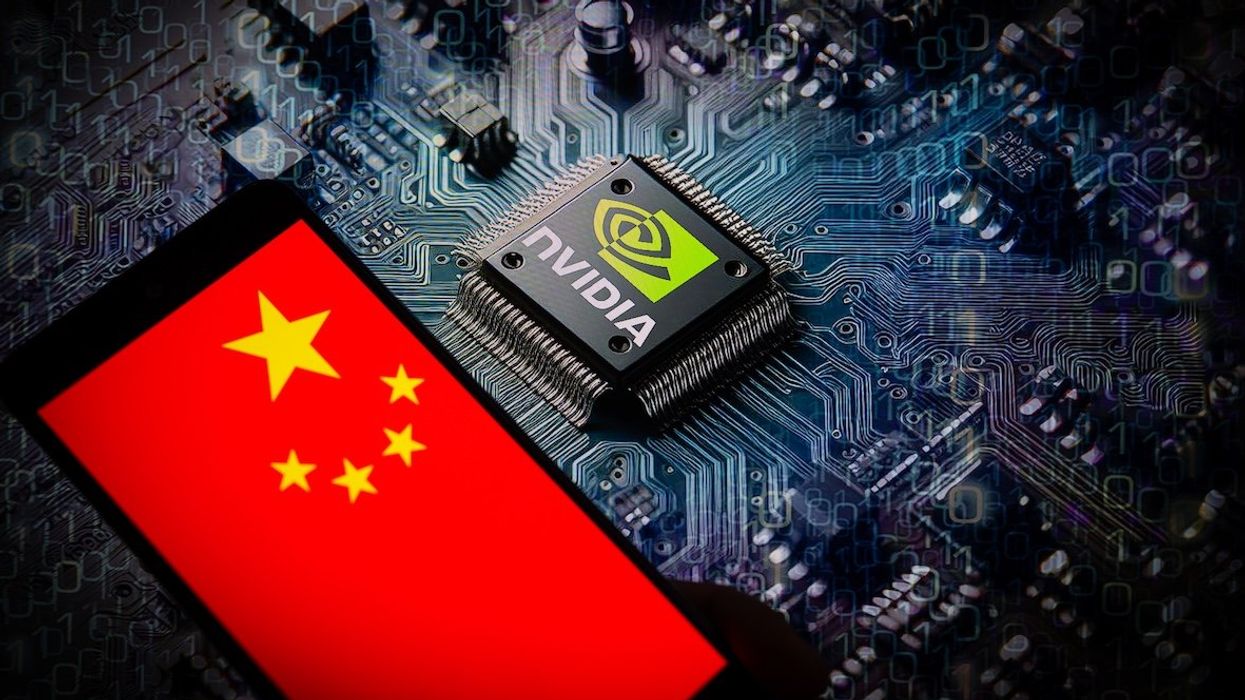
The flag of China is displayed on a smartphone with a NVIDIA chip in the background in this photo illustration.

The flag of China is displayed on a smartphone with a NVIDIA chip in the background in this photo illustration.

Jonathan Raa/NurPhoto via Reuters
H3C, one of China’s biggest server makers, has warned about running out of Nvidia H20 chips, the most powerful AI chips Chinese companies can legally purchase under US export controls. [...]
​North Korean leader Kim Jong Un supervises the test of suicide drones with artificial intelligence at an unknown location, in this photo released by North Korea's official Korean Central News Agency on March 27, 2025.

North Korean leader Kim Jong Un supervises the test of suicide drones with artificial intelligence at an unknown location, in this photo released by North Korea's official Korean Central News Agency on March 27, 2025.

KCNA via REUTERS
Hermit Kingdom leader Kim Jong Un has reportedly supervised AI-powered kamikaze drone tests. He told KCNA, the state news agency, that developing unmanned aircraft and AI should be a top priority to modernize North Korea’s armed forces. [...]
The logo for Isomorphic Labs is displayed on a tablet in this illustration.

The logo for Isomorphic Labs is displayed on a tablet in this illustration.

Igor Golovniov/SOPA Images/Sipa USA via Reuters
In 2024, Demis Hassabis won a Nobel Prize in chemistry for his work in predicting protein structures through his company, Isomorphic Labs. The lab, which broke off from Google's DeepMind in 2021, raised $600 million from investors in a new funding round led by Thrive Capital on Monday. The company did not disclose a valuation. [...]