Anyone who watches soccer — “football”, whatever — knows that the wildest part of the game is always the last five minutes.
That’s when both teams, knowing that the end is near, take bigger risks. They open up on the field. They make longer passes, attempt crazier shots. And they usually score more goals.
There’s actually data to support this. One guy ran the numbers on more than forty thousand goals scored in international matches since the 19th century and found that yes, there is more scoring in the final moments of a game. After all, with the whistle about to blow, what’s a team got to lose?
That’s what’s happening in Ukraine right now.
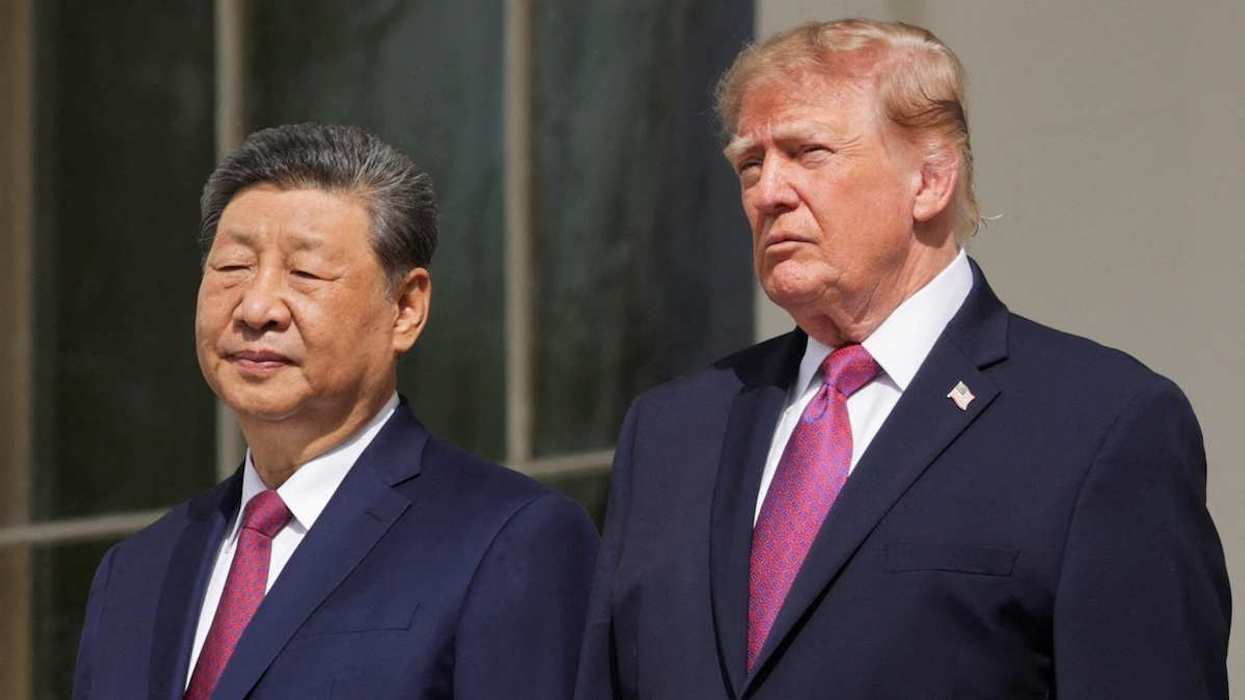
Just over a thousand days since Vladimir Putin launched his unprovoked, full-scale assault on the country, the whistle on this phase of the conflict will sound soon — and by soon, we mean on January 20, 2025. That’s when Donald Trump will be back in the White House.
Trump, of course, has questioned Washington’s massive support for Ukraine and promised to end the war in “24 hours.”
Nobody knows what that really means, but everybody understands that whatever the battlefield looks like in mid-January will be the baseline for whatever Trump tries to do.
That’s why the past week or so in the Ukraine war has felt so much like the 85th minute of a deadlocked World Cup match. All sides are pulling out the stops to maximize the territory they control and the deterrent fear that they instill in their opponents.
The US and UK have now — after months of cautious restraint — finally given permission to Ukraine to use Western made long-range missiles to knock out military installations deeper inside of Russia. Washington also began shipping anti-personnel landmines to Kyiv, so that Ukraine could mine the frontlines that Russian troops are gradually pushing back every day now.
The Ukrainians wasted no time trying out their new Western weapons, firing at least two barrages of the long range missiles at Russian military installations.
Not to be outdone, Russia fired an “experimental” new intermediate range missile of its own into Ukraine. There was some dispute about whether it might count as an “intercontinental” ballistic missile or not, but experts noted that whatever you call it, the weapon was far better suited to nuclear payloads than to the conventional ones that it carried into Dnipro.
The unspoken signal was clear: we didn’t split the atom on you this time, but we are readying the tools to do so in the future.
Later in the day, Putin also declared that Russia has “the right to use our weapons against the military facilities of countries that allow the use of their weapons against our facilities.”
Translation: we have the right to strike military facilities in NATO countries.
Since the earliest moments of the war, many in the West have wondered — with frequent reminders from the Kremlin — if a cornered or slighted Putin might in fact use a tactical nuclear weapon against Ukraine. And if so, wouldn’t that invite a response from NATO that could escalate to a more direct confrontation between the world’s two largest nuclear powers?
A terrifying thought. And one that Putin revived this week by signing a new, looser nuclear weapons doctrine. Russia is now prepared to use its atomic arsenal in response even to certain conventional attacks.
The good news is: it’s hard to see anyone deliberately choosing the very worst and most radioactive outcomes right now. Putin is, after all, doing relatively well at the moment. Russia’s forces are advancing slowly but daily. A friendlier US president is about to take power. And breaking the nuclear taboo would risk a huge backlash, not only from Russia’s adversaries in the West, but from its friends in the Global South and China too. It just wouldn’t make sense.
The bad news is this: sense sometimes goes out the window in the final rush of a game. Miscalculations or miscommunications become more likely. When that’s on the soccer pitch, it means a turnover, a counterattack, a heartbreaking/exhilarating last minute goal.
But when it happens during a major war in Eastern Europe involving the world’s two largest nuclear powers, it can lead to a dangerous escalation that quickly takes on a life of its own.
The next two months are going to be the longest, and most dangerous, five minutes in the world.