Skip to content
Search

Latest Stories

Asia

Does Trump’s uneven China approach imperil allies?

U.S. President Donald Trump meets with China's President Xi Jinping at the start of their bilateral meeting at the G20 leaders summit in Osaka, Japan, June 29, 2019.

U.S. President Donald Trump meets with China's President Xi Jinping at the start of their bilateral meeting at the G20 leaders summit in Osaka, Japan, June 29, 2019.

REUTERS/Kevin Lamarque

What is President Donald Trump’s strategy on China? On the one hand, he slapped additional 10% tariffs on Chinese goods and is considering $1 million fees on Chinese-built vessels entering US ports. On the other, Washington and Beijing are reportedly discussing a cozy-sounding “birthday summit” between Trump and Chinese President Xi Jinping to talk trade in June. It’s enough to give investors whiplash – and make neighboring nations nervous.

And they may have good reason. Last week, Trump issued an “advance warning” to long-time allies Japan and South Korea that he is not prepared to defend them against Chinese aggression unless they make economic concessions. He complained that the American security treaty with Japan is nonreciprocal and claimed that “South Korea’s average tariff is four times higher” than that of the US.


But Trump was referencing South Korea’s Most Favored Nations tariff of 13.4%, which does not apply to most goods traded between the two countries since they signed a free trade deal in 2012. The actual tariff rate charged by South Korea on US goods is 0.79%, leading Seoul to offer to resolve any “misunderstanding” about the real charge.

Meanwhile, China’s talking tough. The Chinese defense ministry recently stated that it will “tighten the noose” around Taiwan if its pro-independence movements escalate. This signals that China will continue to use military gray-zone coercion against Taiwan to deter moves toward – or remarks about – independence, according to Eurasia Group regional expert Ava Shen. Beijing has also vowed to fight a tariff war with the US “to the bitter end” and is busily tariffing other nations, such as Canada, which saw a 25% tariff imposed on seafood, including important lobster exports, as of March 20.
More For You

Is regime change in Iran even possible?
- YouTube
The war in Iran is entering a more dangerous phase. [...]
March 13, 2026, Tehran, Iran: ALI LARIJANI (C), Secretary of the Supreme National Security Council of Iran, participates in the Al-Quds (Jerusalem) Day rally, a commemoration in support of the Palestinian people on the last Friday of the Islamic holy month of Ramadan, in Tehran.

March 13, 2026, Tehran, Iran: ALI LARIJANI (C), Secretary of the Supreme National Security Council of Iran, participates in the Al-Quds (Jerusalem) Day rally, a commemoration in support of the Palestinian people on the last Friday of the Islamic holy month of Ramadan, in Tehran.

Supreme National Security Counci via ZUMA Press Wire
Israel says it has killed Iran’s security chief, as war drags onAli Larijani, who was head of the Islamic Republic’s influential security council and had effectively run the country since Supreme Leader Ali Khamenei’s death, was killed in a strike overnight, Israel has said. Tehran has not confirmed his death. If it is true, Larijani would be the [...]
The site of a destroyed drug rehabilitation hospital following a Pakistani air strike in Kabul, Afghanistan, on March 17, 2026.

Afghan men stand at the site of a destroyed drug rehabilitation hospital following a Pakistani air strike in Kabul, Afghanistan, on March 17, 2026.

REUTERS/Sayed Hassib
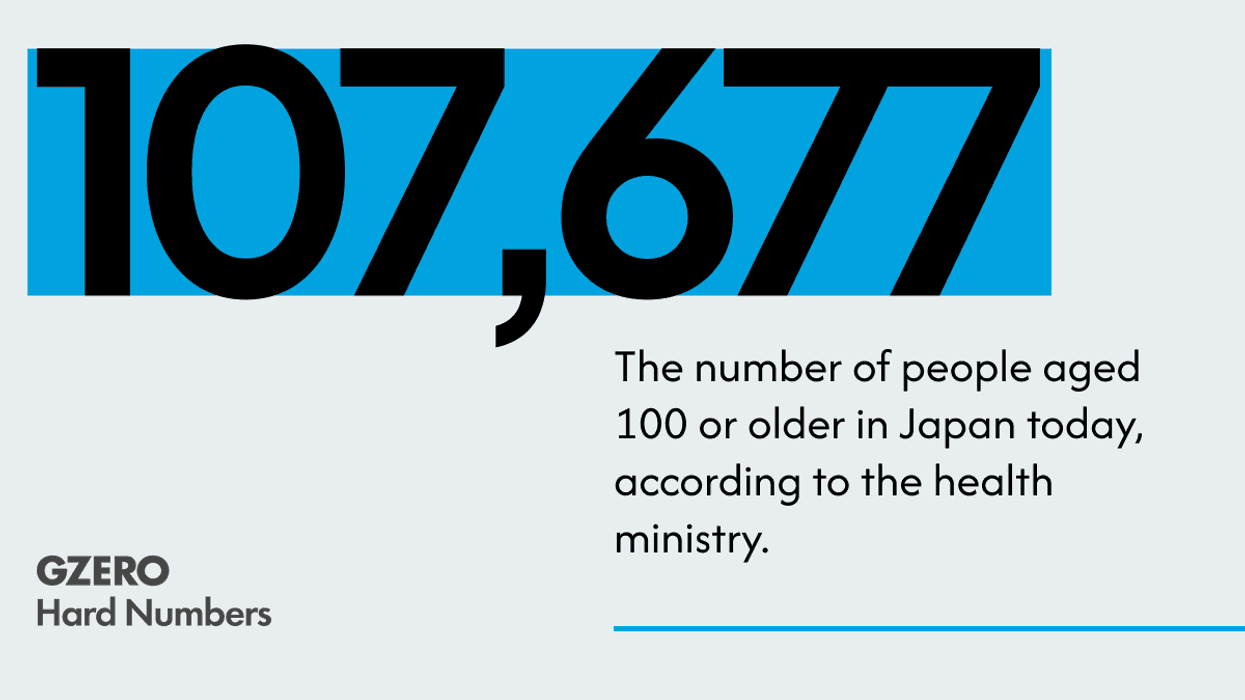
408: The number of people killed in the Afghan capital of Kabul, after a Pakistani strike hit a drug rehabilitation center there, according to Taliban officials. Another 250 were reported injured. Islamabad claimed the facility was being used as an ammunition depot, as the conflict between the two neighbors, which started as border clashes last [...]
War in Iran disrupts global shipping
- YouTube
In this Quick Take, Ian Bremmer breaks down the escalating US-Israel war with Iran and its ripple effects on global markets and supply chains. [...]