As we approach the grim first anniversary of Russia’s invasion of Ukraine – which came on the heels of last year’s Munich Security Conference – GZERO is back in Germany, discussing the past year since the war began, what’s likely to come next, and what it means for the world.
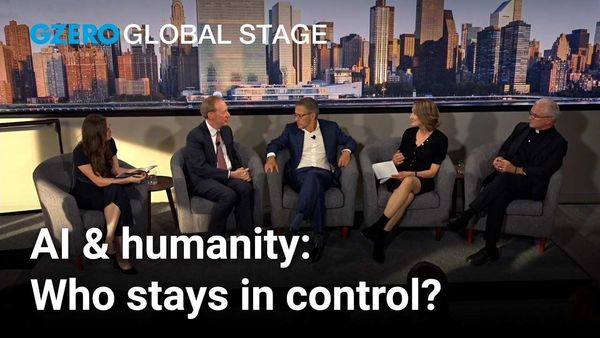
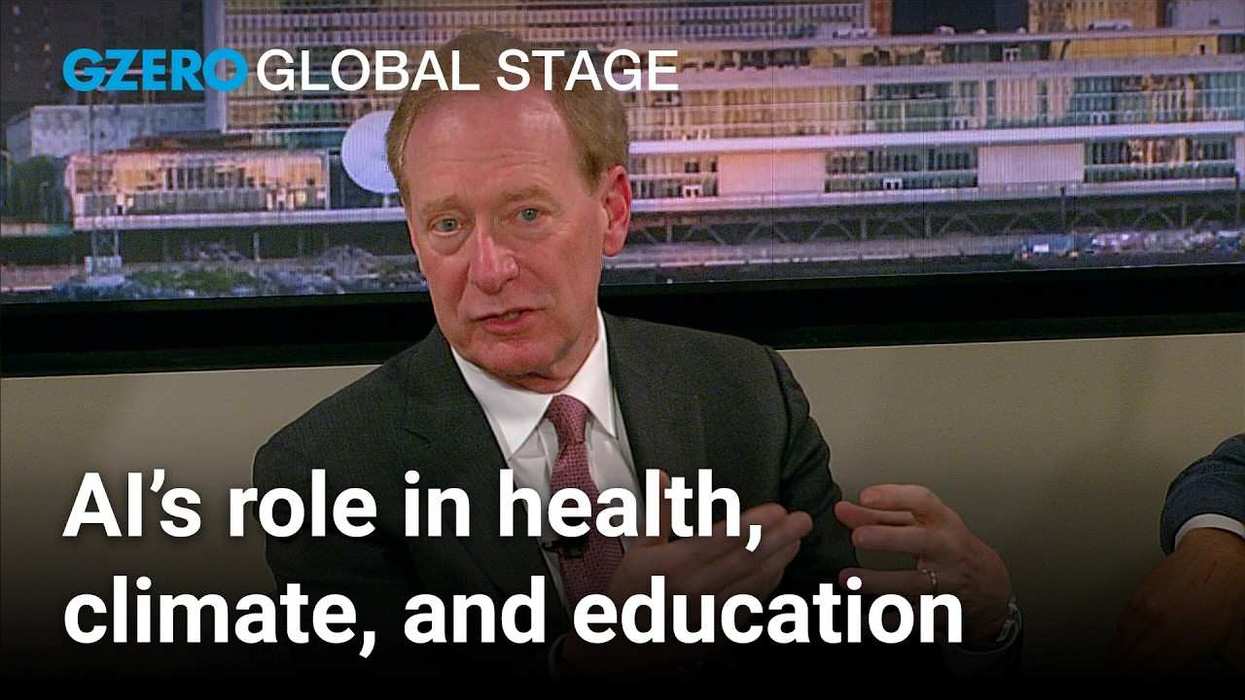
Benedetta Berti, NATO’s head of policy planning in the office of the Secretary-General; Ian Bremmer, president and founder of Eurasia Group and GZERO Media; Comfort Ero, president and CEO of Crisis Group; and Brad Smith, vice chair and president of Microsoft, sat down with CNN’s Nic Robertson at the Munich Security Conference for a Global Stage livestream, hosted by GZERO Media in partnership with Microsoft.
Taking stock of the past 12 months, the panelists discussed Western unity and Ukraine’s resolve while warning against underestimating Russia’s possible next moves. The West gets a top grade for its response to the invasion, Ian Bremmer says. But much depends on sustained unity and keeping war fatigue at bay. “I think it's always more difficult for a democratically elected government to sustain that kind of political support and public support,” says Brad Smith.
While many overestimated Russia’s military prowess and underestimated Ukraine’s agility to embrace technology and stay the course, Benedetta Berti warns that it ”would be a real strategic mistake if we started to underestimate what Russia could do in the future.” Could spillover be a threat to Europe and the world?
Bremmer notes that the West cannot afford to assume that the Russians are incapable of doing anything to NATO simply because they haven’t done so yet. “Russia is becoming the most powerful rogue state in history, and we have seen that a much less powerful Iran has caused an enormous amount of problems in their backyard.” What form could Russian aggression toward NATO take? “I think that we should recognize,” says Bremmer, “that we will start to see asymmetric attacks from Russia against NATO.”
Comfort Ero, meanwhile, was careful to point to the global ramifications of the war, noting how it has disrupted food supplies while distracting many from other major crises. “Everybody's got Ukraine in their headline, but the most deadly violent conflict last year was not Ukraine,” she says. “It was Ethiopia.”
The panelists also reflected on the power of technology, addressing whether it is making the world a safer or more dangerous place. Smith noted how quickly and flexibly Ukraine has used technology to its advantage – both on the battlefield and particularly “President Zelensky's ability to use [it] to really rally the support of the world.”
But can tech make the world a safe place? How will the US-China AI race impact its development and use?
Bremmer says that technology has certainly made the world wealthier, making people safer by pulling them from poverty. But while 8 billion people worldwide are better off because of it, “they feel like technology is becoming more dangerous” because of its speed of development.
As for the future of Ukraine, the biggest worry, says Bremmer, is that we’re “not seeing even a remote possibility of an exit ramp, a remote possibility of negotiations getting started.” This means the West has no idea of what things might look like after the war.
“I've never seen the fog of war feel this thick.”