Skip to content
Search

Latest Stories

Middle East

A crucial vote on the judiciary in Israel

People block a highway to Jerusalem on a day of disturbance to protest against Israeli PM Benjamin Netanyahu and his nationalist coalition government's judicial overhaul.

People block a highway to Jerusalem on a day of disturbance to protest against Israeli PM Benjamin Netanyahu and his nationalist coalition government's judicial overhaul.

REUTERS/Ronen Zvulun

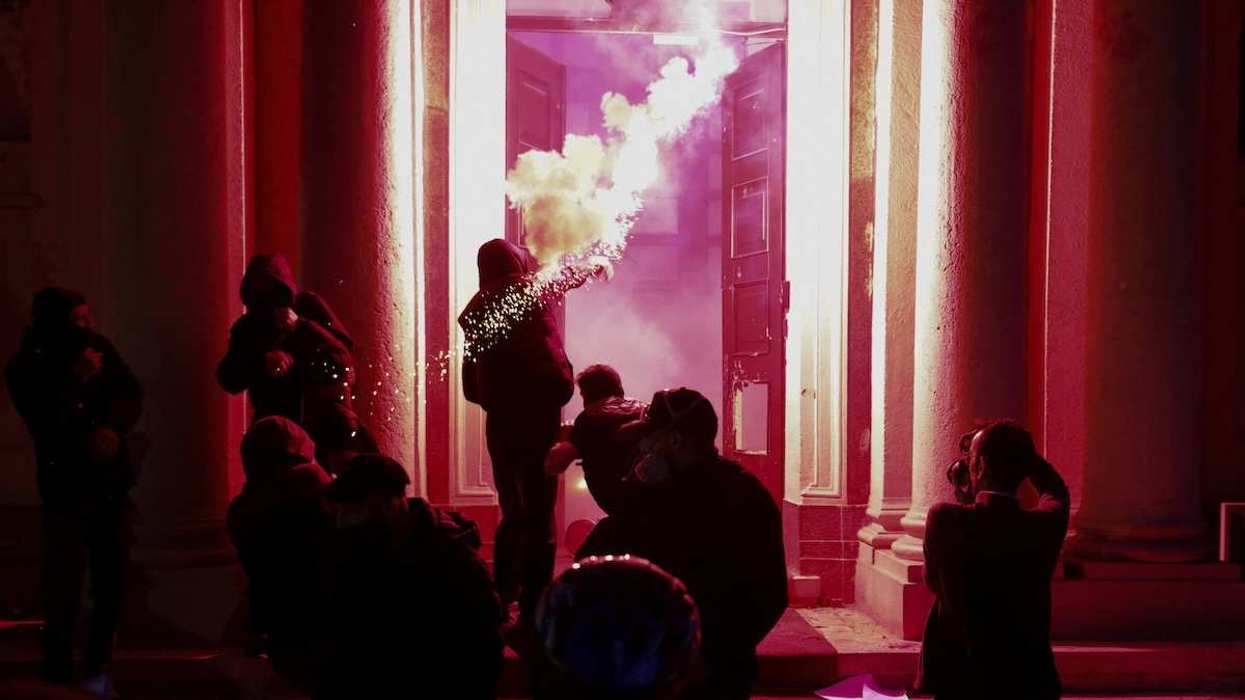
On Tuesday, Israelis opposed to the government's judicial overhaul blocked highways leading to the country's main cities as part of a national day of disturbance the day after the Knesset (parliament) passed the first part of a legislative package designed to dilute the power of the judiciary.


At the heart of the bill – which still needs two more parliamentary votes to pass – is the “reasonableness” clause. If enacted, the clause would prevent the High Court from overriding government decisions the judges deem to be unreasonable. This provision applies to administrative issues (like ministerial appointments) but not legislation.

This is a top legislative priority for the far-right government led by PM Benjamin Netanyahu. Consider that earlier this year, Israel’s High Court ruled that a senior member of the Netanyahu government could not serve in the cabinet because he had previously vowed to exit politics as part of a plea deal linked to corruption charges. While the court deemed the appointment a violation of the reasonable standard, the government said this move reflected the court’s activist streak.

Israelis have doubled down on protests in recent days, including in the halls of the Knesset. The last time this happened, the big labor unions joined in, causing Israel’s international airport to shutter for a day, and bringing Israel’s economy to a standstill. With his back against the wall, Netanyahu then called for a cooling-off period, putting the judicial overhaul on the back burner for several months.

But analysts say that the government would fall if Bibi drags his feet again, something the PM is loath to let happen. In the meantime, demonstrations, public disruption, and military holdouts are only getting more pronounced.

More For You

Revisiting the top geopolitical risks of 2025
- YouTube
Before turning to Top Risks 2026, Ian Bremmer looks back at how this year’s Top Risks 2025 actually performed. [...]
Pro-democracy protesters carry portraits of North Yemen's late president Ibrahim al-Hamdi.

Pro-democracy protesters carry portraits of North Yemen's late president Ibrahim al-Hamdi.

REUTERS/Khaled Abdullah
Group of Yemeni ministers announce support for UAE-backed rebel coalitionIn the latest twist to Yemen’s decade-long civil war, a group of government ministers declared support for the UAE-backed Southern Transitional Council (STC), a rebel group that broke the war’s deadlock earlier this month by seizing control of the oil-rich Handramout region. [...]
US President Donald Trump speaks with Chinese President Xi Jinping at Gimhae Air Base in Gimhae, South Korea, on October 30, 2025.

US President Donald Trump speaks with Chinese President Xi Jinping, during a bilateral meeting at Gimhae Air Base in Gimhae, South Korea, on October 30, 2025.

Yonhap News/POOL/Handout via Sipa USA
Every January, Eurasia Group, GZERO’s parent company, unveils a forecast of the top 10 geopolitical risks for the world in the year ahead, authored by EG President Ian Bremmer and EG Chairman Cliff Kupchan. The 2026 report drops on Monday, January 5.Before looking forward, though, it’s worth looking back. Here’s how the 2025 Top Risks report [...]
Israel is still banning foreign media from entering Gaza
- YouTube
Israel and Hamas agreed to a ceasefire in October, so why is the IDF still preventing foreign journalists from entering Gaza? CNN Chief International Correspondent Clarissa Ward joined Ian Bremmer on GZERO World to discuss her reporting from conflict zones this year and said that a major challenge has been covering the realities in the Palestinian [...]