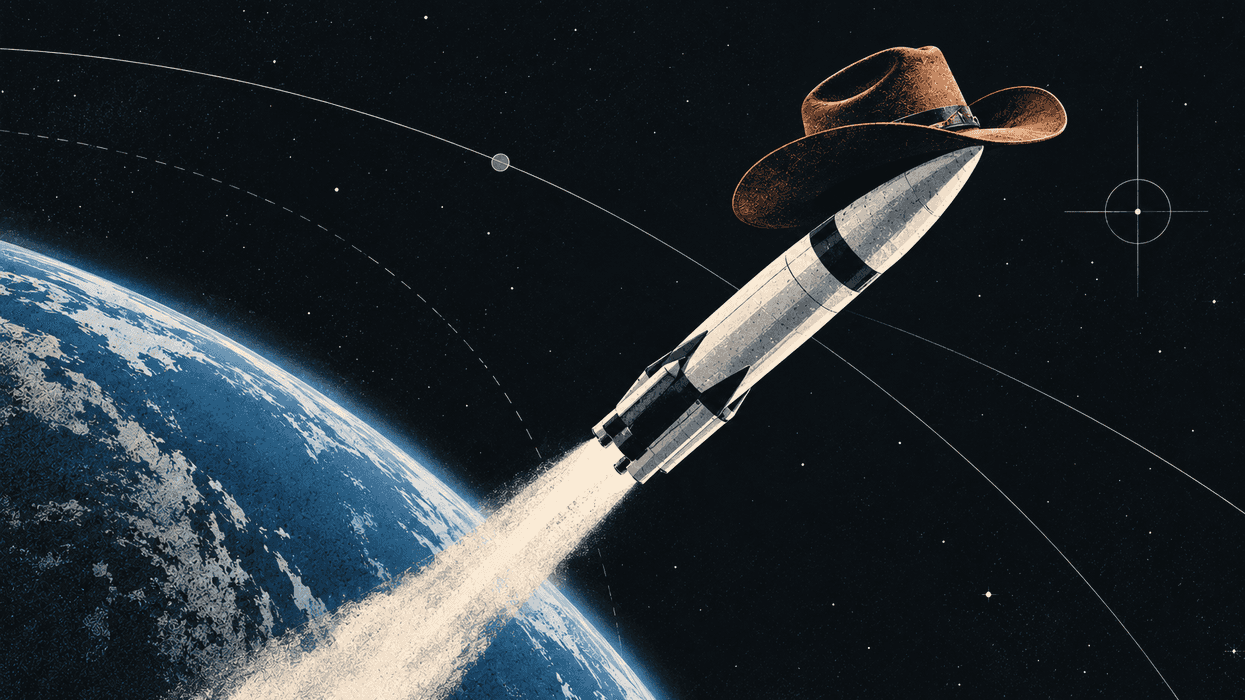
The festival of football is finally here: the 2026 World Cup kicks off today, with the United States, Mexico, and Canada hosting the largest tournament in the competition’s history.
The buildup has been far from smooth, though. Ticket prices are eye-watering, raising concerns about empty seats at the stadiums. There are also fears that the heat will harm the players and that the tournament's size will dilute the competition.
Then there’s the politics. US President Donald Trump’s travel ban has delayed or blocked some soccer team staff, fans, a referee, and even one player from attending the World Cup. Relations among the three hosts are edgy at best – as we wrote about in Tuesday’s edition. Meanwhile, the US war with the Islamic Republic raised doubts for months over whether Iran would compete.
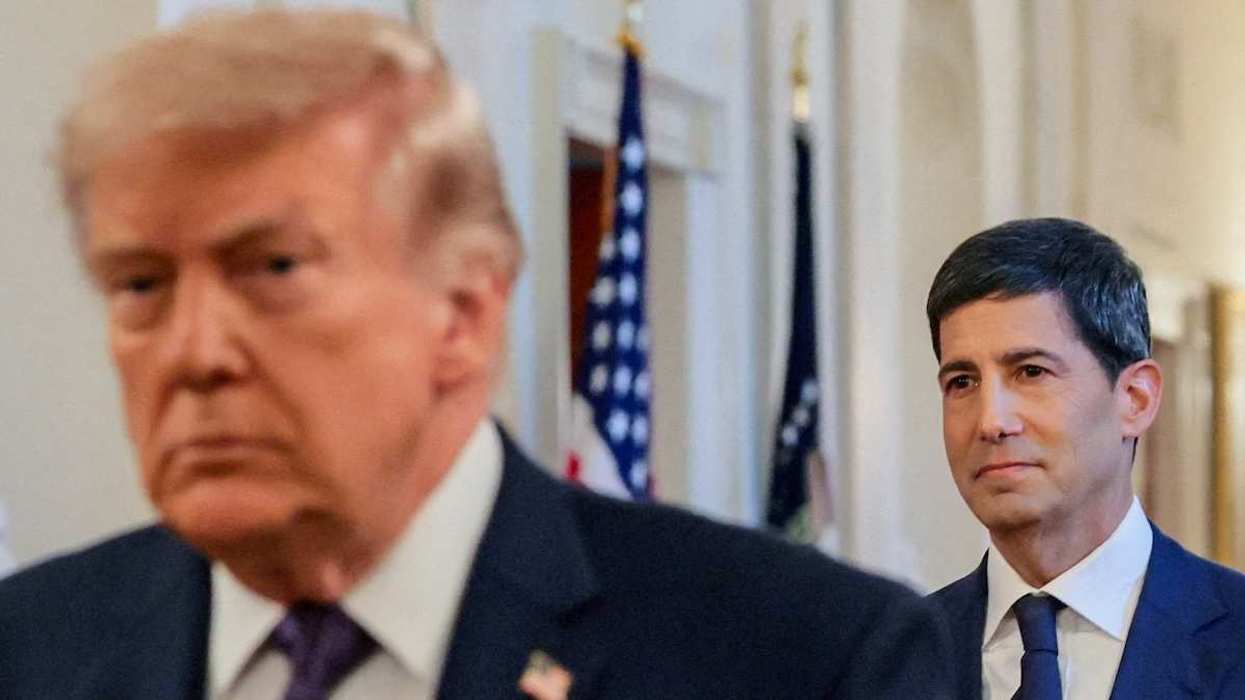
And yet, Trump has embraced this World Cup, adopting it as his own (the US is hosting most of the matches). He has regularly promoted the tournament alongside FIFA President Gianni Infantino. He attended the dress rehearsal last year, the Club World Cup, even joining the victors on stage as they received the trophy. The US leader even suggested it should be called football, not soccer. The goal: to showcase American exceptionalism on its 250th birthday.
This approach is nothing new. Several world leaders have seized on the political opportunity of hosting the world’s biggest sporting event, which attracts billions of viewers worldwide.
“The World Cup is definitely a very symbolic event to boost legitimacy at home, but also international awareness and attraction, and to showcase brilliance and beauty on a global scale,” Sebastian Sons, a political analyst whose past research has covered Qatar’s hosting of the 2022 World Cup, told GZERO.
For governments, a home World Cup can be a political gift. But the benefits often prove short-lived. GZERO runs through three such cases in history, starting with Italy.
1934: Mussolini’s fascist government announces itself to the world
The 1934 World Cup was only the second in history, but Italian dictator Benito Mussolini immediately grasped its political potential. Having established the first fascist government a little over a decade earlier, he saw the tournament as a chance to showcase Italy as a European power.
“The World Cup was used to literally put Italy back on the map,” Stanislao Pugliese, a professor of modern European history at Hofstra University, told GZERO. He noted that Italy was humbled by its sidelining from territorial negotiations in the 1919 Treaty of Versailles, even though it had been on the winning side of World War I, which later fueled nationalist resentment.
According to Pugliese, Mussolini – himself a former journalist – “recognized the propaganda value of” hosting a World Cup. In the short-term, it was a success: Italy won the tournament, scoring a propaganda win for Mussolini’s regime. Yet “Il Duce’s” fascist rule didn’t last long thereafter. Mussolini aligned himself with Nazi Germany in World War II and duly lost. The fascist leader himself was removed from office in 1943 and executed in 1945.
1978: Argentina’s junta looks for unity
There is perhaps no tournament more controversial than the one held in football-obsessed Argentina in 1978.
Two years earlier, a military junta had seized power from the Peronist government and launched a brutal crackdown on political dissidents and suspected left-wing opponents. Tens of thousands were killed, tortured, or disappeared by the government – some were infamously thrown off planes – in what became known as the “Dirty War.”
Reports of this repression from Argentine exiles, the arrival of the Carter administration in 1977, and domestic protests from groups like the “Madres de Plaza de Mayo” brought the spotlight onto the South American state. With the World Cup arriving on their shores, the military government saw an opportunity to push back.
“The junta tried to use the World Cup to improve the international image of the regime. That was one objective,” Marcelo J. Garcia, Americas director at Horizon Engage consultancy, told GZERO. “The other one was to consolidate the grip on power domestically … and to show the Argentine people that there was an environment of normalcy.”
To achieve this, the government used the state-controlled media to spread pro-junta propaganda. They cut deals with guerrillas to ensure there were no attacks during the tournament. And they embraced the team. This appeared to work out: Argentina ended up winning its first World Cup.
But it wouldn’t end well for the junta. Five years later, humbled by economic problems and a defeat to the United Kingdom in the Falklands War, the military government would fall and democracy would return.
1998: France celebrates its multiculturalism
It’s not just autocracies: democratic governments have also sought to exploit the World Cup to convey a political message. France, hosts of the 1998 edition, did just that.
At the time, signs of discontent with the post-Soviet liberal world order were emerging, especially in France. Unemployment there was high, and people were starting to rail against open borders and immigration. This discontent stretched to the national soccer team and its diverse squad, which featured players of African descent – most notably Zinedine Zidane (Algerian parents), Patrick Vieira (born in Senegal), and Marcel Desailly (born in Ghana).
In 1996, far-right leader Jean-Marie Le Pen, father of Marine Le Pen, denounced the team as “artificial.”
However, when France hosted the World Cup, center-right French President Jacques Chirac – who had once criticized immigration – chose to celebrate the country’s and the squad’s multiculturalism. The team was nicknamed “black, blanc, beur,” a play on the usual “bleu, blanc, rouge” that refers to the colors of the French flag (the phrase referred to players of African, French, and Arab origins, respectively).
Chirac was rewarded: France won its first World Cup, beating Brazil 3-0 in the final. Their victory prompted scenes of unbridled jubilation on the streets of Paris and was regarded as a triumph for multiculturalism in the public eye.
As with Italy in ‘34 and Argentina in ‘78, though, the victory only brought a fleeting moment of national unity. Immigration soon became a divisive issue again in French politics. Today – 28 years on – the younger Le Pen’s hard-right National Rally party leads polls for next year’s presidential election, with immigration central to its message. What’s that French expression about the more things change, the more they stay the same?
All to say: the World Cup can give host governments a short-term boost. But history suggests its political effects rarely outlast the tournament itself.
“The illusion that the sporting event helps the agenda of the ruling party of the time,” said Garcia, “is no more than an illusion.”
For more on the 1978 World Cup, arguably the most controversial edition in history, watch this video here from GZERO’s Zac Weisz.