If you spend a week in Ukraine, you’ll get a long list of advice. Download the air raid app. Download the power outage app. Don’t use elevators – you’ll be trapped if the power goes out. Download the map of bomb shelters. Bring batteries and portable chargers, more than you think. Take a course on how to tie a tourniquet.
The guidance given to me before my trip to Ukraine’s capital suggested a city where daily life was governed by alarms, blackouts, and contingency plans. What became clear on arrival was that the list was less a warning than a routine, a system Ukrainians have built after nearly four years of war to keep life moving despite daily Russian attacks.
At night, air raid alarms screech, drones buzz overhead, and explosions break the power-stricken city. But then, Telegram channels are scrolled, information about the attack is crowdsourced, and most take the risk of staying in their beds rather than descending into the freezing metro stations for shelter. Bars and restaurants are busy but close early under curfew, and men may be stopped by police on their walks home to ensure they aren’t dodging the draft. Companies work in person, but it's normal to sit at your desk wrapped in a blanket because the office is without heat.
Adaptation has not meant acquiescence. “Most people have switched jobs to something for the war since 2022, or are doing something outside of work to help out,” said Tamara Hryshchenko, 32, a former artist who now works with the military. She runs the Kyiv Defenders, a volunteer group that buys cars from Europe, turns them into military vehicles, and drives them to the front lines. She was one of many civilians I met who devote their time – and often accept personal risk – to the war effort.
The holidays in Kyiv were darker than usual, but were marked by a resurgence of people reconnecting with Ukrainian traditions. “This year to get my mind off depressing news I’ve decided to focus on rediscovering Ukrainian Christmas… Our history that the Soviet Union stole from us,” said Darina Malashenko, 30. She said she is learning these traditions alongside her parents, who grew up in the Soviet Union. “It feels like we're reclaiming what’s ours.”
Before the invasion, the city’s iconic Sophia square would be cloaked in Christmas lights. This year, amid energy rationing, only a single tree is illuminated. Down the street stands another, decorated with the uniforms of energy workers who are repairing the power grid under fire. Russia, said Maksym Timchenko, head of DTEK, Ukraine’s largest power company, “has been hitting us harder than at any time since the full-scale invasion.” Despite thousands of repair crews, he added, “the level of destruction is too great. Our task is to survive the winter.”
Power outages now come several times a day. Temperatures frequently drop to 4 degrees Fahrenheit, and heat disappears along with the lights. “Russia is betting more on winter than on diplomacy,” President Volodymyr Zelensky said in a recent address. “On ballistic missiles against our energy system rather than engagement with the United States.” Last week, Russia shot an Oreshnik ballistic missile at western Ukraine. Following the attack, temporary evacuation orders were issued for Kyiv because half of all apartment blocks were left without heat.
The blackouts overlapped with a corruption scandal late last year, when investigators uncovered more than $100 million in kickbacks from Ukraine’s state-owned nuclear energy company. The revelations forced the dismissal of senior officials close to Zelensky, and fueled public anger among citizens enduring cold and darkness. Yet, Olena Halushka of the Anti-Corruption Action Centre argues the episode demonstrates institutional progress rather than decay. “The fact that this was exposed — and that senior figures faced consequences — shows that anti-corruption efforts are working,” she said. In earlier years, she argues, such schemes would have likely remained hidden.
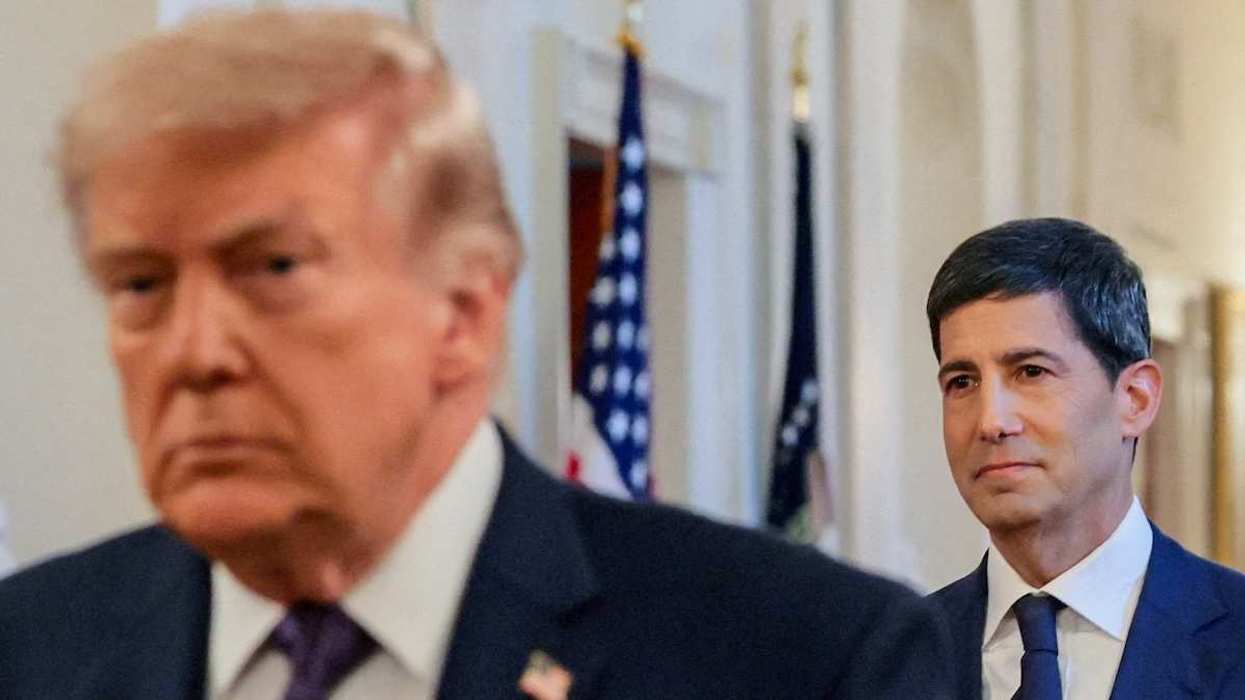
Zelensky reshuffled his inner circle earlier this month in an attempt to put the scandal behind him. Most notably, he replaced his powerful chief of staff with Kyrylo Budanov, the former head of military intelligence – a move that signals Ukraine is keen to prioritize diplomacy with the US. Budanov has a strong relationship with the Trump administration and participated in secret talks with American and Russian representatives in Abu Dhabi last year.
During my visit, news broke that the United States had captured Venezuela’s leader, Nicolás Maduro. The development rippled through Kyiv, where comparisons to Ukraine’s own conflict were unavoidable. But the reaction among residents I spoke to was divided. Some objected to “America invading just like Russia.” Others were struck by the speed and resolve to oust the dictator. “Six hours,” said Maksym Koval, 27. “That’s fast. Maybe they could help us like that with Putin.” Zelensky echoed these sentiments, saying that “if this can be done with dictators, the US knows what to do next.”
On my final day in Ukraine, I woke up at sunrise to take part in the tradition of jumping into the frozen water of the Dnipro River on the Epiphany holiday. A group that called themselves the нарвал, Ukrainian for “narwhals,” cracked the ice and we all took the plunge, despite the drone attack that had hit a hospital the night before, despite the snow falling around us, and despite the uncertainty that there would be heat to warm us when we got back inside.