Every January, Eurasia Group, our parent company, produces a report with its forecast for the Top 10 Risks for the world in the year ahead. Its authors are EG President Ian Bremmer and EG Chairman Cliff Kupchan.
Disclaimer: Your GZERO newsletter author has contributed to these Top Risks reports for the past 19 years.
Here are brief summaries of the 10 most important risks that will preoccupy world leaders, business decision-makers, and the rest of us in 2024, according to Bremmer and Kupchan. You can read the full report here.
1. The United States vs. itself
While America’s military and economy remain exceptionally strong, the US political system is more dysfunctional than any other advanced industrial democracy. In 2024, the problem will get much worse. The presidential election will deepen the country’s political division, testing American democracy to a degree the nation hasn’t experienced in 150 years and undermining US credibility internationally. With the outcome of the vote close to a coin toss (at least for now), the only certainty is damage to America’s social fabric, political institutions, and international standing. In a world beset by crises, the prospect of a Trump victory will weaken America’s position on the global stage as Republican lawmakers take up his foreign policy positions and US allies and adversaries hedge against his likely policies.
2. Middle East on the brink
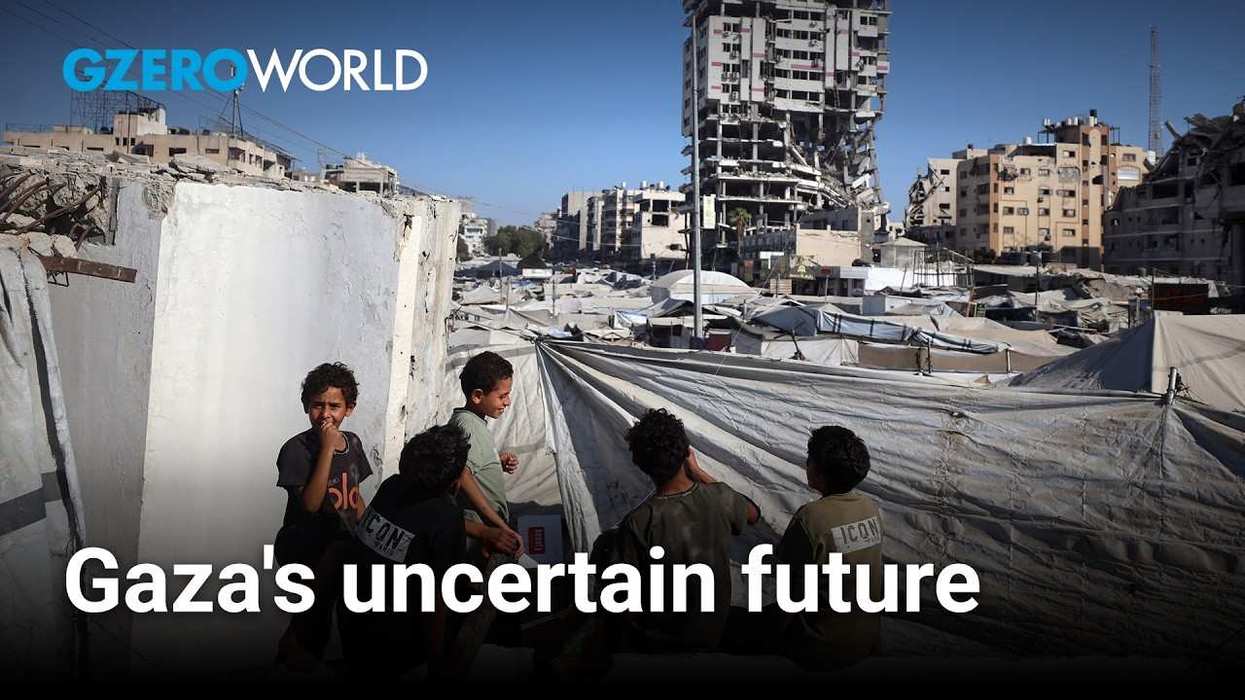
The fighting in Gaza will expand in 2024, with several pathways for escalation into a broader regional war. Some could draw the US and Iran more directly into the fighting. The conflict will pose risks to the global economy, widen geopolitical and political divisions, and stoke global extremism. The straightest path to escalation would be a decision by either Israel or Hezbollah to attack the other. Top Israeli leaders have pledged to “remove” the threat from Hezbollah. If Israel were to attack preemptively, the US military would provide support, and Iran would assist Hezbollah, its most important regional proxy. Houthi militants are also pursuing an escalatory path, and Shia militias operating in Iraq and Syria have increased attacks on US bases with Tehran’s blessing. No country involved in the Gaza conflict wants a regional conflict to erupt. But the powder is dry, and the number of players carrying matches makes the risk of escalation high.
3. Partitioned Ukraine
Russia’s invasion of Ukraine remains a historic failure. NATO is strengthened by new members Finland and (soon) Sweden. The EU has opened a membership process for Ukraine, Russia has faced 11 rounds of sanctions, with more on the way, and half of its sovereign assets have been frozen — money increasingly likely to be used for Ukrainian reconstruction. Europe no longer buys Russian energy. But Ukraine will be de facto partitioned this year, and Russia now has the battlefield initiative and a material advantage. 2024 is an inflection point in the war, and if Ukraine doesn't solve its manpower problems, increase weapons production, and set a realistic military strategy soon, its territorial losses could prove permanent and may well expand. Kyiv has taken a body blow from ebbing political and material support from the United States, and the outlook for European assistance is only slightly better. Ukraine is desperate for more troops. For all these reasons, Kyiv will take bigger military risks this year, including strikes on more targets inside Russia that provoke unprecedented Russian responses and could pull NATO into the conflict.
4. Ungoverned AI
Technology will outstrip AI governance in 2024 as regulatory efforts falter, tech companies remain largely unconstrained, and far more powerful AI models and tools spread beyond the control of governments.
5. Axis of rogues (and America’s dangerous friends)
In 2024, Russia, North Korea, and Iran will boost one another’s capabilities and act in increasingly coordinated and disruptive ways on the global stage. Meanwhile, even Washington’s friends — the leaders of Ukraine, Israel and (potentially) Taiwan — will pull the US into confrontations it wants to avoid.
6. No China Recovery
Absent an unlikely loosening of President Xi Jinping’s grip on power or a radical pivot toward large-scale consumer stimulus and structural reform, China’s economy will underperform throughout 2024. Beijing’s failure to reform the country’s sputtering economic growth model, the country’s financial fragilities, and a crisis of public confidence will expose gaps in the Chinese Communist Party’s leadership capabilities and increase the risk of social instability.
7. The fight for critical minerals
Critical minerals will be a crucial component in virtually every sector that will drive growth, innovation, and national security in the 21st century, from clean energy to advanced computing, biotechnology, transportation, and defense. In 2024, governments around the world will intensify their use of industrial policies and trade restrictions that disrupt the flow of the critical minerals.
8. No room for error
The global inflation shock that began in 2021 will continue to exert an economic and political drag in 2024. High interest rates caused by stubborn inflation will slow growth around the world, and governments will have little scope to stimulate growth or respond to shocks, heightening risk of financial stress, social unrest, and political instability.
9. El Nino is back
After a four-year absence, a powerful El Nino climate pattern will peak in the first half of this year, bringing extreme weather events that trigger food insecurity, increase water stress, disrupt logistics, spread disease, and foment migration and political instability, particularly in countries already weakened by the pandemic and the energy and food prices shocks created by the Ukraine war.
10. Risky business
Customers, employees, and investors — mostly on the progressive side — have brought the US culture wars to corporate offices, and now courts, state legislatures, governors, and activist groups — mostly conservative ones — will hit back. Companies caught in the political and legal crossfire will face higher uncertainty and costs.
Red herrings
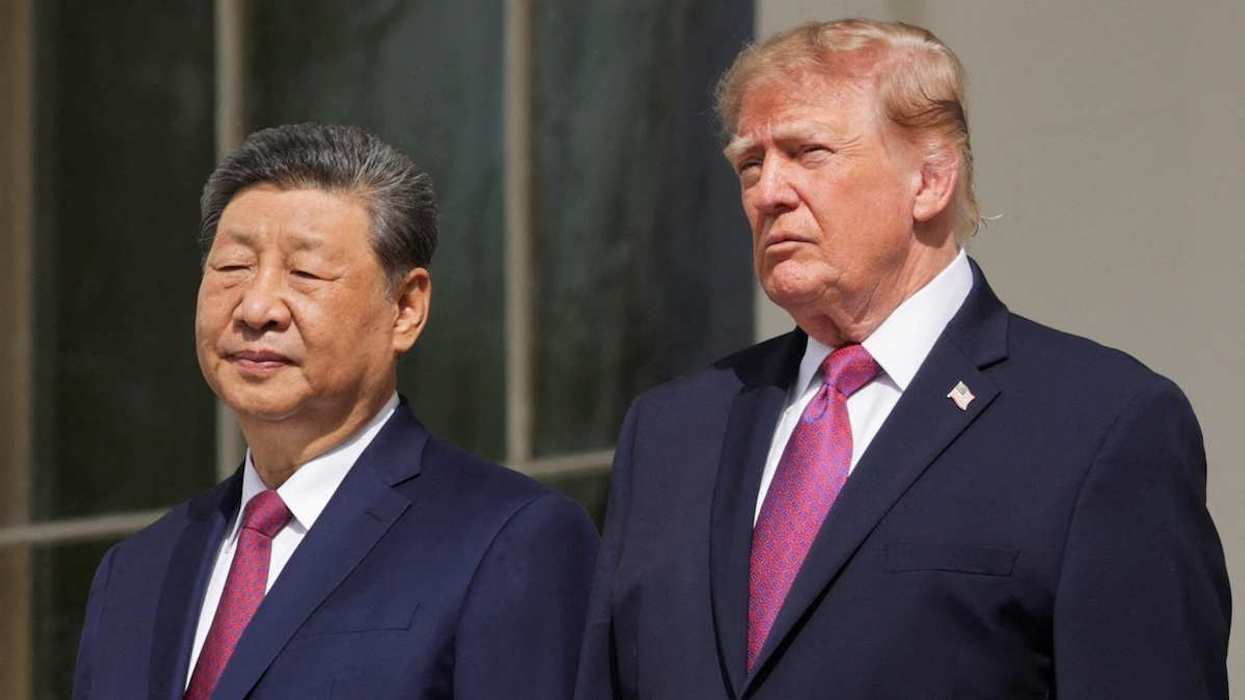
US-China crisis
This will be another turbulent year for US-China relations, particularly over Taiwan and tech competition, but domestic preoccupations have persuaded Presidents Joe Biden and Xi Jinping that better-managed relations serve both sides.
Populist takeover of European politics
Europe’s populists will continue to strike fear in the European political establishment, but limited setbacks for mainstream parties at European Parliament, national, and local elections will neither upend the European political order nor derail EU ambitions rejuvenated by the Covid-19 pandemic and Ukraine war.
BRICS vs. G7
Even after this year’s expansion, the BRICS will not emerge as a China-led rival to the G7.
*****
GZERO readers, tell us what you think. Where do you think Bremmer and Kupchan are wrong? What are they missing or overplaying?