Welcome to the new global arms race: faster, smarter, more dangerous and more expensive than ever. In 2024, world military spending surged to a record $2.7 trillion, the steepest annual increase since the Cold War's end, driven largely by European, Asian and Middle Eastern nations.
Who's buying?
Faced with threats from Russia, Europe has ramped up defense budgets, with Poland's spending growing by 31% to $38 billion and Sweden’s by 34% to $12 billion in its first year of NATO membership. Germany increased military expenditure by 28% to $88.5 billion, making it the fourth-largest spender globally and rearming the nation that precipitated the two major world wars of the last century.
In the Middle East, Israel's military spending soared by 65% per cent to $46.5 billion, the largest annual rise since 1967, amid its war with Hamas in Gaza and conflict with Hezbollah in South Lebanon. In Asia, China spent 7% more on its military in 2024, adding an estimated $314 billion, raising fears of an imminent operation against Taiwan, which boosted its military spending by 1.8% in 2024 to $16.5 billion. Fellow Asia-Pacific power Japan saw its military budget rise by 21% to $55.3 billion, its largest annual increase since 1952.
Who's selling?
Traditional arms exporters like the United States, France, Russia, China, and Germany continue to dominate the market. However, emerging players such as India, Turkey, and Israel are increasing their share. Notably, Israel's defense exports reached a record $14.8 billion in 2024, with Europe accounting for 54% of sales, up from 35% the previous year.
What’s on the wish list?
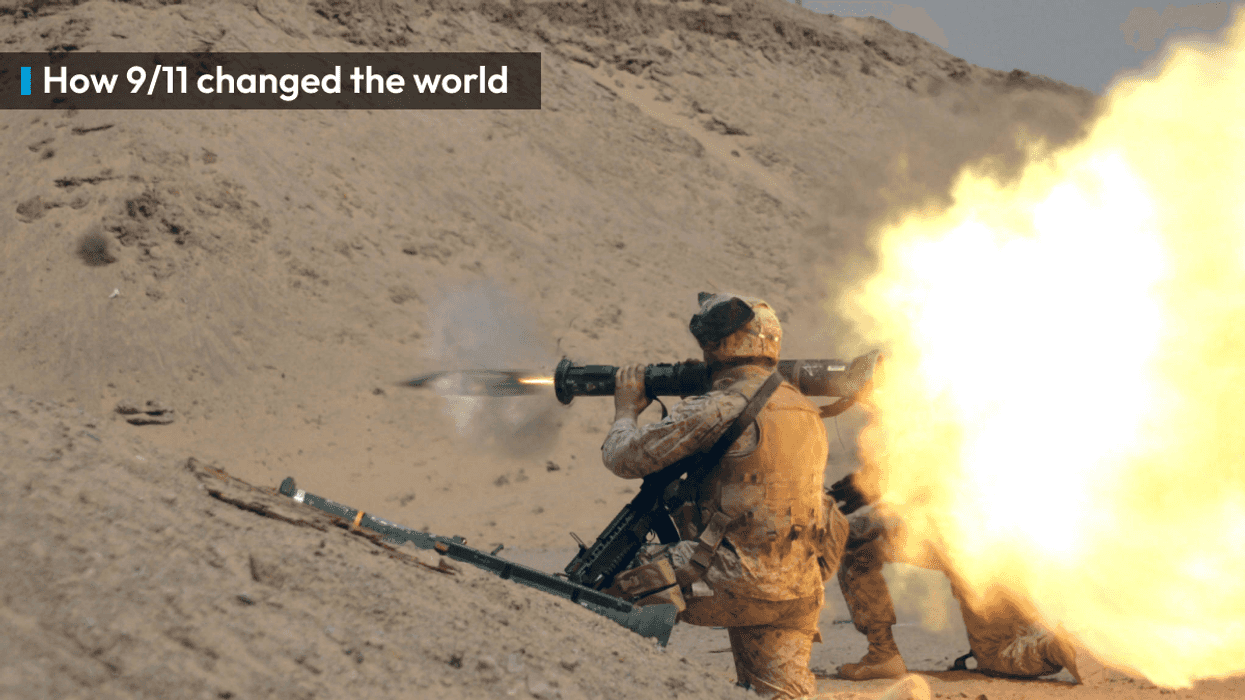
Today’s arms race is not just about quantity, but technology. Nations are investing heavily in next-generation weapons, including drones, hypersonic missiles, artificial intelligence, cyber capabilities, and space-based systems.
In the US, President Donald Trump’s desire for a “Golden Dome” missile defence system akin to Israel’s “Iron Dome” would add $175 billion to Washington’s arms budget over the next three years. It would also require the cooperation of neighboring Canada, at a price of $61 billion, or 51st statehood – which Prime Minister Mark Carney has made clear is not on the table.
Russia’s recent announcement that it is equipping Belarus with antiballistic Oreshnik missiles capable of striking all of Europe has upped the need for missile defence systems on the continent. The United States, China, France, and Germany have also invested in electromagnetic railguns that shoot projectiles without gunpowder; last year, Japan became the first country to test one at sea.
Strategic implications
All this warmongering could deal a death blow to arms control agreements. The New START treaty between the US and Russia is set to expire in February 2026, with little hope for renewal. It could also see new theatres of war emerge: in the Asia Pacific around Taiwan, in Europe in countries bordering Ukraine, and in cyberspace, through the use of disinformation and propaganda campaigns. And all that military spending will put a dent in national budgets, possibly requiring cuts to social benefits, increased debt, or fewer government services - which won’t make voters happy, and could contribute to political instability.