When Donald Trump suggested early last year that the United States had set its sights on acquiring Greenland, the response from Europe was to treat the incoming president like an unconventional uncle – worthy of a chuckle and a general sentiment that this was just Trump being Trump.
It’s hard to blame European diplomats for their initial view. Trump spent much of the post-election, pre-inauguration period rolling out a wish list that included retaking control of the Panama Canal, removing the dividing line between the US and Canada, and renaming the Gulf of Mexico.
A year on, European leaders are no longer laughing. Trump’s ambitions for Greenland are the talk of the town this week at the World Economic Forum in Davos. In an address to the forum today, Trump said, “We need [Greenland] for strategic national security and international security. This enormous, unsecured island is actually part of North America … That’s our territory.”
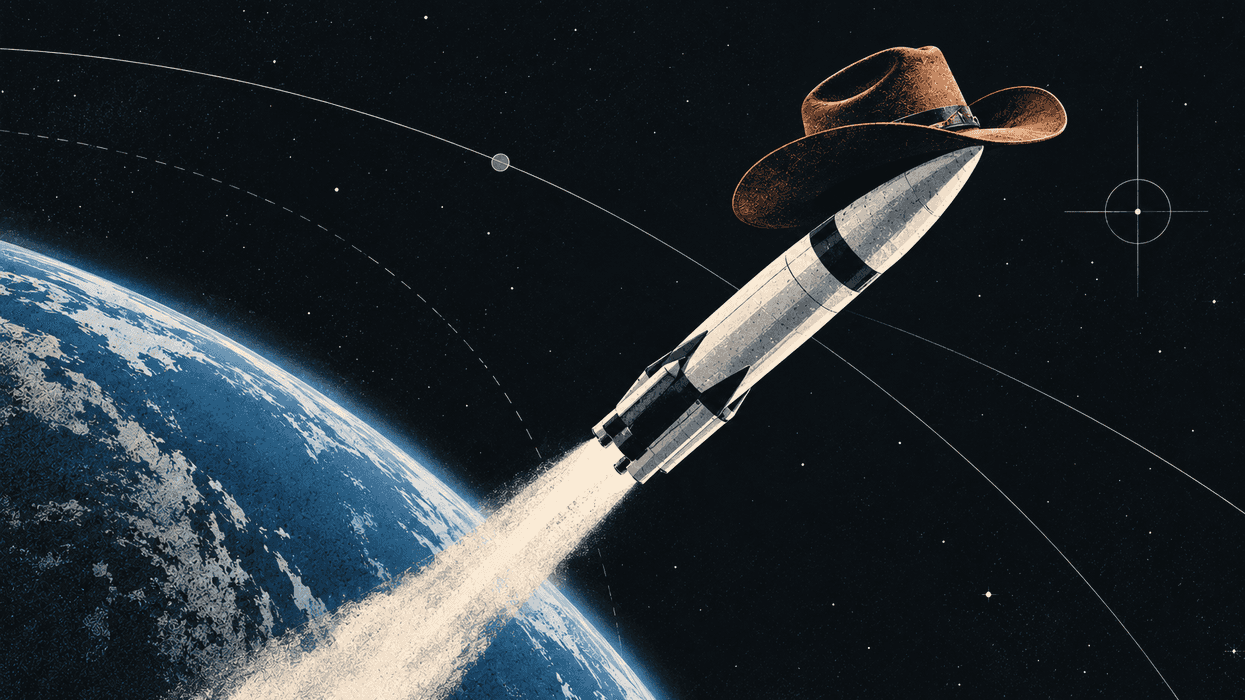
Yet, even as Trump calls for negotiations to begin, Europe still appears no closer to asking the right question on Greenland. If it’s not comedy, is Trump’s goal truly about US national security? Or, and more worrying for Europe, is this really just a “large real estate deal?”
A sobering realization. In recent weeks, a new reality has settled across Europe. The removal of Venezuelan President Nicolás Maduro after months of escalation and economic threats forced Europe to sober up. If the US could extract Maduro from his own bedroom in the cover of night, what would Trump be willing to try to fulfill his Greenland aspirations?
With Europe once again forced to adapt its approach to Trump in the wake of Venezuela, it’s hoping the question that needs answering on Greenland relates to its strategic relevance to the global landscape. If this is about NATO security, then Europe is prepared to meet the challenge. Denmark and Greenland’s leaders traveled to Washington earlier this month and agreed to establish a high-level working group to explore a common way forward on American security considerations. In recent days, various European NATO allies have sent additional military personnel to demonstrate capability and interest in defending Greenland against external threats (Russian, American or otherwise).
The quagmire for Europe, though, is that Greenland is not only (or even not really) about US national security. Trump is not (just) looking to build new military bases or send more US troops to Greenland. A defense pact between Denmark and the US, signed in 1951, already provides for that. Nor is Trump (just) looking for Europe to contribute more for its collective defense. He has already pushed them to raise their defensive commitments to 5% of their GDPs. And he is not (just) looking for enhanced access through the Arctic Circle. The United Nations Convention on the Law of the Sea sets out a vast framework for commercial and military passage.
A stark reality. Even as the president says the US’s national security – along with the world’s – is at “stake,” the security dynamics are at best only part of the matter. And at worst, they represent a pretext for what Greenland has always been about: a large real estate deal.
Given this, the question everyone in Europe should be asking themselves is: what will satisfy Trump?
The president is a predictable negotiator. His worldview always leads him to deploy a competitive approach (I win-you lose) in which he anchors negotiations by naming a price early on. By doing so, he limits the conversation, frames reality and forces other alternatives off the table. In that sense, Greenland is up for grabs. Everyone is talking about Greenland because Trump has put it up for grabs, even if he does not ultimately succeed in acquiring it.
In response, Europe, Denmark and Greenland need to be thinking about what will feel to Trump like ownership without involving actual ownership. In Ukraine, for example, Trump has shown a genuine interest in mineral diplomacy. Despite his suggestion at Davos that US enthusiasm is not about rare earths, Greenland has proven copper, lead and zinc reserves that will intrigue him, especially at this moment when mastering the “electric stack” is so critical to 21st century geopolitics (for more on this, see Eurasia Group’s Top Risk #2: Overpowered). In 2008, the US Geological Survey found Greenland also appears to have significant, yet untapped petroleum reserves. The assessment found that the eastern part of the island contains roughly 31.4 billion barrels of oil and hydrocarbons. That’s considerable potential, if extractable. By comparison, the US – the world’s top oil producer – holds nearly the same volume of proven crude reserves. Trump may find co-ownership of these potential petroleum resources – a co-branding exercise – feels a lot like the US “getting its hands” on Greenland.
A historic prize. Europe is waking up to the gravity of Trump’s interest in Greenland. An invasion of Greenland remains a very remote-probability but high-impact event. In fact, Trump seemingly took the use of force off the table in his Davos remarks. Even still, the US administration will continue to apply a ring of pressure on the parties involved, pulling all the various economic and security levers at its disposal in a concerted effort to drive concessions from Denmark, Greenland and NATO.
While Trump was still speaking at Davos, the European Parliament suspended the approval of a trade deal the EU had reached with the US last year. European leaders are also weighing retaliatory tariffs and a “bazooka” option of labeling the US behavior “economic coercion.” But these considerations signal that European leadership may still be asking (and answering) the wrong question. It’s not how to barter trade for security. The question Trump is posing is about legacy. In his most direct message to European partners, Trump told the Davos audience: “You can say yes and we will be very appreciative. Or you can say no and we will remember.”
Acquiring Greenland would represent the largest land addition to the US in its history. For the president to be satisfied, legacy looks an awful lot like a Trump version of the Louisiana Purchase – which would be one for the history books.