Canadian Prime Minister Mark Carney went to France over the weekend, but he didn't have to go far: meeting French President Emmanuel Macron on the archipelago of Saint Pierre and Miquelon, just south of Newfoundland. The optics of the meeting—on a French territory that shows Europe is not quite as far from Canada as one might expect—reinforce Carney's recent push to build a closer alliance with the European Union.
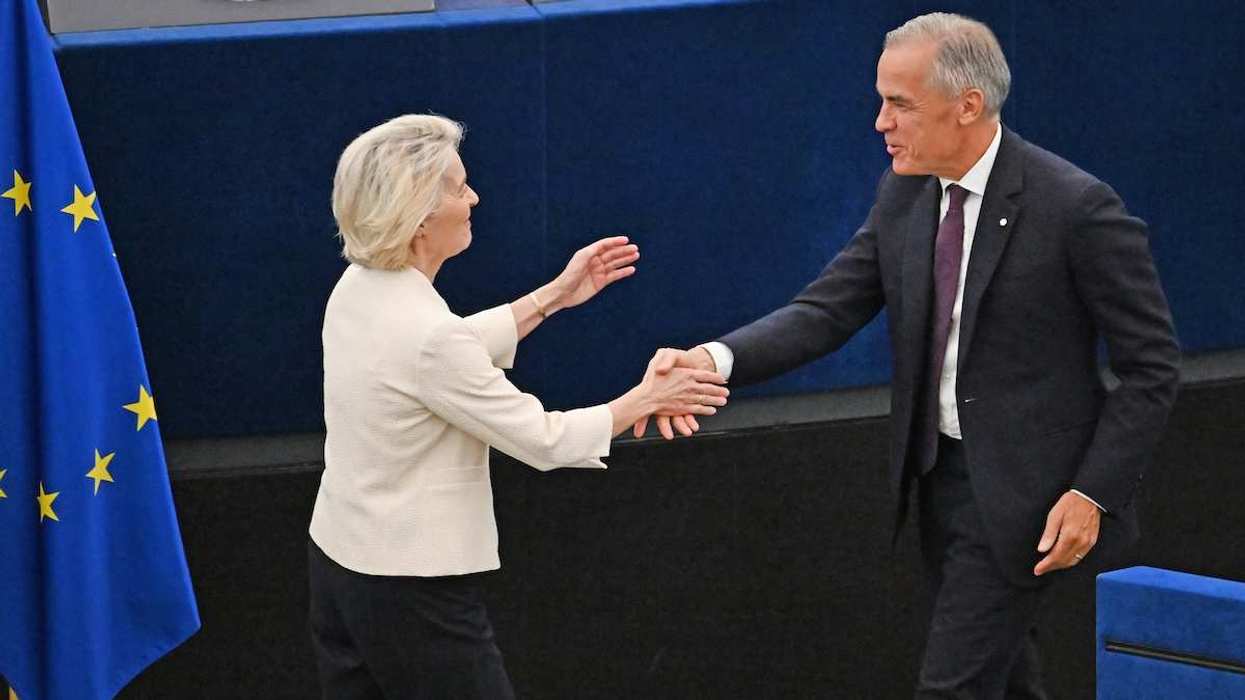
It began with the news that Canada was pursuing associate member status. Carney then flew to Strasbourg, where he delivered a sequel to his well-received Davos speech, this time to the European Parliament. In it, he invoked Goethe, the horrors of the Holocaust, and the Battle of Vimy Ridge (a key battle for both the course of World War I and the development of Canadian national identity) in making the case that Canada and Europe must work together to preserve their sovereignty in the face of threats from the United States. In his words, Carney isn't interested in "a third bloc in order to become a great-power rival—only with better manners" but "resilience so no one, no one can control our open markets, impair our sovereignty, threaten our territorial integrity or undermine our freedoms, our democracies, our rule of law."
But in a globalized, interdependent international system, can Carney really build "resilience" against the US and China as they grow in economic and military strength? Will the famously inflexible EU create a new mechanism allowing for an unconventional associate membership stake for Canada? And can Carney bring other middle powers along with him, such as the United Kingdom and Australia?
Before getting to those questions, we need to understand what's motivating Carney's actions, and how he's come to acquire the domestic political capital to make this move.
President Trump has changed US-Canada relations in a manner that will likely cause permanent damage. While the next president—Republican or Democrat—will try to restore more stable relations with our neighbor to the north, there will never be a full return to the lockstep US-Canada friendship of the past nearly one hundred years. Canada needs the US economy (with 70% of Canadian exports going to the US before the trade war), but it's looking to diversify. That leads Canada to the EU as well as to a number of other states, including even China—with whom Carney improved relations with his January visit.
Ever since Trump first began his saber rattling with Canada—back to his 51st state comments to former Prime Minister Justin Trudeau—he created a rally effect in Canada that helped Carney beat the previously Trump-friendly, conservative Pierre Poilievre. Since then, Carney's approval ratings have skyrocketed amidst his decision to hold firm against Trump's trade threats. He's so popular domestically that even conservative former Prime Minister Stephen Harper is giving speeches endorsing Carney's policies.
So, Carney is faced with an existential economic threat from the Trump administration, but he has the political capital to absorb this short-term pain while building a long-term hedge against the United States. Carney knows that he will outlast Trump—who only has a little over two years left in his term and has passed the peak of his global influence—so he's more prepared to build for what comes next.
But Carney's bid for associate membership in the European Union faces real challenges. First, there's not much clarity over how much integration the new associate member classification will entail and the process by which EU member states will approve of it. Canada and the EU haven't even managed to fully ratify the Comprehensive Economic and Trade Agreement (CETA), which has been provisionally in place since 2017 but is still lacking ten member states' approval. As a result, the notion that each EU country will greet Canada with open arms is far-fetched.
Second, there's an inherent tension in the EU's interest in expanding its power, and Canada's interest in avoiding getting too integrated, especially as the EU faces headwinds from the increasing popularity of Euroskeptic parties like the AfD in Germany and the National Rally in France. Carney doesn't want to get bogged down in a yearslong accession process or tie Canada inextricably to a bloc that could become mired in gridlock if far-right parties take charge of Europe's most powerful economies. He wants to more closely collaborate with the European Union on key areas of strategic resilience, from defense production to critical minerals, without full integration. And most importantly, he wants to involve other like-minded countries, like the United Kingdom and Australia, in that process.
So, it's not really associate membership that Carney is after (which was European Commission President Ursula von der Leyen's formulation, not Canada's) but something broader and more flexible: an "alliance for the future." And he already has some supporters in the countries he hopes to lure into this alliance, like new UK Prime Minister Andy Burnham and Australian Prime Minister Anthony Albanese, who are fellow left-of-center, pro-multilateral leaders of middle powers. But Burnham and Albanese lack Carney's political capital—with Burnham's Labour surging but still trying to fend off Nigel Farage's Reform Party, and Albanese facing plummeting approval ratings. Both leaders can be counted on for now, but as more conservative and nationalist parties gain strength, how long will they be there for?
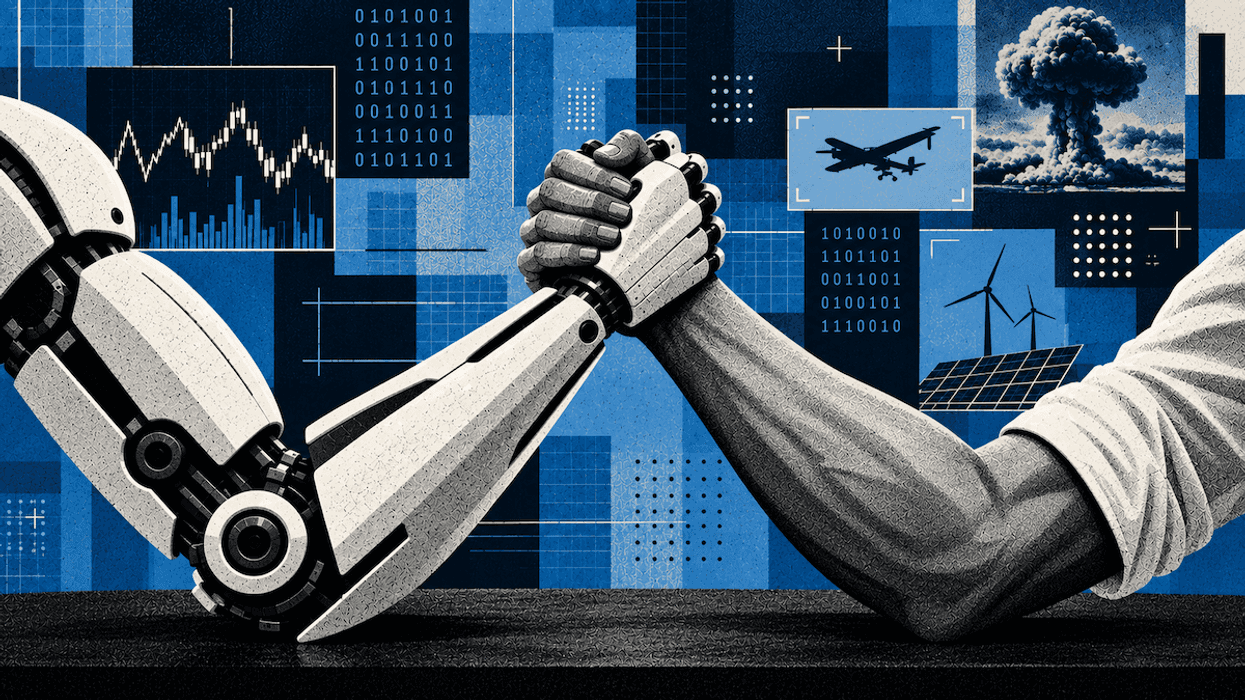
And even if Canada can build this new bloc, it will be difficult to attain true strategic autonomy in essential industries. While European countries have worked to build their own defense supply chains, it's been a slow and costly process, set against the backdrop of rising fiscal challenges. AI is poised to become essential to both offensive and defensive military operations, but middle powers are largely reliant on the US and China to power their models—access which could be switched off at any time. Changing that will take years. Carney possesses real political capital, but can it last to the end of the Trump administration, as Canada incurs rising economic costs while trying to develop its resilience?
Carney is betting that the answer is yes. It's the best move available to Canada and to all the middle powers, but the road ahead will not be easy. In a g-zero world where the two global superpowers are aggressively seeking to grow their power (as Trump stated at the UN General Assembly yesterday, "to the victor belong the spoils"), countries must ensure that interdependence cannot be wielded against them.