Skip to content
Search

Latest Stories

News

The Decade of Disruption

The Decade of Disruption

Ten years ago tomorrow, Lehman Brothers, the financial services behemoth, collapsed. It was a crucial moment in what became the most severe global financial crisis since the 1930s. US banks teetered. European markets shuddered. Growth slowed in Asia. China’s diminished demand for oil, gas, metals, and minerals hit emerging markets in Latin America, Africa, and the Middle East.


Crises radicalize voters, say the political scientists, and the decade since the fall of Lehman has provided plenty of new evidence. The US financial market meltdown didn’t directly trigger all the remarkable political events that followed, but the anger and fear of the future it provoked have effects that reverberate still.

  • The US financial crisis triggered a global recession and a European sovereign debt crisis severe enough to call the survival of the Eurozone into question.

  • A wave of unrest swept across North Africa and the Middle East. Tunisia’s government fell. Egypt’s Hosni Mubarak went to prison. Libya’s Muammar Qaddafi was executed in the street. Yemen exploded into violence. Syria sank into a civil war that has killed or displaced half the country’s population.

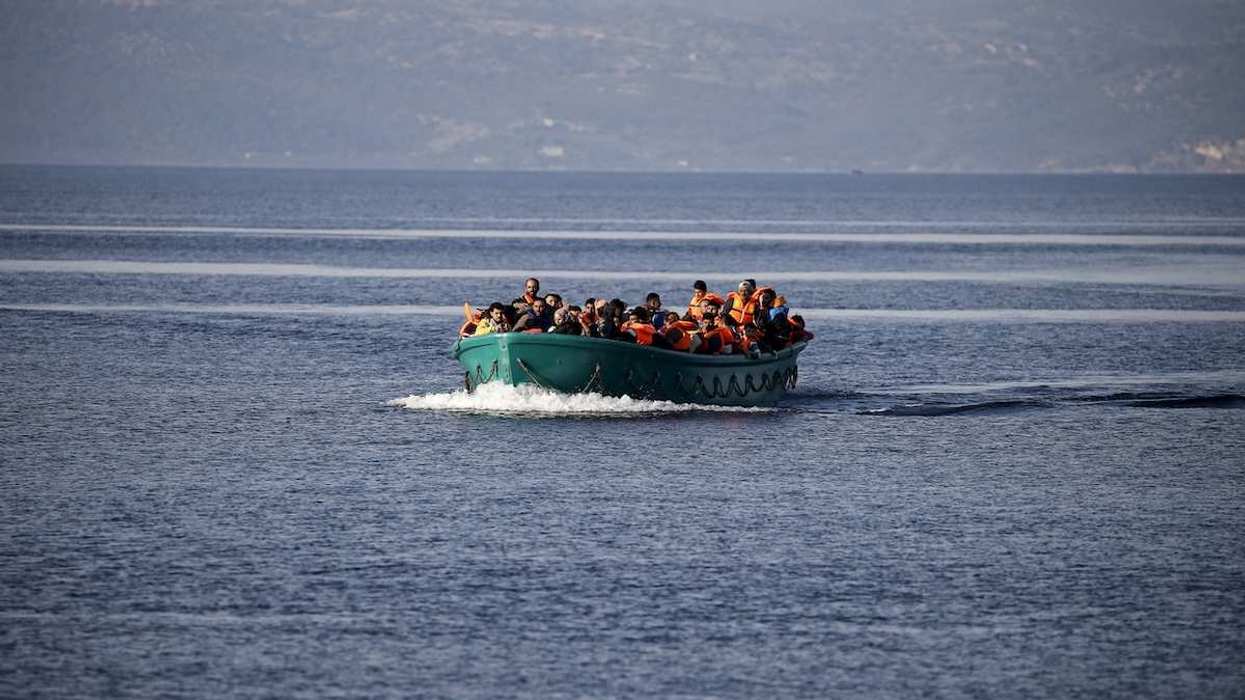
  • Middle East unrest triggered a new crisis in Europe, as more than two million migrants made their way north, transforming European politics. Angry, fearful voters began to reject establishment political parties.

  • In 2016, faced with a choice between continued membership in the European Union and a leap into the unknown, Britons chose Brexit.

  • In the United States, voters chose a brash celebrity businessman who had never run for office over a rival who epitomized the political establishment.

  • In 2017, the long-dominant political parties of center-right and center-left were swept aside in France in favor of another candidate making his very first run for office. Emmanuel Macron led a party he had created from nothing just one year before.

  • German voters re-elected Angela Merkel to a fourth term, but her center-right party and its center-left coalition partner posted their lowest share of the vote in decades. A party of the far-right won seats in the Bundestag for the first time since 1945. It is now the largest opposition party in Germany.

  • In 2018, Italian voters pushed aside long-established parties to elevate a movement founded nine years ago by a professional comedian and a rebranded separatist party from the country’s north.

  • In Mexico, voters elected the first leftist president since the 1930s, a man leading a political party he created just four years prior.

  • In Pakistan, voters rejected the long-dominant Bhutto and Sharif dynasties in favor of a man who became famous as captain of the country’s 1992 World Cup-winning cricket team.

  • In Brazil, voters go to the polls next month to cast ballots in a wide-open election.

These events represent rejection of the known and a lunge toward the brand new. This has become a world of profound political disruption.

There’s no reason to believe this turbulence is nearing an end.
More For You

PA via Reuters Ukraine's Vladyslav Heraskevych, with his helmet, which features pictures of people killed in the war with Russia. Heraskevych was ruled out of the Men's Skeleton event by the International Olympic Committee just over an hour before competition began, pictured at the Cortina Sliding Centre, on day six of the Milano Cortina 2026 Winter Olympics, Italy. Picture date: Thursday February 12, 2026.

PA via Reuters Ukraine's Vladyslav Heraskevych, with his helmet, which features pictures of people killed in the war with Russia. Heraskevych was ruled out of the Men's Skeleton event by the International Olympic Committee just over an hour before competition began, pictured at the Cortina Sliding Centre, on day six of the Milano Cortina 2026 Winter Olympics, Italy. Picture date: Thursday February 12, 2026.

20: The number of fallen Ukrainian athletes and coaches depicted on a Ukrainian skeleton racer’s helmet at the Winter Olympics, which prompted the International Olympic Committee (IOC) to disqualify him on Thursday. The IOC said the helmet violated Olympic rules, which prohibit political messaging during games. Critics of the disqualification said [...]
​Russian President Vladimir Putin attends his annual end-of-year press conference and phone-in in Moscow, Russia December 19, 2025.

Russian President Vladimir Putin attends his annual end-of-year press conference and phone-in in Moscow, Russia December 19, 2025.

Sputnik/Alexander Kazakov/Pool via REUTERS
Russia tries to control the message, literally.The Russian government has begun blocking the popular messaging apps WhatsApp and Telegram in a sweeping crackdown aimed at forcing Russians to use a state-backed alternative called MAX, which critics say would enable censorship and surveillance. The move is part of the Kremlin’s broader drive for [...]
Donald Trump alongside Nigel Farage at the Trump Turnberry course in South Ayrshire, United Kingdom, on May 3, 2023.

Donald Trump alongside Nigel Farage amid a television interview at his Trump Turnberry course in South Ayrshire during his visit to the United Kingdom, on May 3, 2023.

PA via Reuters
Allies of US President Donald Trump have long sought to build bridges with European counterparts. They have a close relationship with supporters of Hungarian Prime Minister Viktor Orbán, hosting conferences together, such as CPAC, in Budapest. Elon Musk campaigned for Alternative for Germany (AfD) ahead of last year’s federal elections while he [...]
Photo by Kim Kyung-Hoon - Pool/Getty Images

TOKYO, JAPAN - FEBRUARY 8: Japan's Prime Minister Sanae Takaichi, leader of the ruling Liberal Democratic Party (LDP), places a red paper rose on the name of an elected candidate at the LDP headquarters on general election day on February 08, 2026 in Tokyo, Japan. Voters across the country headed to polls today as Japan's Lower House election was held.

Photo by Kim Kyung-Hoon - Pool/Getty Images
When Japanese Prime Minister Sanae Takaichi called snap elections last month, it was a big gamble. Holding a winter election just four months into her tenure with no real policy record to run on? Staking her sky-high approval ratings – then hovering around 70% – on an untested bet that personal popularity would translate into seats? The [...]