As Venezuelans prepare to head for the polls on July 28, President Nicolas Maduro is pulling out all the stops to secure a third term in office and extend the Chavismo political movement’s 25-year grip on power. Chosen by the movement’s founder Hugo Chavez to succeed him as president, Maduro first won election in 2013 and has grown steadily more authoritarian.
Though Maduro pledged the coming election would be free and fair under the terms of the Norway-brokered “Barbados Agreement,” he has already reneged on some of its key terms. The agreement represents the latest in a series of attempts by the US and Latin American and European countries to encourage greater democratic opening in Venezuela.
We asked Eurasia Group expert Risa Grais-Targow what to expect from this weekend’s vote.
Do you think Maduro will do whatever it takes to ensure he remains in office?
It’s pretty clear at this point that Maduro is going to hold this election on his own terms. We’ve seen him bar the participation of the winner of the opposition primary, Maria Corina Machado, and her chosen successor, Corina Yoris. He has also taken steps to limit both credible electoral observation, including that of the EU, and voting by opposition supporters such as Venezuelans living abroad. All of these moves represent a violation of the Barbados Agreement.
On election day, I think the regime is hoping it can rely on various measures to suppress opposition voter turnout and mobilize its own base so that it doesn’t have to resort to ballot tampering to win. But I do think it is willing to do whatever it takes. I don’t think Maduro is going anywhere.
Would an opposition candidate likely win a fair election, and if so, why?
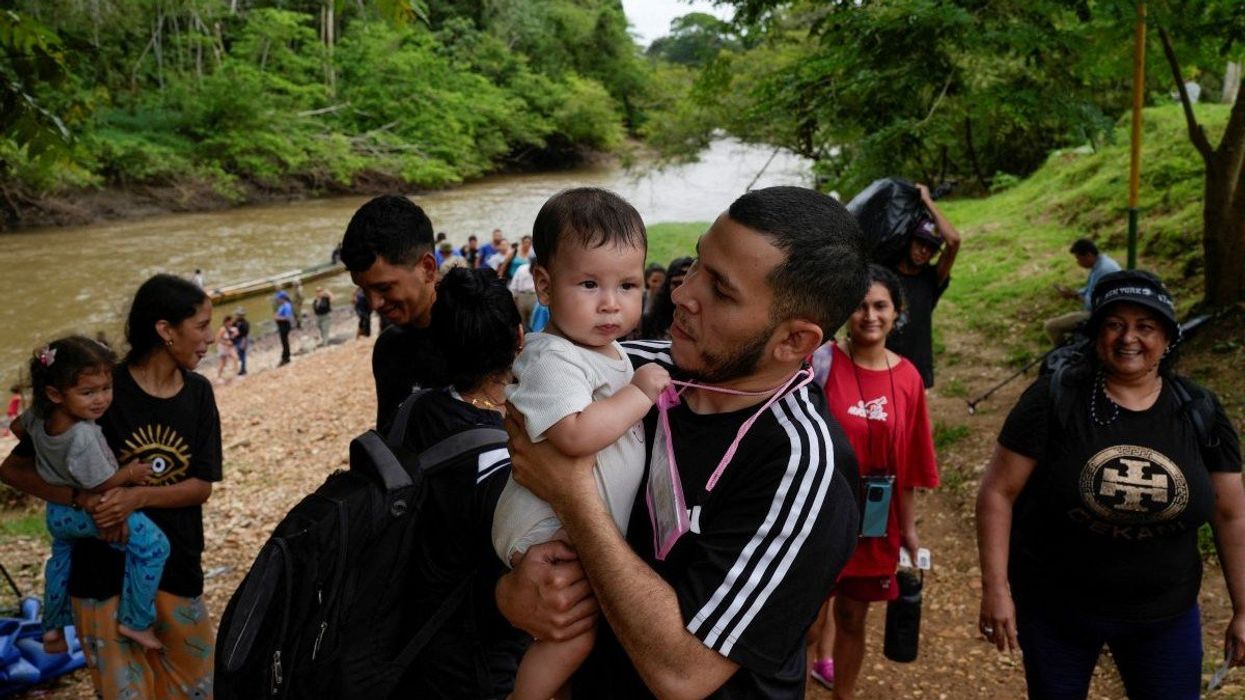
Yes, absolutely. What we’re seeing from credible polls is that Edmundo Gonzalez, the new unified opposition candidate, has an advantage of between 20 and 30 percentage points over Maduro. Maduro has been in power for 11 years and has overseen a substantial deterioration of economic conditions, the result of government mismanagement exacerbated by US sanctions aimed at forcing democratic reforms. Though conditions are finally stabilizing, multiple years of deep economic contraction have triggered massive migration outflows. About 7 million Venezuelans are living abroad today.
What’s more, this is the first presidential election since 2013 that the main opposition forces are all participating and backing a single candidate, which is one of the reasons Gonzalez is polling so well.
What is the likelihood of protests or violence around the election?
I think some level of violence or instability related to the vote could manifest in two ways, and I would say that both of them are somewhat likely. The first would be violence on election day as part of a repertoire of measures to discourage support for the opposition that includes moving polling stations from opposition strongholds or blocking their entrances and deploying the so-called colectivos (regime-affiliated criminal groups) to attack voters.
The second is the potential for unrest after the election, assuming that Maduro claims victory. There’s been a groundswell of support for the opposition, and its voters would probably feel like the election had been stolen. That said, recent polls suggest that voter appetite to take to the streets has waned, probably because of the regime’s violent repression of previous anti-government protests.
How do you think the international community is likely to react if Maduro wins what appears to be a fraudulent election?
This would be a difficult situation for the US, the EU, and some of Maduro’s key allies in the region such as Brazilian President Luiz Inacio Lula da Silva and Colombian President Gustavo Petro. These regional leaders were trying to welcome Maduro back into the fold after the failed Juan Guaido experiment [the former head of Venezuela’s National Assembly claimed in 2019 to be the country’s legitimate president – and won recognition from many countries around the world – but then failed to consolidate his domestic support]. I would be surprised if they fully abandon Maduro and break off ties with him again.
The EU likewise has a bias toward normalization, though its electoral observation mission was uninvited by the regime, and if there is a lot of fraud, it will be forced to condemn the results. In the US, President Joe Biden’s administration also prefers normalization and engagement but will take its cues from how the opposition characterizes the elections. Regardless, I don’t see the US, at least under the Biden administration, going back to what they called the “maximum pressure” sanctions regime that we had in place up until September 2022.
What do you think the continuance of the Maduro regime means for the quality of life in Venezuela?
As I mentioned, the economic situation has stabilized somewhat over the last couple of years. Ironically, in response to the US sanctions, Maduro has become much more pragmatic in terms of economic policy. He has allowed for a dollarization of the economy and stopped printing money, so inflation has really come down. Still, there is a deep divide between those who have access to dollars and can afford to pay for imported goods and those who don’t. So, it’s no longer the case that the shelves in stores are empty, but you have to have the money to pay for them.
Edited by Jonathan House, Senior Editor at Eurasia Group.