Skip to content
Search

Latest Stories

News

What would the US “de-coupling” with China really look like?

What would the US “de-coupling” with China really look like?

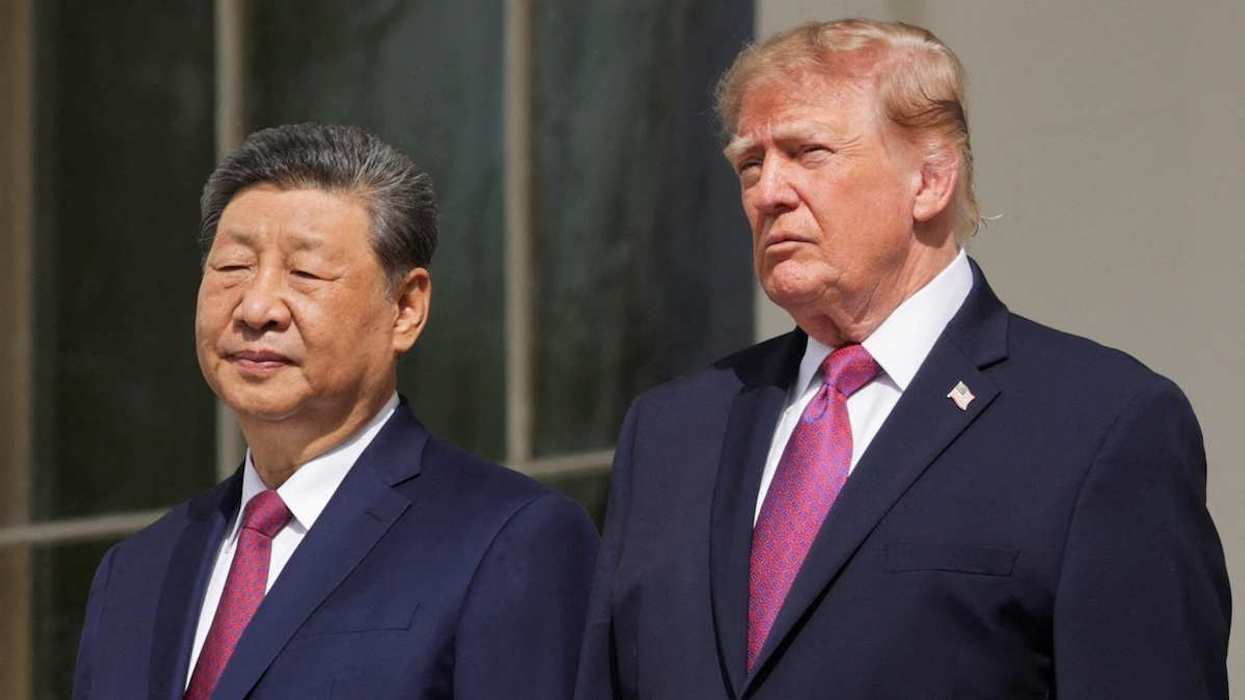
Last week, Washington and Beijing struck a deal to pause their costly trade war. The US held off on new tariffs and reduced levies on some other Chinese goods, and China promised to buy more US goods and protect intellectual property rights better.

But don't let the trade truce fool you: powerful political forces are continuing to push the two countries apart, politically, economically, and technologically – a process that's been called "decoupling".


But what does decoupling really mean? And why should you care?

What's Decoupling? For decades, the two countries have had a basic bargain: the US invents, China builds, everybody wins.

But there's a growing view among politicians in the US that, rightly or wrongly, this bargain is bad one. Sure, it's given Americans access to cheaper imported consumer goods, they say, but it's also cost millions of US manufacturing jobs and strengthened a strategic adversary that doesn't share American values. At the same time, there are national security concerns about Chinese firms with ties to the government supplying technology to US critical infrastructure, including the 5G data networks that will power the next phase of the digital revolution.

So advocates of "decoupling" want to tear up this bargain and disengage with China. They want to use tariffs to pressure US companies into moving their plants out of China, and they seek to cut off China's access to advanced US technologies. They also want to make it harder for Chinese computer scientists to study in the US.

"Ok, but how does this affect me?"

It depends who you are, and how far decoupling goes. Here's a view from few different perspectives.

You're a student who just dropped your iPhone in the toilet. Already an expensive mistake. But if decoupling gets so bad that the iPhone is no longer made in China, the cost of a new one will almost certainly go up. You'll pine for the days when an iPhone X cost only $1,000.

You're a recently graduated Chinese PhD in computer science. A few years ago you'd already be applying to US universities of companies, but now you've started looking at A.I. post-docs in Canada and Europe instead.

You're a country like, say, Brazil – You want your economy to have good access to ultra-fast 5G data networks that will power more efficient cities and factories, and driverless cars. And China's Huawei is the world's biggest and cheapest supplier of 5G tech. But you are under huge pressure from the US, a major economic and regional partner, not to do a deal with Beijing and to buy from Western competitors instead. It's tough to have both ways -- which technology will your government choose?

You're Xi Jinping. Mastering A.I. and big data are the key to growing your economy while maintaining the Communist Party's grip on power. And given the bipartisan US backlash against China, you can see the writing on the wall. So you recently raised $29 billion to pump into China's domestic semiconductor industry to try to break its dependence on the US for this critical technology. If the US wants to decouple, so be it.


More For You

Immigration and Customs Enforcement (ICE) agents check the identity documents of a group of agricultural workers at a grocery store parking lot during an immigration raid in Mecca, California, U.S. December 19, 2025.

Immigration and Customs Enforcement (ICE) agents check the identity documents of a group of agricultural workers at a grocery store parking lot during an immigration raid in Mecca, California, U.S. December 19, 2025.

REUTERS/Daniel Cole
A year into US President Donald Trump’s second term, America’s immigration policy has undergone one of its most sweeping resets in decades. Unauthorized border crossings are at 50 year-lows. While the administration says its focus is the “worst of the worst” criminals, immigration enforcement has expanded to include all undocumented immigrants, [...]
People gather around offered flowers to honour the victims of a mass shooting during a Jewish Hanukkah celebration at Bondi Beach on December 14, in Sydney, Australia, December 19, 2025.

People gather around offered flowers to honour the victims of a mass shooting during a Jewish Hanukkah celebration at Bondi Beach on December 14, in Sydney, Australia, December 19, 2025.

REUTERS/Eloisa Lopez
Australia launches gun buyback after Bondi Beach shootingThe Australian government announced a plan to purchase and destroy civilian-owned firearms after a terrorist attack left 15 people dead at a Jewish holiday gathering on Sydney’s Bondi Beach. Prime Minister Anthony Albanese says hundreds of thousands of guns will be taken off the streets [...]
Zambia, Collum Coal Mine ZAMBIA, Sinazese, chinese owned Collum Coal Mine, underground mining of hard coal for copper melter and cement factory, loading place ***SAMBIA, Collum Coal Mine eines chinesischem Unternehmens, Untertageabbau von Steinkohle, Ladeplatz Sinasese Zambia

Zambia, Collum Coal Mine ZAMBIA, Sinazese, chinese owned Collum Coal Mine, underground mining of hard coal for copper melter and cement factory, loading place ***SAMBIA, Collum Coal Mine eines chinesischem Unternehmens, Untertageabbau von Steinkohle, Ladeplatz Sinasese Zambia

  • imago images/Joerg Boethling via Reuters Connect
$753 million: Angola secured $753 million in loans from the US and South Africa to revamp a railway line linking mining regions in the Democratic Republic of Congo and Zambia. For Washington, the investment is strategic: the Lobito corridor offers the shortest route from the DRC’s copper and cobalt belt to Atlantic shipping lanes, helping secure [...]
​A Boeing 737 Max 8 with Afghans on board lands at Berlin Brandenburg Airport (BER) on December 16, 2025.

A Boeing 737 Max 8 with Afghans on board lands at Berlin Brandenburg Airport (BER) on December 16, 2025. 160 Afghans have come to Berlin on a charter flight organized by the German government.

Fabian Sommer/dpa via Reuters Connect
500: By the end of the year, Germany plans to accept over 500 Afghan refugees who assisted German troops on the ground in Afghanistan, or face threats from the Taliban. Although these refugees have already been approved for admission, Chancellor Friedrich Merz’s coalition government delayed their entry into the country. [...]