It's been two months since President Trump abruptly ordered the withdrawal of US troops from northern Syria, paving the way for a bloody Turkish offensive in that region. (See our earlier coverage here.) What's happened since? A guide for the puzzled:
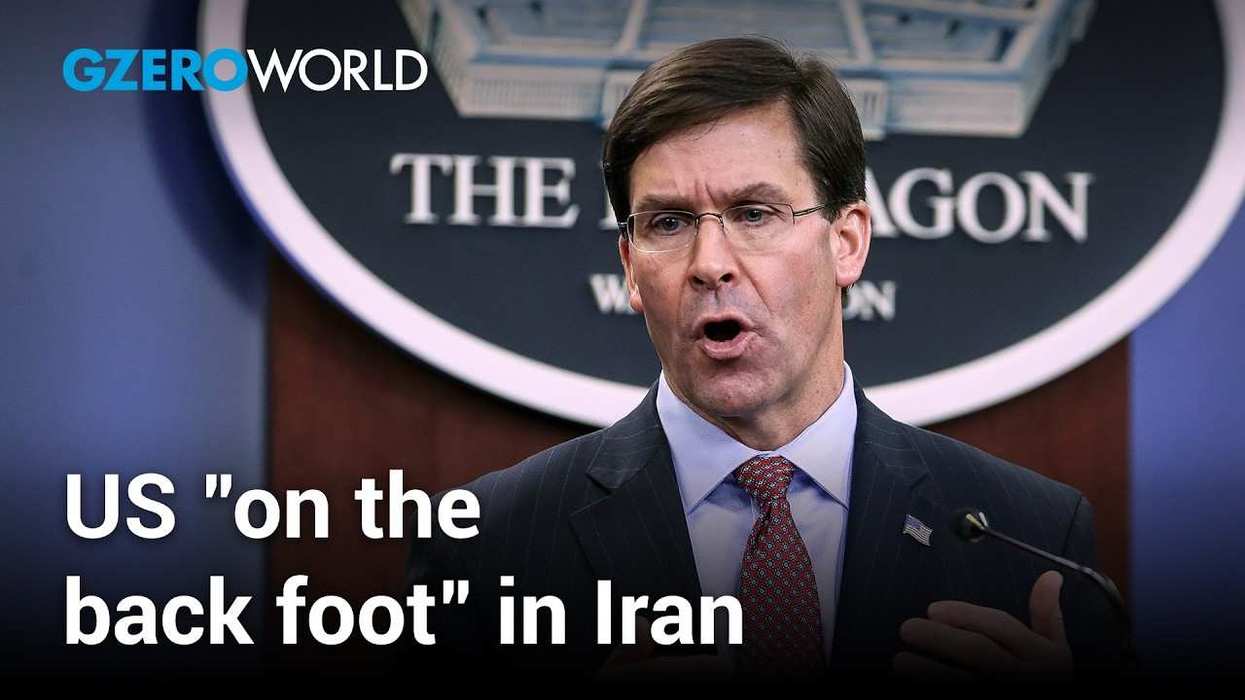
No "end date" for US troops in Syria – US Secretary of Defense Mark Esper said this week that the United States has completed its military pullback in northeastern Syria. Back in October, President Trump pledged to withdraw the roughly 1,000 American troops deployed there. Since then, some American troops have left Syria altogether, while others were redeployed to defend nearby oil fields from ISIS, as well as from Syrian government troops and Russia. Now, there are roughly 600 American troops dispersed around Syria, and the remainder have been deployed in Iraq to stave off a potential ISIS resurgence. It's not clear if any troops have returned to the US. When asked about the chaotic comings and goings of US troops in Syria in recent months, the commander of US Central Command said frankly: there's no "end date" for American troops stationed there.
Calamity for Syria's Kurds – President Trump's decision to give Ankara a green light to launch a military offensive against Syria's Kurds gave renewed resonance to the old adage "Kurds have no friends but the mountains." Both Russia and Turkey rushed to fill the vacuum left by the US withdrawal, with Turkey launching a sustained shelling campaign of Kurdish villages. A recent Turkish strike on a marketplace killed at least 10 civilians, mostly children. Around 160,000 Kurdish civilians have fled the area, with many escaping to other parts of Syria or making their way to refugee camps in Iraq.
But at the same time…The US has actually resumed some joint anti-ISIS missions with the Kurds, capturing and killing dozens of ISIS fighters in recent weeks. And that's a good thing: the US Defense Intelligence Agency recently warned that ISIS would exploit the collapse of the weakened US-Kurdish alliance to regroup in Syria.
What's Russia's role? Back in October, Russia agreed to help Turkey drive out Kurdish fighters from a "safe zone" along the Turkey-Syria border. The deal was a boon to Moscow, which quickly took over local US bases and expanded its influence. For now, Russia is using its warplanes to help the Assad regime reclaim territory in Idlib province – some of the last pockets of anti-Assad opposition. Writing in the Daily Beast, Middle-East based reporter Seth Frantzman aptly summed up Moscow's strategy: "Russia's real goal is not to end the war in Syria, but to sustain low-level confrontations where all sides become dependent on Moscow."