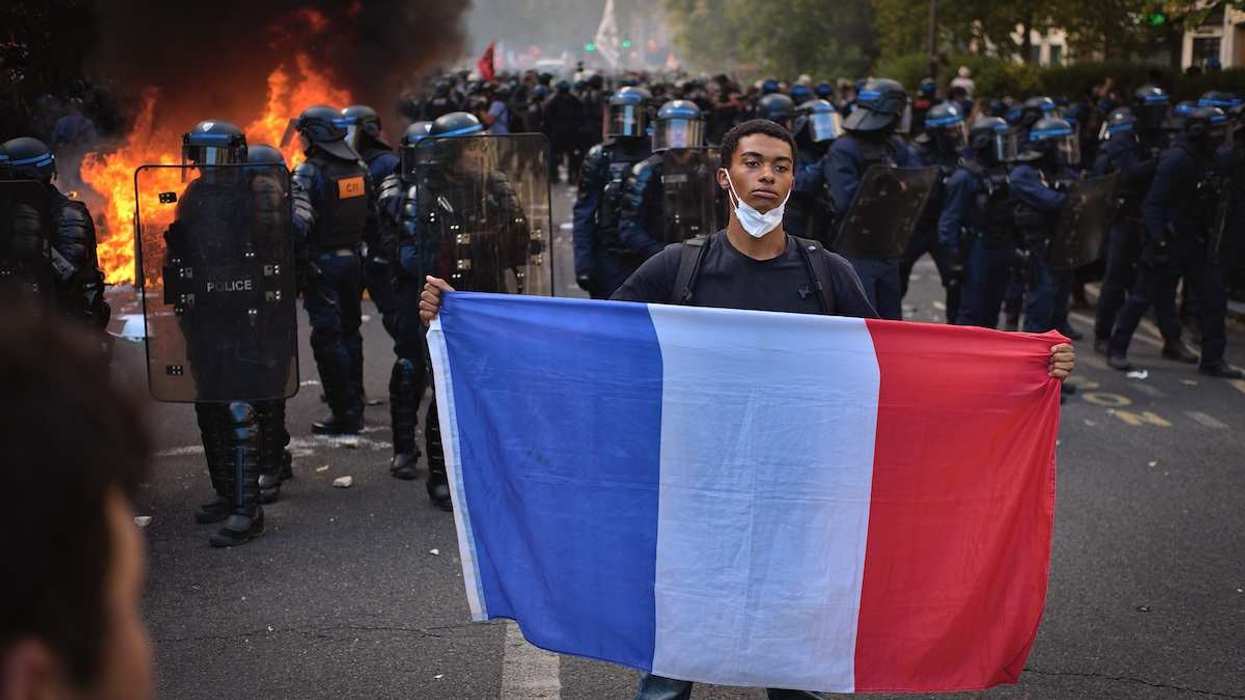
Whose job is it to keep an eye on the governments that kill, torture, and displace people? The officials who turn back asylum-seekers, abuse migrants, jail journalists, or smash the skulls of peaceful protesters?
That's more or less a day at the office for Michelle Bachelet. As the United Nations High Commissioner for Human Rights since 2018, the former two-time leftwing president of Chile is perhaps the most visible and influential voice on human rights in the world today.
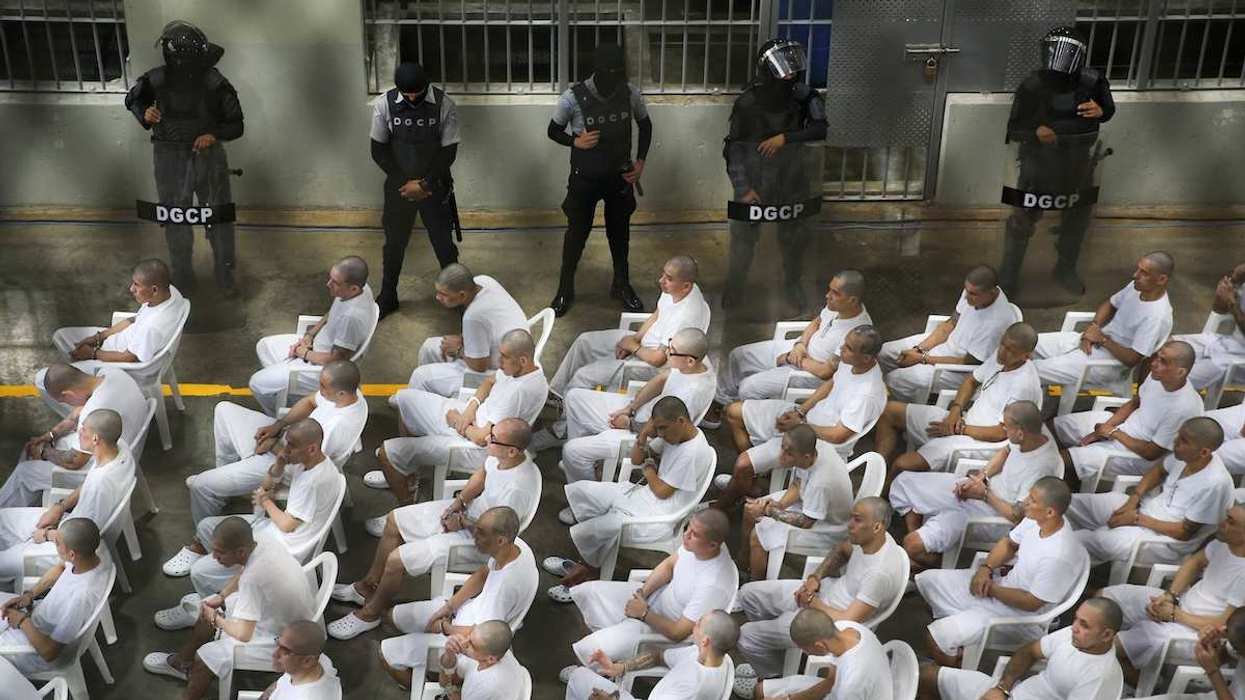
Calling out the the worst. As High Commissioner, her job is to promote and monitor governments' protection of universal human rights and freedoms, as laid out in UN declarations and international law. Unjust detention, torture, repression of journalists, and discrimination are just a few of the targets of her work.
Her office has issued searing reports on, among other things, horrific abuses in the Philippines under tough-guy President Rodrigo Duterte's "war on drugs" campaign; the surge in killings by Brazilian police under Brazil's gun-loving; far-right president Jair Bolsonaro, and the erosion of human rights under the current government of Sri Lanka, whose leaders themselves are implicated in crimes committed during the civil war that ended there in 2009.
One of Bachelet's most influential reports to date was issued in 2019, on the human rights and rule of law crisis in Venezuela under the regime of strongman President Nicolas Maduro. It was a tricky undertaking — Maduro himself had invited the investigation, perhaps believing that Bachelet's left-wing bonafides would make it possible to turn the report into an exculpatory propaganda coup for his regime. No such luck. The 19-page report detailed a raft of abuses right as the world was keenly watching the (now largely defunct) opposition movement of Juan Guaidó.
She brings a personal perspective to this work. Bachelet was a teenager in Chile when rightwing General Augusto Pinochet took power in a coup in 1973. Bachelet's father, an Air Force General who opposed Pinochet, was arrested and died in prison after being tortured. Two years later, Bachelet and her mother were jailed by Pinochet's henchmen and subjected to psychological abuse themselves.
They fled into exile. But after several years abroad, Bachelet returned to Chile to study medicine and work in the Chilean health ministry where she developed a reputation among Chileans as a compassionate fighter on behalf of those left behind in a country that, despite its economic successes, is also one of the most unequal in the world.
Her election as Chile's president in 2006 was a watershed. Not only was Bachelet the first woman president in Chile's history, she was also the first president from the left since the end of Pinochet's regime, and the first female president in Latin America elected on her own merits (Argentina's Isabel Perón and Cristina Kirchner are welcome to disagree if they like). And the fact that she is an agnostic leftwing mother of three — "all of the sins together" she likes to say — added to the sense of change in a Catholic country where gender role expectations are often archaic.
She did not always succeed during her two, non-contiguous, terms as president. Her plans for expanding education and infrastructure fell short of their goals, partly because of flawed political strategy, and partly because of resistance from an established business and political elite hostile to change. But she also took criticism from some of her own supporters for her decision to take a pragmatic, non-confrontational approach to dealing with the legacy of the dictatorship in a country that is still deeply divided over the past.
Does her current work have an effect? Critics say that the High Commissioner's office is a toothless body, good at pointing out problems but powerless to solve them. Most countries don't take kindly to having their abuses exposed. (Bolsonaro even reacted with a swipe at Bachelet's dead father.) And any immediate successes, like Venezuela quietly releasing several political prisoners on the eve of her report's publication, are both small and rare.
Meanwhile, the UN Security Council, one of the main audiences for her reports, is riven by geopolitical rivalries among the permanent members (China, Russia, the US, UK, and France), which often deadlock the ability to address human rights abuses.
But at a time when democracy and rule of law are suffering globally — both because of authoritarian impulses in democracies and more assertive strongmen in autocracies — it is important to simply say and prove: these people's rights are being abused, these people's freedoms are being curtailed, these things are happening right now.
Michelle Bachelet's power is, then, to act as the world's most powerful voice for the voiceless. And in 2021, there are a great many people still waiting to be heard.
This article is part of GZERO Media's Women in Power Series, profiling female leaders around the world who hold positions of decisive power and influence in global politics.
CORRECTION: An earlier version of this piece incorrectly stated that Eva Perón was president of Argentina, instead of Isabel. We regret the error.