Gold bust along the Egypt-Sudan border
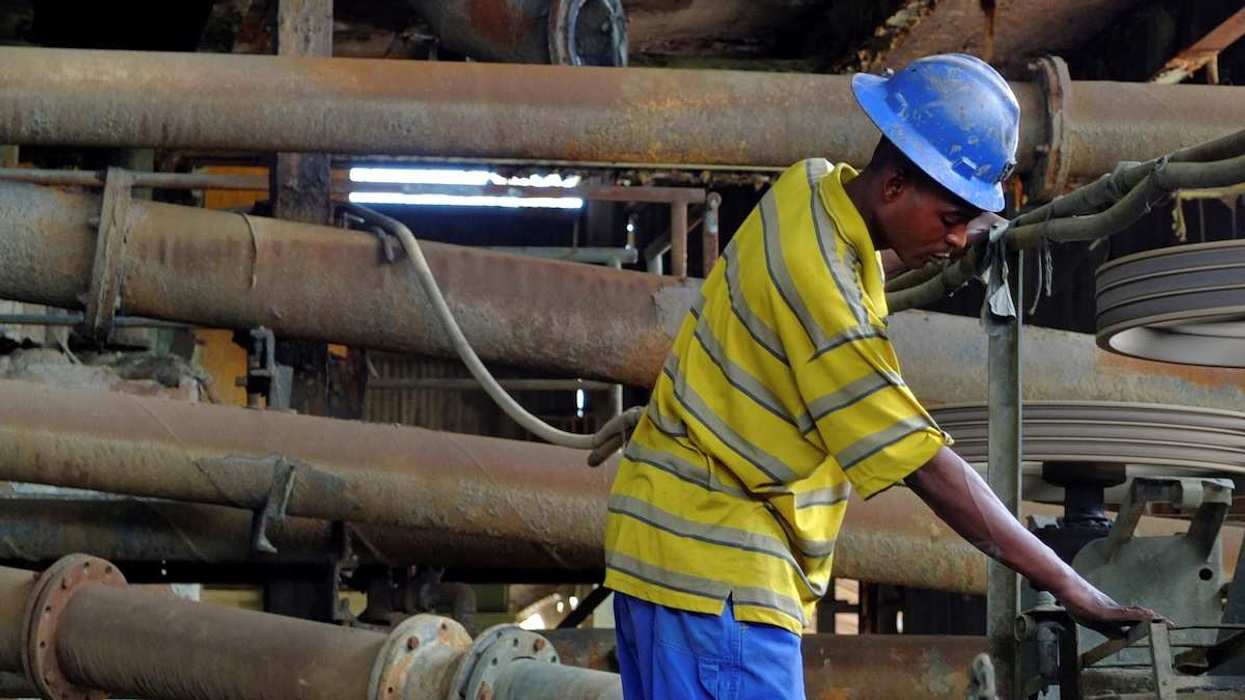
Egypt said on Monday it arrested more than 200 people along its southern border – most of them foreigners – as part of a crackdown on illegal gold mining and smuggling in the area. The border region is rich in mines: if you know the regional name “Nubia” you’re actually saying the ancient Egyptian word for gold: “nub.” These days illegal mining is rife, especially as war-wracked Sudan is unable to adequately police the industry on its side of the frontier. Gold accounts for some 70% of Sudan’s state revenue, but about half of all gold mined there leaves the country illegally. This has become a significant source of revenue for the rebel Rapid Support Forces (RSF) battling the Sudanese army. Although gold prices have fallen since reaching an all time high in January, they are still higher than in any six-month period in history.
Denmark’s center-left PM bets on taking a hardline immigration stance
Denmark’s Prime Minister, Mette Frederiksen, is promoting an initiative for the European Union to establish deportation centers outside the bloc by next year. In an interview with the Financial Times on Monday, Frederiksen said the idea is for centers outside the EU to host rejected asylum seekers who can’t be deported to their home countries. Frederiksen, a social democrat, has made waves for taking a hardline stance on immigration in a bid to counter the rise of the far-right in Denmark and elsewhere in Europe. The PM said that the effort, co-led by Italy, has received the backing of 19 EU countries, arguing for the relaxation of human rights standards in order to address irregular immigration. Frederiksen’s broader political wager is that Europe’s center-left can further their agendas by making concessions on immigration.
Human labor driving soccer’s AI revolution
This year’s World Cup is the most technologically advanced yet, with AI‑assisted refereeing, sensor‑enabled balls, and AI coaching tools. But the path to this innovation has been far more human powered than you might think. Every system FIFA uses depends on data annotation workers – people with deep soccer knowledge and sometimes players themselves – who label thousands of clips to train the algorithms. Many of these workers are based in cities in the Philippines, Egypt, India, and Ukraine, where annotating matches has become a popular side job for lower‑league players seeking extra income. But it’s not just FIFA who uses these workers: sports betting platforms also hire data collectors to attend small, non-broadcasted matches so their AI-driven algorithms can update instantly. As investment and analytics reshape global soccer, this hidden labor force largely in non-Western countries will continue to power the sport’s high tech future.