
Skip to content
Search

Latest Stories

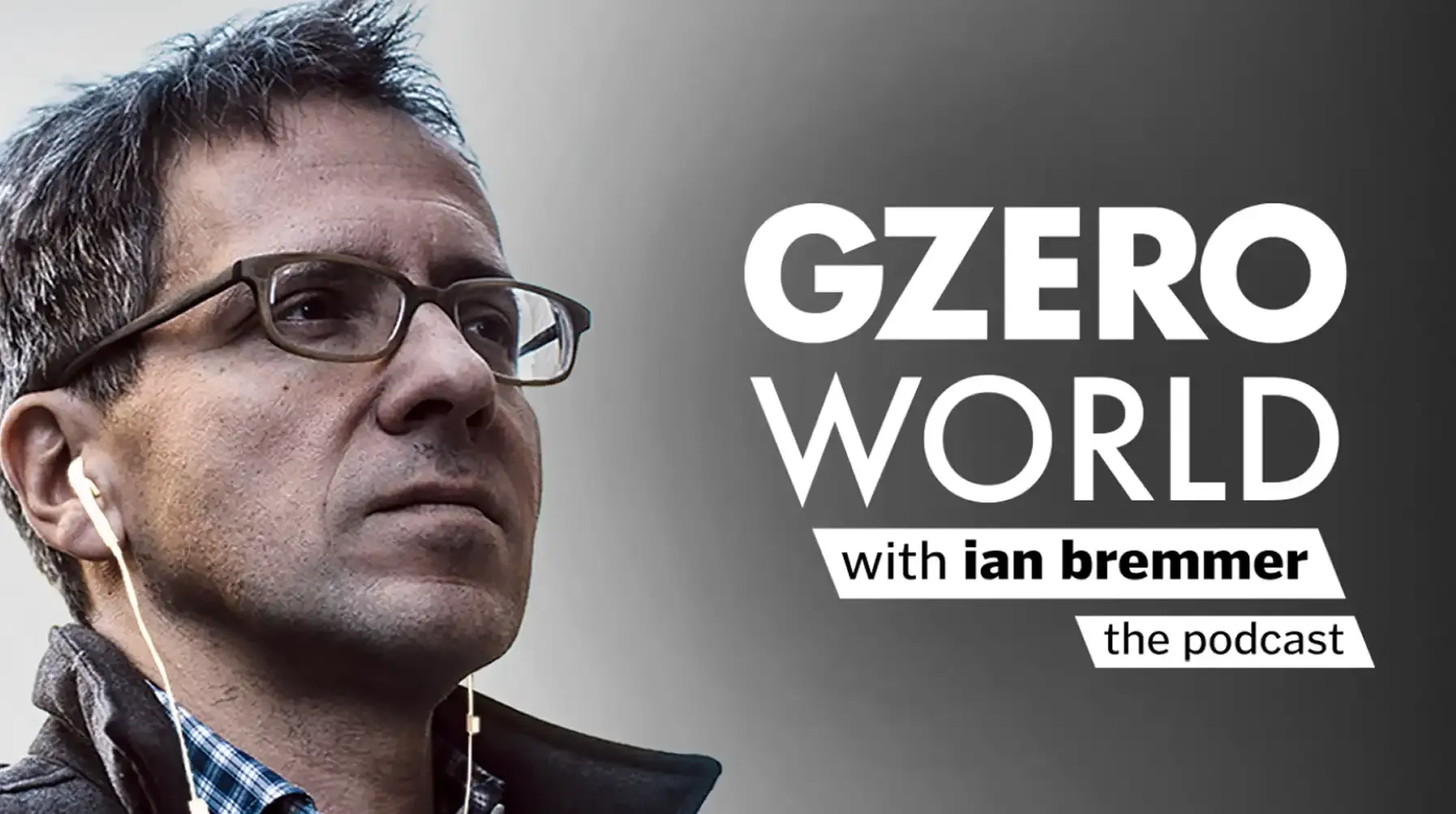
The United States will no longer play global policeman, and no one else wants the job. This is not a G-7 or a G-20 world. Welcome to the GZERO, a world made volatile by an intensifying international battle for power and influence. Every week on this podcast, Ian Bremmer will interview the world leaders and the thought leaders shaping our GZERO World.

Presented by

students protesting the Gaza war on a college campus and GZERO World with ian bremmer - the podcast

Why campus protests worsen divisions, and how to mediate: Advice from Eboo Patel

Listen: On this episode of the GZERO World Podcast with Ian Bremmer, Eboo Patel, founder of Interfaith America, advocates for cooperation over division on college campuses in response to protests, highlighting the need for civil discourse and pointing out that despite some instances of violence, most campuses engage in constructive dialogue.


Transcript

Listen: On this episode of the GZERO World Podcast with Ian Bremmer, Eboo Patel, founder of Interfaith America, advocates for cooperation over division on college campuses in response to protests, highlighting the need for civil discourse and pointing out that despite some instances of violence, most campuses engage in constructive dialogue.

Whether you are for or against the protests happening across the country, one thing is clear: They've caught the world's attention. Some have escalated into violence, as seen at UCLA, Texas, and Columbia University. On the podcast, Patel discusses his efforts on over 600 college campuses to foster unity. His central message: "Cooperation is better than division."


Patel emphasizes the need for universities to shift their focus from confrontation to cooperation, advocating for environments that promote civil discourse. He suggests initiatives such as teach-ins and dialogues to explore constructive solutions to complex issues. Patel criticizes the default mode of many universities. "I think the problem here, the thing that universities could control, which I think that they have gotten wrong in many cases over the course of the past five years, is the default mode has been set to confrontation, not cooperation."

While it may be challenging to find common ground, Patel highlights that the majority of college campuses have managed to engage in debates about the Israel-Gaza conflict without resorting to chaos or violence. He explains, "The media, for good reasons, covers planes that crash and not planes that land." This suggests that the instances of violence and chaos are outliers and that civil discourse is still prevalent on many campuses.

Subscribe to the GZERO World Podcast on Apple Podcasts, Spotify, or your preferred podcast platform, to receive new episodes as soon as they're published.
Next Page

More from GZERO World Podcast

Gaming out a US-Venezuela war with ambassador James Story

The Trump administration is ramping up pressure on Venezuela, with the USS Gerald R. Ford deployed to the region, CIA covert operations approved by the White House, and strikes on suspected narco‑trafficking vessels attributed to Caracas. Many analysts now see regime change as the ultimate goal. On the GZERO World Podcast, Ian Bremmer and former US Ambassador James Story game out what a US intervention in Venezuela might look like—and more importantly, how the US would manage the aftermath.

Keep reading...Show less

The Trump administration is ramping up pressure on Venezuela, with the USS Gerald R. Ford deployed to the region, CIA covert operations approved by [...]

More >

Andrew Ross Sorkin says the next financial crisis is coming

In 1929, unchecked speculation and economic hype helped fuel the worst financial crash in modern history. Nearly a century later, New York Times journalist and CNBC anchor Andrew Ross Sorkin sees troubling parallels. On the GZERO World podcast, he joins Ian Bremmer to talk about his new book, "1929: Inside the Greatest Crash in Wall Street History—and How It Shattered a Nation," and whether today’s economy is headed for another cliff.

Keep reading...Show less

In 1929, unchecked speculation and economic hype helped fuel the worst financial crash in modern history. Nearly a century later, New York Times [...]

More >

China has become an "engineering state," with Dan Wang

What can the US learn from the benefits–and perils–of China’s quest to engineer the future? Tech analyst and author Dan Wang joins Ian Bremmer on the GZERO World Podcast to discuss his new book "Breakneck," China’s infrastructure boom, and the future of the US-China relationship. Over the last two decades, China has transformed into what Wang calls an “engineering state,” marshaling near unlimited resources to build almost anything–roads, bridges, entire cities overnight. That investment has created astounding growth, but also domestic challenges and soaring debt.

Keep reading...Show less

What can the US learn from the benefits–and perils–of China’s quest to engineer the future? Tech analyst and author Dan Wang joins Ian Bremmer on the [...]

More >

The risks of reckless AI rollout with Tristan Harris

Transcript

Can we align AI with society’s best interests? Tristan Harris, co-founder of the Center for Humane Technology, joins Ian Bremmer on the GZERO World Podcast to discuss the risks to humanity and society as tech firms ignore safety and prioritize speed in the race to build more and more powerful AI models. AI is the most powerful technology humanity has ever built. It can cure disease, reinvent education, unlock scientific discovery. But there is a danger to rolling out new technologies en masse to society without understanding the possible risks. What if the way we deploy artificial intelligence, Harris argues, isn’t inevitable, but a choice?

Keep reading...Show less

TranscriptCan we align AI with society’s best interests? Tristan Harris, co-founder of the Center for Humane Technology, joins Ian Bremmer on the [...]

More >

GZERO Podcasts

The Trump administration is ramping up pressure on Venezuela, with the USS Gerald R. Ford deployed to the region, CIA covert operations approved by [...]

More >

Listen: What does global energy transition look like in a time of major geopolitical change, including rebalancing of trade? In this special episode [...]

More >

Listen: Creating artificial human retinas in zero gravity. Mining rare minerals on the moon. There seems to be no limit to what could be possible if [...]

More >

Nearly four years into Russia's invasion of Ukraine, the push to end the war is intensifying. The past few weeks produced not one but two proposals. [...]

More >

Transcript Listen: “The equivalent of what we spent in World War II was spent in the course of a year and a half to support the US economy, and that [...]

More >

Listen: Investing in health and science research isn’t just about curing diseases. It has huge impacts across society, from creating jobs to driving [...]

More >

Listen: As populations grow and communities evolve, transportation authorities and urban infrastructure are seeking ways to modernize.In this episode [...]

More >