Skip to content
Search

Latest Stories

Analysis

25 years on, is Putin unstoppable?

​Russian President Vladimir Putin takes part in a ceremony launching the construction of infrastructure objects via video link from a residence outside Moscow, Russia, March 14, 2024.

Russian President Vladimir Putin takes part in a ceremony launching the construction of infrastructure objects via video link from a residence outside Moscow, Russia, March 14, 2024.

Sputnik/Mikhail Metzel/Pool via REUTERS
Make us preferred on Google

Surprising zero people, Vladimir Putin on Sunday "won" his fifth term as Russia’s president.

The result was not close: Russia's electoral authorities say Putin took 87% of the vote with 77% turnout. A landslide was never in question, as Putin has systematically eliminated any opposition to his rule.

Putin has now ruled Russia for 25 years. When he first became president, no one had ever heard of "YouTube,” Italy’s economy was still bigger than China’s, and Britney Spears ruled the Billboard with “One More Time.” But now, a quarter of a century later, is Putin more powerful than ever?


Consider:

  • His economy has largely weathered sanctions and is humming again — on a war footing.
  • He faced down an insurrection from his own warlord protege last year.
  • He dispatched his most eloquent and charismatic critic to the grave.
  • The war in Ukraine wasn’t the four-day cakewalk to Kyiv he imagined, but Russia again has the upper hand in a grinding war of attrition as Ukraine scrambles to find more military aid.
  • The Putin-curious Donald Trump leads the polls ahead of this fall’s US presidential election.

To be clear, there are plenty of reasons to believe that Russia is a long-term loser as a result of Putin’s decision to invade Ukraine. Willis Sparks recently outlined them here.

And Russia today is a far cry from the booming country of 2006-2012 that was pumping oil at $120 a barrel and winning bids for the World Cup and the Olympics while Putin gallivanted around on a horse, in an F1 car, or in a giant Siberian crane disguise.

But Vladimir Vladimirovich Putin currently has virtually unfettered control over the economy, society, and war machine of a nuclear superpower. The big question now is what he’ll do with that power next, and who might stand in his way.


More For You

Demonstrators participate in a nationwide protest against data centers, in Fredericksburg, Virginia, U.S., July 18, 2026.

Demonstrators participate in a nationwide protest against data centers, in Fredericksburg, Virginia, U.S., July 18, 2026.

REUTERS/Evelyn Hockstein
In 2019, GZERO reported on a brewing backlash against AI’s facial recognition and surveillance capabilities. Seven years later, opposition to the technology, which has advanced dramatically since then, is intensifying. A survey of more than 18,000 people in 15 countries found that over one-third ranked AI development among their top concerns over [...]
A man holds up a Venezuelan flag in front of the sun.

A man holds up a Venezuelan flag while taking part in a march calling for amnesty for political prisoners and to mark Youth Day, in Caracas, Venezuela, February 12, 2026.

REUTERS/Maxwell Briceno
Since last weekend, Washington’s tutelage over Venezuela’s regime after the capture of autocrat Nicolás Maduro in January produced its clearest step yet toward an actual democratic transition: a US-brokered negotiation between the government and a slice of the opposition, opening what could be the first credible path to competitive elections in [...]
Small countries are betting big on AI data centers
Last month, Trinidad and Tobago signed agreements with American tech companies paving the way for them to build data centers in the island nation — the first deal of its kind in the Caribbean. Government officials hailed it as a transformational investment that could position the nation of just 1.5 million at the forefront of the AI boom. But not [...]
Dozens of migrants celebrate having crossed the border between Ceuta and Morocco in Madrid, Spain on July 31, 2026

Dozens of migrants celebrate having crossed the border between Ceuta and Morocco in Madrid, Spain on July 31, 2026, as thousands entered the autonomous city by swimming and on foot, skirting the breakwater that separates Ceuta from Morocco, while border control units recovered the bodies of 16 people in the last 24 hours, bringing the total number of foreign nationals found dead in Ceuta’s waters this year to 47.

Marcos Moreno/Europa Press/ABACAPRESS.COM
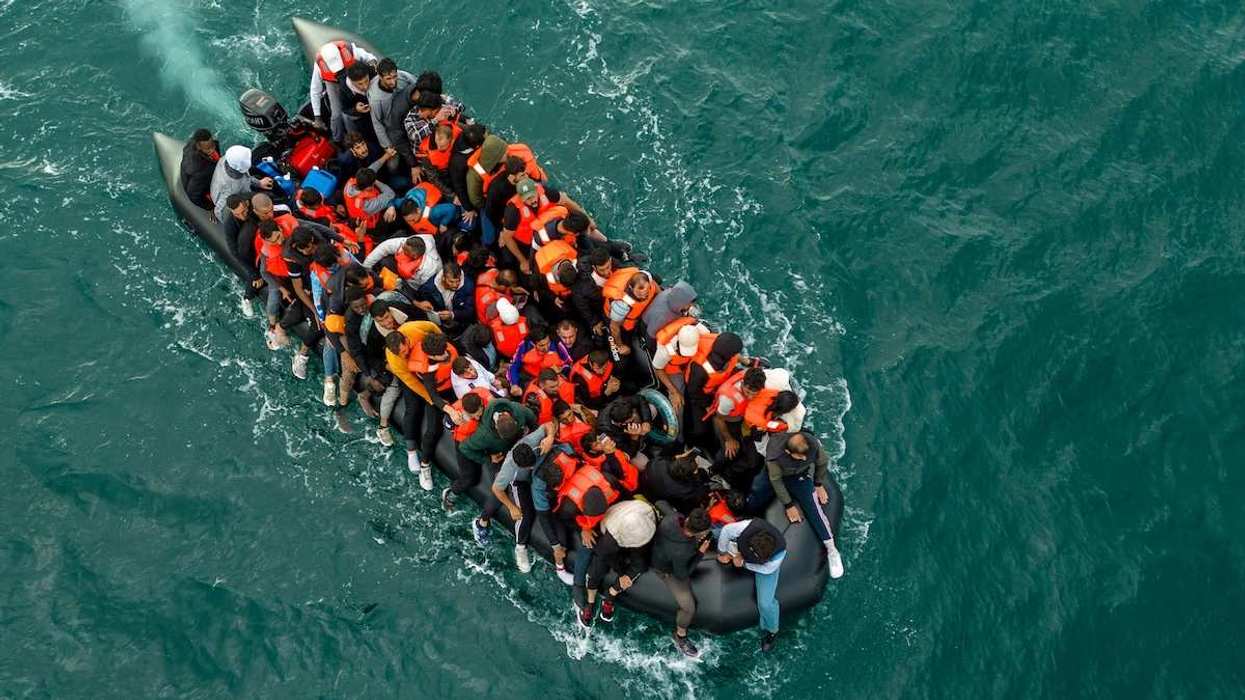
The images were striking: Last week’s chaotic sea crossing saw an estimated 60,000 migrants from Morocco flood into the tiny Spanish exclave of Ceuta in North Africa, swimming around seawalls and climbing over fences. At least 72 people lost their lives, according to Spain. The unprecedented surge stunned European governments and prompted EU [...]