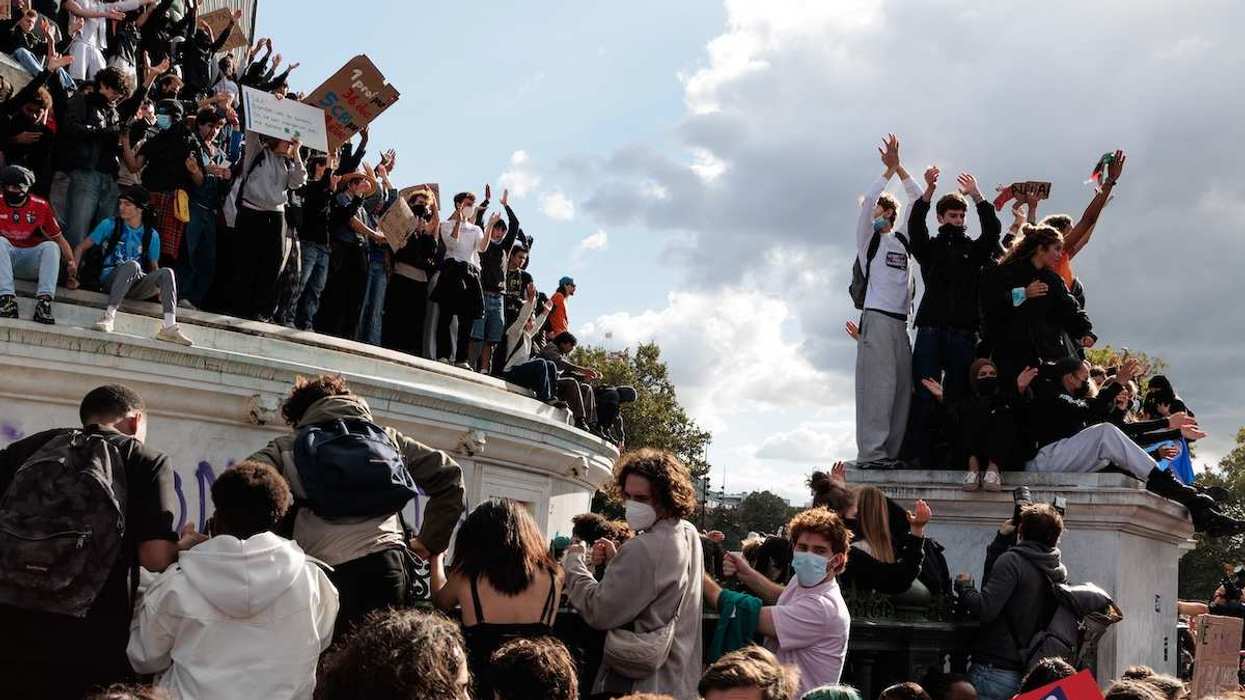
Earlier this week, thousands of people flooded the streets in Bangladesh’s capital of Dhaka to mark the one-year anniversary of a student-led protest movement that brought an end to 15 years of rule under former Prime Minister Sheikh Hasina and her political party, the Awami League. Hasina, who fled to India last August, had been accused of increasingly arbitrary and authoritarian rule.
The anniversary celebrations culminated with a nationally televised address by Bangladesh’s current caretaker leader, Nobel Peace Prize winner Muhammad Yunus, who pledged to honor the spirit of the protests by working towards an orderly and inclusive democracy in the densely-populated country of 175 million.
But one year on, that path remains rocky.
“There are many that are disappointed, particularly students,” says Meenakshi Ganguly, deputy Asia director at Human Rights Watch, “The pledges for reform have taken much longer than we had earlier thought.”
While the climate of fear under Hasina has lifted, Bangladesh still faces challenges from security forces with a controversial human rights record, the rising influence of Islamist hardliners, and deeply entrenched political and communal divisions.
So why has reform stalled in Bangladesh? From the outset, Yunus faced an uphill battle. Under Hasina’s rule, Bangladesh’s key institutions – from the judiciary and civil service to the military and economy – were politicized and abused.
“[He’s] basically facing the challenges of putting a country back together after 15 years and increasingly autocratic rule,” says Jon F. Danilowicz, the former deputy chief of mission at the US embassy in Dhaka. “The system is overwhelmed.”
And although Yunus set up no fewer than 11 commissions to propose legal and constitutional reforms, political infighting has stalled progress at nearly every turn.
“Whatever change they’re hoping for hasn’t really happened that much,” says Joshua Kurlantzick, senior fellow for South Asia and Southeast Asia at the Council of Foreign Relations. “Yunus tried to get all these reforms, but the political parties wouldn’t agree.”
Yunus, after all, is the unelected head of an interim government that lacks a popular mandate to push through difficult reforms or unify the country’s fractured political class.
While conditions have improved overall since the Awami League’s exit, the failure to bring needed reforms to the military and police has enabled Hasina-era abuses to resurface.
Mob violence, political unrest, and Islamist attacks targeting women, LGBT communities, and religious minorities have escalated sharply, while rights groups have accused the interim government of using arbitrary detentions to target its political opponents.
But experts stress that the current government still marks a significant departure from its predecessor.
“When there’s a charge that this government is acting just like its predecessor, I’d say that in this government, you have good people who sometimes do bad things,” says Danilowicz. “In the past government, you’ve had a lot of bad people who consistently did bad things.”
What’s next for Bangladesh’s fragile democracy? With national elections slated for February, Bangladesh stands at a crossroads. The incoming government will inherit the same hopes for change and challenges of reform as the interim one.
The Bangladesh Nationalist Party, the traditional rival of Hasina’s Awami League, is positioning itself for a comeback, but it faces challenges from the country’s largest Islamist party, Jamaat-e-Islami, as well as the student-led National Citizen Party (NCP), which was born out of last year’s protests.
Still, Danilowicz maintains a positive outlook.
“I’m still hopefully optimistic that the Bangladeshi people may take advantage of this opportunity and not squander it as they have in the past,” he says. “The spirit [of the protests] still exists… there is a group of empowered young people who don’t want to see the country move backwards.”