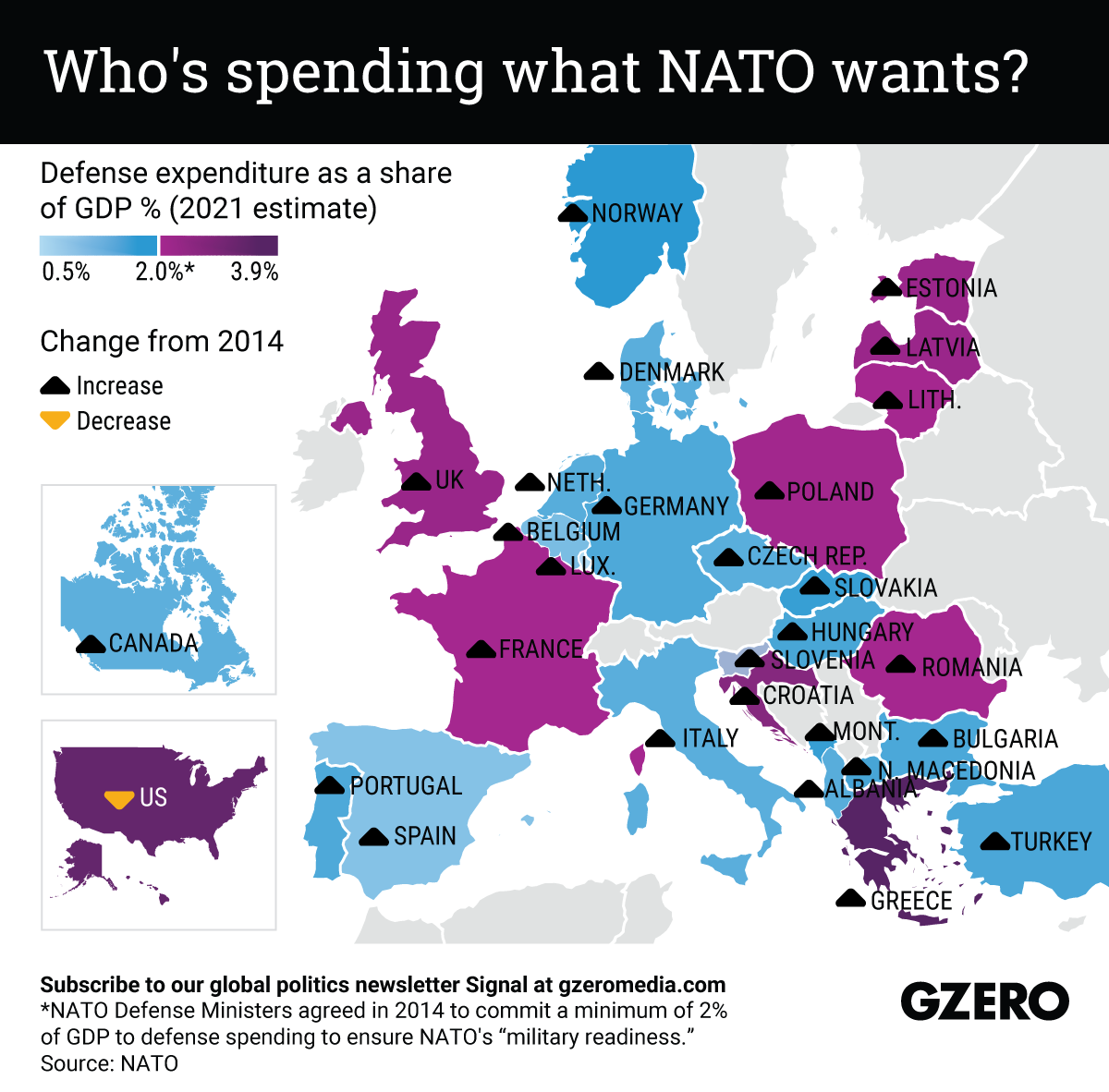
In 2017, then-US President Trump rallied against NATO, complaining that European member states weren't pulling their weight to bolster the alliance, whose cornerstone is that an attack on one member is considered an attack on all. NATO was formed in the wake of World War II as a counterweight against Soviet dominance in Europe and beyond. But this week, when US President Biden met fellow NATO members in the UK, the emphasis was on how to adapt the alliance to counter China's increasing belligerence. Indeed, disagreements over sharing the cost of maintaining military readiness have caused frictions in recent years, and as a result, the bloc agreed that all member states would spend at least 2 percent of GDP on defense by 2024. So, how are they tracking? Here's a look at who pays what.