Skip to content
Search

Latest Stories

Women take center stage in Mexican politics

Former Mexico City Mayor Claudia Sheinbaum gestures on the day of the announcement of the results of an internal national polling which declared Sheinbaum as the presidential candidate, in Mexico City, Mexico September 6, 2023.

Former Mexico City Mayor Claudia Sheinbaum gestures on the day of the announcement of the results of an internal national polling which declared Sheinbaum as the presidential candidate, in Mexico City, Mexico September 6, 2023.

REUTERS/Raquel Cunha

By this time next year, Mexico is almost certain to have its first-ever woman president. Former Mexico City Mayor Claudia Sheinbaum clinched the presidential nomination of the ruling Morena party this week, setting up a contest against charismatic opposition Senator Xochitl Galvez in 2024.

The news comes among a series of victories for Mexico’s feminist movement in recent years, most recently highlighted in the Supreme Court’s decriminalization of abortion nationwide.


In 2019, Mexico’s legislature passed bills requiring a 50-50 gender parity in both houses of Congress, in top posts in the executive and judicial branches and on party candidate lists. No legislator voted against the package.

Since the requirements went into force in 2021, Mexico has become one of just six countries — and the only one besides New Zealand, which holds competitive elections — where women hold at least half of the seats in the national legislature. Ten years ago, women held only 33% of the Senate and 36% of the lower house in Mexico. What’s more, data from UN Women shows that one out of every four women who hold local elected office in Latin America are now in Mexico, where women make up 47% of local officials.

But progress on the political stage has not necessarily trickled into the lives of ordinary women in Mexico. Every day, an average of 10 women and girls are killed in an epidemic of femicide that is just one facet of Mexico’s problems with violence and insecurity. Women also earn about 14% less than men for the same work on average, with the majority living on less than $18 a day.

And even within the halls of power, top leadership positions on congressional committees and within political parties are still heavily dominated by men, according to Eurasia Group Mexico analyst Matias Gomez Leautaud.

“Both Sheinbaum and Galvez will struggle as female candidates with the same problem, which is that the male leadership of their own parties will try to impose their own themes and agenda on them,” he said. “And both of their successes will rely on how they thread this pressure from within while constructing an independent narrative, team, and agenda.”

More For You

What is Trump's exit strategy from Iran?
- YouTube
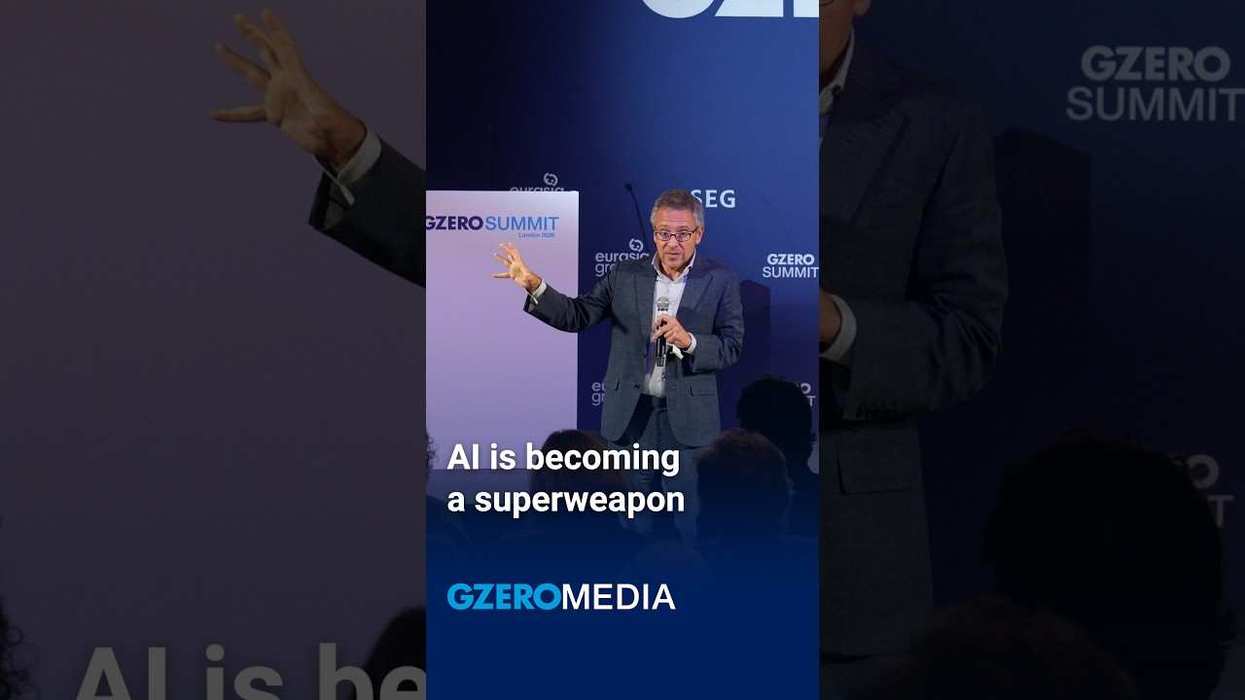
In this "ask ian," Ian Bremmer explains why the Trump administration may be looking for a way out of the US–Israel war with Iran, even as Israel appears determined to keep fighting.“The easiest way to declare victory is to narrow the war aims,” Ian says, pointing to US goals like destroying Iran’s navy and ballistic missile capabilities.But Israel [...]
Last week, Microsoft, Europol, and industry partners took coordinated action to disrupt Tycoon 2FA, a major phishing‑as‑a‑service operation designed to bypass multifactor authentication. Active since 2023, the service fueled large‑scale online impersonation, enabling fraud, data theft, and disruptions across sectors, including healthcare and [...]
Sanae Takaichi announces running for presidential election of the LDP

Sanae Takaichi announces running for presidential election of the LDP

Aflo via Reuters
Japan strikes rare earths deal with largest non-Chinese producerAustralian mining giant Lynas will sell rare earths to Japan for 12 years in a major pact meant to chip away at China’s dominance of the global market. The highlight of the deal is that it sets a minimum price of $110 per kilogram of the minerals. That is the same “price floor” that [...]
​A woman cries as she visits of a war memorial site near the Iraqi border, 1,365 km (854 miles) southwest of Tehran in Khoozestan province, March 16, 2009.

A woman cries as she visits of a war memorial site near the Iraqi border, 1,365 km (854 miles) southwest of Tehran in Khoozestan province, March 16, 2009.

REUTERS/Morteza Nikoubazl
As missiles rain down on the Middle East, concerns about a humanitarian emergency are beginning to mount.Hundreds of thousands of people have already been displaced by fighting in Iran and Lebanon, setting in motion what could become yet another major refugee crisis in the region. The European Union’s asylum agency warned that a displacement of [...]