
Skip to content
Search

Latest Stories

Puppet Regime is up for a Webby Award!   VOTE HERE
Europe

Hard Numbers: Uganda charges gay men, EU Ukraine aid hiccup, Amhara death toll, brain food in Australia

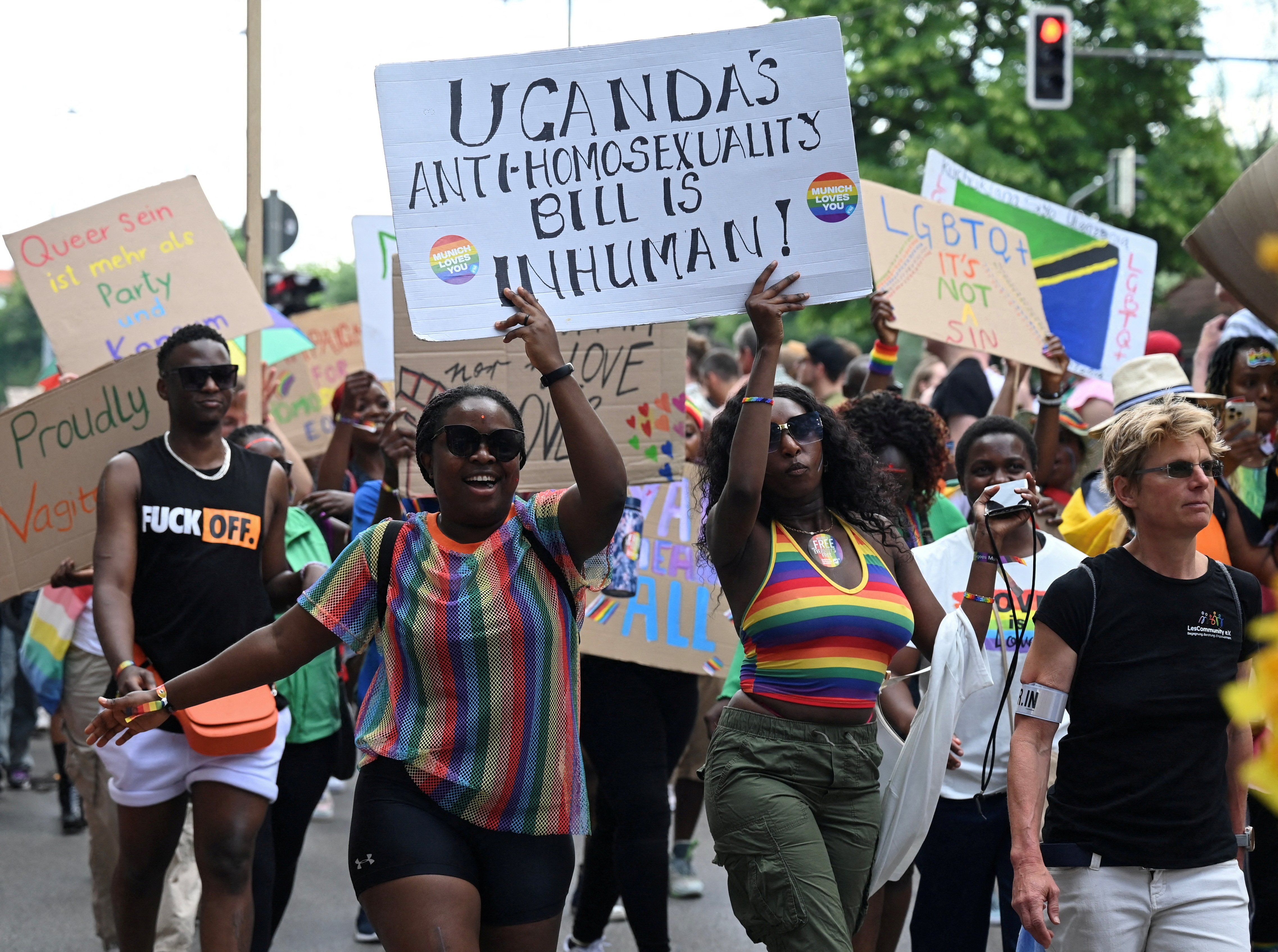
​Protesters from the LGBTQ+ community demonstrate against Uganda's anti-homosexuality law in Munich.

Protesters from the LGBTQ+ community demonstrate against Uganda's anti-homosexuality law in Munich.

REUTERS/Fariha Farooqui

2: Two Ugandan men could face the death penalty after being charged with “aggravated homosexuality” under the country’s new anti-gay law. The legislation calls for life imprisonment for same-sex intercourse and the death penalty for “aggravated” cases, which involve sex with people who are underage, disabled, or elderly. Read about LGBTQ rights around the globe here.

183: At least 183 people have been killed in recent clashes between Ethiopian federal troops and local militias from the Amhara region, who say the government has tried to undermine Amhara’s security and autonomy following the recent war in the neighboring region of Tigray. Read more here.


86 billion: An €86 billion EU spending package is in peril because it includes additional aid for Ukraine, which some member states are reluctant to approve amid their own economic and fiscal struggles. After a year and a half of war, with no clear end in sight, the fate of the fiscal request will be a bellwether for broader EU support for Kyiv.

8: In a world first, surgeons in Australia removed an 8cm long worm known as Ophidascaris robertsi from the brain of a woman who had complained of memory loss and depression. This specific parasite had previously been found only in pythons, large numbers of which happen to live near the woman’s home. Scientists say instances of animal-to-human transmission of diseases and parasites are increasing as human and animal habitats increasingly overlap.


More For You

​A woman shows her ink-marked finger after casting her ballot at a polling station during the Assam Legislative Assembly election in Nagaon District, Assam, India, on April 9, 2026.

A woman shows her ink-marked finger after casting her ballot at a polling station during the Assam Legislative Assembly election in Nagaon District, Assam, India, on April 9, 2026.

Photo by Anuwar Hazarika/NurPhoto
Can India’s Modi make inroads in unfriendly territory?More than 50 million voters in India’s states of Assam and Kerala, along with the federally-administered territory of Puducherry, head to the polls today in regional elections. Prime Minister Narendra Modi’s Hindu nationalist Bharatiya Janata Party (BJP) will be hoping for a change of fortune [...]
The revenue generated by Russia’s main oil tax in April amid the Iran war, per Reuters calculations. The amount is double last month’s revenue, and up by 10% from this time last year.

The revenue generated by Russia’s main oil tax in April amid the Iran war, per Reuters calculations. The amount is double last month’s revenue, and up by 10% from this time last year.

Natalie Johnson
The Iran war has pushed Brent crude prices to $100 per barrel, up from around $70 before the conflict began. One of the main beneficiaries was a country not fighting in the war: Russia. The Kremlin relies heavily on its oil and gas exports, which account for between 30% and 50% of the government’s budget. As such, the global surge in prices has [...]
​Viktor Orban and Peter Magyar

Viktor Orban and Peter Magyar

Miguel Saenz-Flores
For sixteen years, Prime Minister Viktor Orban has won every fight: four consecutive parliamentary supermajorities for his party, Fidesz; a constitution rewritten to his specifications; courts, media, and oligarchs brought to heel. He turned Hungary into what scholars politely call an "electoral autocracy" and what his critics less politely call a [...]
How Viktor Orbán went from pro-democratic dissident to authoritarian strongman
- YouTube
Viktor Orbán started his political life as a pro-democracy liberalist, according to Chairman of the Centre for Liberal Strategies Ivan Krastev. Orbán first made history in 1989 by demanding Soviet troops leave Hungary. What happened next, Ivan Krastev argues, was a genuine ideological transformation. "I do believe he internalized his own [...]