Into the flurry of activity in New York this week stepped Syrian President Ahmed Al-Sharaa, on his first-ever trip to the United Nations - and it was quite the diplomatic coup.
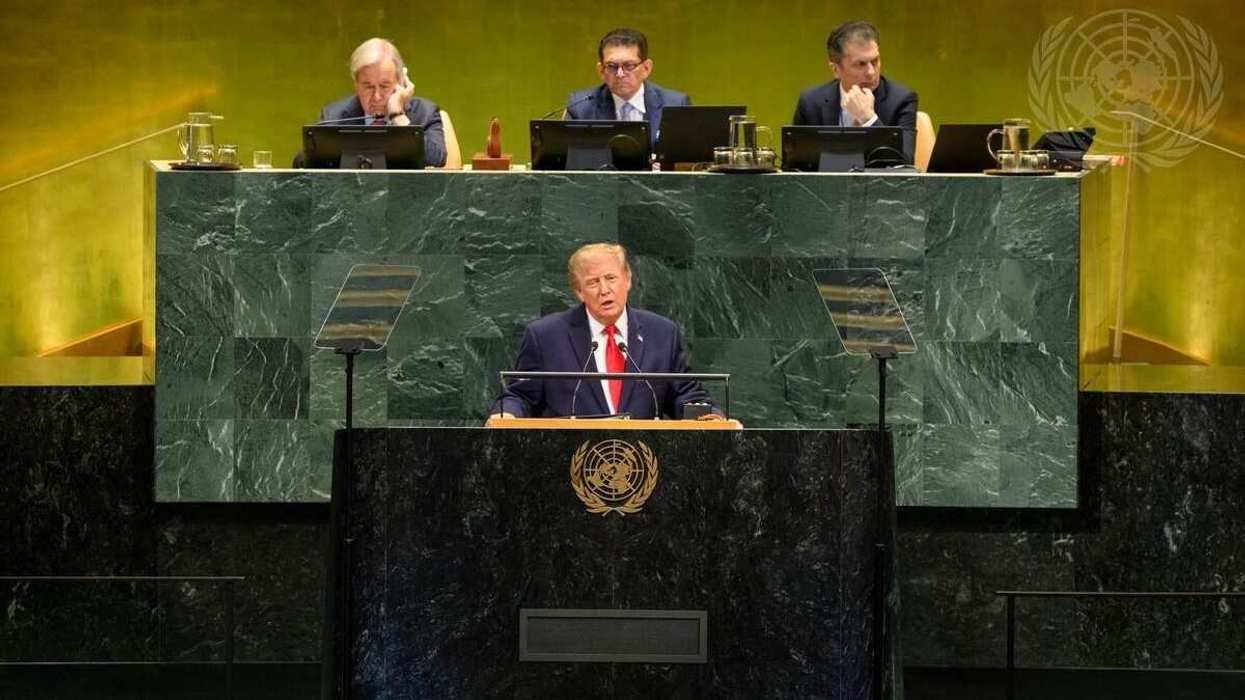
Al-Sharaa’s address to the UN General Assembly is the first by a Syrian leader since 1967. But it is all the more remarkable because Al-Sharaa – then known as Abu Mohammad al-Julani - spent 2006–2011 in US custody, during the Iraq war led by Gen. David Petraeus. Washington subsequently designated his Hayat Tahrir al-Sham (HTS) movement a Foreign Terrorist Organization in 2018, and only revoked that designation in July 2025. During much of the intervening time, there was a $10m bounty on al-Sharaa.
How things have changed since Al-Sharaa and his forces ousted former Syrian dictator President Bashar al-Assad last December. Assad’s fall was seen as a major blow to Iran, and despite Al-Sharaa’s history of extremism, the US administration cautiously began crafting a new relationship with Damascus.
The start of a beautiful friendship?
That relationship is now a full-on bromance. On his arrival in New York, Al-Sharaa sat down for a fireside chat with Petraeus, who told the audience, “His trajectory from insurgent leader to head of state has been one of the most dramatic political transformations in recent Middle Eastern history.” Al-Sharaa then met with US Secretary of State Marco Rubio (who had tweeted the $10 million reward in 2017) to discuss "US priorities" in Syria, including counterterrorism efforts, efforts to locate missing Americans, and the importance of Israel-Syria relations in regional security.
It’s a remarkable evolution. When asked whether Syria would join the Abraham Accords, which normalized relations between Israel, Bahrain and the UAE in 2020, however, Al-Sharaa demurred, saying “Syria is different, as those that are part of the Abraham Accords are not Israel’s neighbors. Syria has been subjected to more than 1,000 Israeli raids, strikes and incursions from the Golan Heights into Syria.”
Syria’s relations with the West have still evolved massively - and could go further. According to Ibrahim Al-Assil, Syria Project Lead at the Atlantic Council, “Syria’s movement toward joining the anti-ISIS coalition (a group of 89 nations formed in 2014 to destroy DAESH) would be a milestone, signaling Damascus’ shift from being seen as a disruptor under Assad to positioning itself as part of a constructive international coalition.”
Challenges for democracy at home
While Syria’s international posture is bringing it close to the West, the domestic story is more complex. Last weekend, Syrian authorities announced October 5 for the country’s first national elections since last year’s coup – sort of.
Instead of all citizens voting directly, Syria’s 210-seat People’s Assembly will be chosen by an electoral college and the President himself. In June, Al-Sharaa appointed a committee which in turn appointed subcommittees in 62 electoral districts. Each subcommittee selected 30-50 delegates, based on population size, for a total of roughly 7,000 “voters.”
Members seeking election have a week to campaign for one of 121 seats in the People's Assembly — but no parties are permitted, and campaigning is a private affair among the 7000 electoral college members only. The remainder of the 210 seats, nearly a majority, will be directly named by Al-Sharaa. He defends that move by claiming his appointees will “balance” existing representation and include more technocrats, though some feel it may turn the Assembly into a rubber-stamp body controlled by the executive.
Why this complex process, instead of direct democracy? According to a statement by the Syrian government at the end of June, "The reality in Syria does not permit the holding of traditional elections, given the presence of millions of internally and externally displaced persons, the absence of official documents [and] the fragility of the legal structure.”
Civil society groups disagree. A statement from 15 organizations warns that Al-Sharaa’s plan paves the way for "the executive authority to dominate an institution that should be independent of it and reflect the popular will."
Officials have floated a 30-month horizon for this temporary arrangement, but it remains to be seen whether Al-Sharaa will transition to true elections at that time.
There are also storm clouds in the Druze and Kurdish parts of the country. There, the pseudo-elections for nineteen local seats have been put “on hold”, ostensibly for security reasons. The government does not exercise local control there, and it’s not clear when local delegate selection might happen.
Tensions with Kurdish leadership in turn impact Damascus’ relationship with the Republic of Türkiye, where a large Kurdish refugee population lives and wishes to return to Syria. According to Ibrahim, avoiding military confrontation is key, as “Any bloodshed would deepen the rift and could irreversibly push the two sides apart.” We’ll see if Al-Sharaa can exercise as much diplomacy at home as he does abroad.