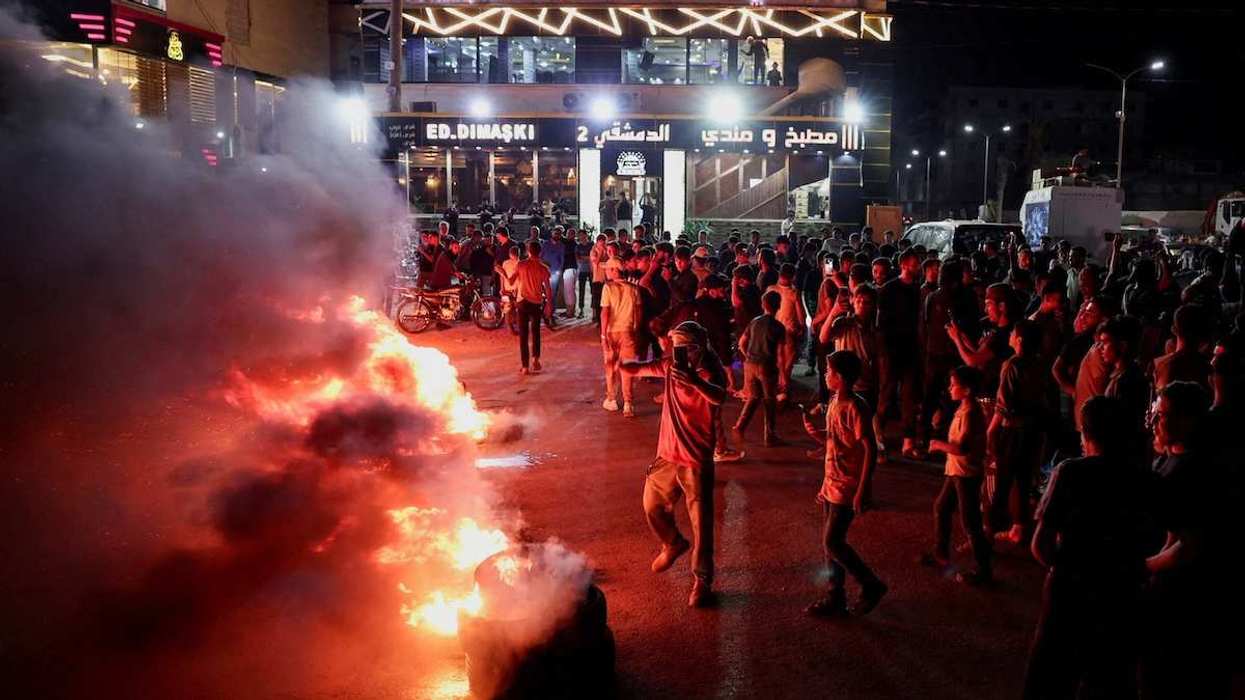
Ugandans go to the polls tomorrow in an election where President Yoweri Museveni is widely expected to be reelected, as authorities crack down on political dissent. On Saturday, soldiers fanned out across the capital of Kampala, to counter unspecified “threats of violence.” On Tuesday, authorities shut down the internet, citing misinformation, fraud, and the risk of unrest. The UN human rights office said hundreds of activists have been detained and journalists have been muzzled.
The moment is rife with historical irony. After taking power in 1986 in the wake of the bloody rule of Idi Amin, then 42-year-old Museveni warned against African leaders who “overstayed” their welcome. He was once considered to be among a “new breed” of leaders replacing postcolonial leaders on the continent. But today at age 81, Museveni is Africa’s third-longest ruling head of state, and seeking his seventh consecutive term.
Opposition parties argue Museveni seeks to intimidate voters and suppress protests should results be disputed, as they were in 2021. That year, Museveni’s share of the vote hit a historic low of 58%, compared with 35% for his chief rival, 43-year-old entertainer-turned-politician Robert Kyagulanyi Ssentamu, better known as Bobi Wine. The two men are squaring off again, pitting Museveni’s promise of stability against a growing appetite for change.
Museveni: four decades in office — and going for more. Museveni’s tenure has been marked by stability and growth. Under the first decade of his administration, Uganda’s economy grew by an average annual rate of 6%, primary school enrolment doubled and HIV levels declined, due to an anti-Aids campaign that Museveni personally championed.
However, he has also been accused of corruption, cronyism, and of manipulating the law to extend his rule. In 2005, Uganda’s parliament scrapped term limits through constitutional changes – a move critics said was aimed at allowing Museveni to cement his rule for life. Now his son, General Muhoozi Kainerugaba, has openly said he expects to succeed his father as president. Still, Museveni maintains strong support in the south of the country, among older Ugandans and the military.
Long tenures like Museveni’s are a recurring feature across Africa, where a number of leaders have clung to power for decades despite young populations itching for change and a distaste for one-man rule.
A friend of the West, again? Despite concerns over his human rights record, Museveni courted support from the United States, France, and other nations in the European Union by sending troops to conflicts in Somalia and South Sudan, and accommodating over two million refugees – the largest in the refugee population on the continent. But relations soured with the US during the Biden administration after Uganda passed the Anti-Homosexuality Act – one of the harshest anti-LGBTQ laws in the world – prompting Washington to cut the country’s access to a tariff-free trade program. In 2025, the US allowed the program, the African Growth and Opportunity Act (AGOA), to expire – leaving Ugandans, and other African countries without duty-free access to the US market.
This summer, however, Kampala struck a deal with Washington to temporarily accept a number of asylum seekers from the US. In return, Uganda will receive $1.7 billion in funding for its health sector over the next five years – part of the Trump administration’s larger effort to remake foreign assistance after shuttering USAID.
Who’s challenging Museveni? Bobi Wine has become the face of Uganda’s young, restless, urban electorate. He represents a generational and political contrast to Museveni in a country where 70% of the population is under 30. Wine is campaigning on a platform of fighting corruption and expanding opportunities for young people, 42% of whom are not working, studying, or training.
He is also urging Ugandans to “protect the vote,” reflecting widespread fears of manipulation. Wine’s supporters claim security forces have harassed, beaten, and detained activists throughout the campaign. Wine himself has campaigned wearing a bullet proof vest and a ballistic helmet, and said he has been attacked at rallies. In the past, he has been arrested, jailed and charged with treason, though the charges were later dropped.
Despite his profile, Wine has been unable to unite the opposition: five other candidates will split the vote, making a defeat of Museveni unlikely.
Great powers aren’t pushing for change. The US, Russia and China all have interest in Uganda’s continued stability. Washington considers Museveni a security ally because of his cooperation on regional peacekeeping and counterterrorism. Russia and China, meanwhile, have cultivated their own ties with Museveni. Uganda is a major buyer of Russian military equipment, and Moscow has given the country substantial aid– $3 million in military equipment last April, $53 million in October, and $100 million in 2024, roughly one-tenth of the country’s defense budget. China has poured money into Uganda’s energy sector, building two hydroelectric dams and investing more than $4.7 billion in its oil industry, which is due to begin commercial crude production this year. Uganda has also signed nuclear power cooperation agreements with both countries.
Continuity will likely prevail in Uganda’s election tomorrow, but Museveni must eventually leave office – due to age, death, or electoral defeat. How Uganda – and other nations – navigates the end of his rule will define the country’s future.