Skip to content
Search

Latest Stories

What We're Watching

Has the world made progress in tackling poverty?

​Signage for the International Monetary Fund (IMF) and World Bank Group (WBG) 2024 Annual Meetings is seen at the IMF secondary headquarters, in Washington, D.C., on Monday, October 21, 2024.

Signage for the International Monetary Fund (IMF) and World Bank Group (WBG) 2024 Annual Meetings is seen at the IMF secondary headquarters, in Washington, D.C., on Monday, October 21, 2024.

(Graeme Sloan/Sipa USA)

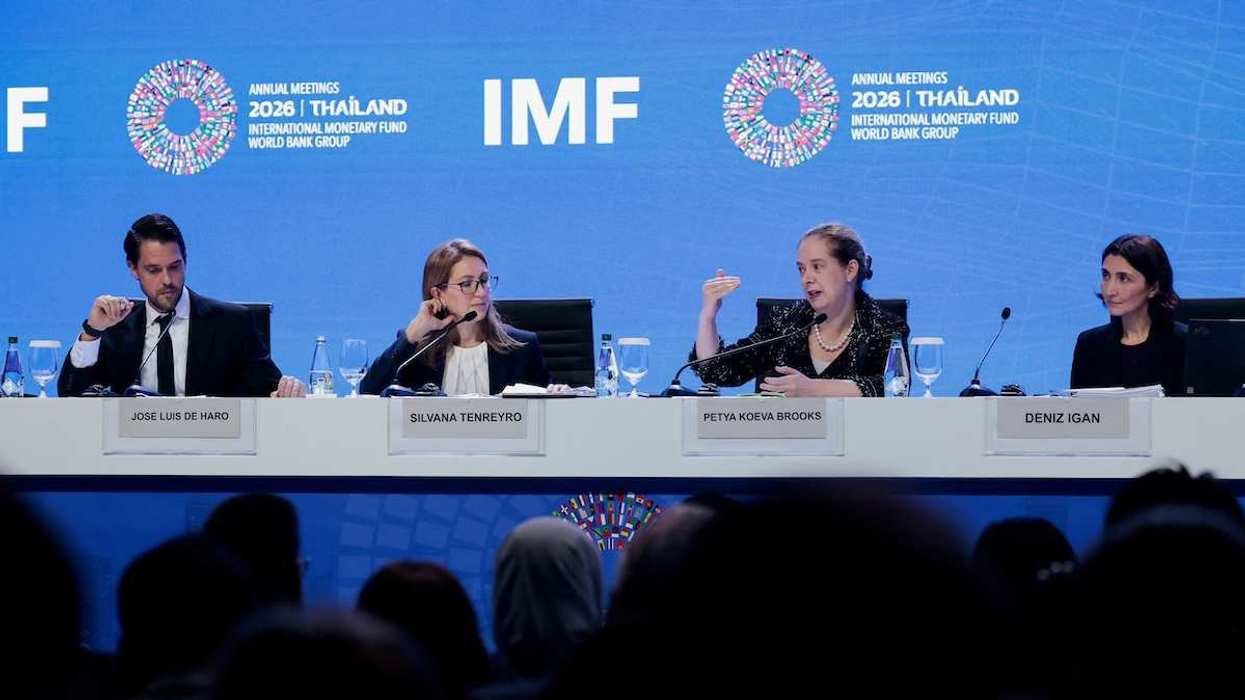
The last time the World Bank and International Monetary Fund held their landmark conference in April, speakers placed great emphasis on each institution’s role in helping the world’s poorest people get a leg up. Not an easy task by any measure — particularly with geopolitics interfering — so just ahead of the release of their latest World Economic Outlook for this week’s Annual Meetings, how have things gone?


Soft landing for rich countries, rocky shores for poor ones. The topline number for global economic growth is deceptive: At 2.6%, the projection seems pretty meh — not great but hardly a catastrophe, particularly if inflation stays under control. Scratch the surface, though, and you’ll find that the world’s 26 poorest countries are deeper in debt than at any time since 2006 while development aid from rich countries has fallen to its lowest level since 2003. The World Bank, in particular, will need to find creative ways to help these most vulnerable economies climb the development ladder.

Electrifying Africa. The flagship program launched at the Spring Meetings in April, a $90 billion effort to bring electricity to some 300 million people across the continent, will also be discussed. “Mission 300” is off to a promising start: The World Bank has allocated $750 million to building rooftop solar and mini-grids in Nigeria, which could bring electricity to nearly 18 million people in Africa’s most populous nation. They’ve also launched 15 smaller projects across 11 other countries in a similar vein, and a summit on the next steps is planned for January in Dar es Salaam.

Bailouts make progress. As the lender of last resort, the International Monetary Fund has to tackle the toughest cases of financial collapse, which was heavily exacerbated by the pandemic. Fortunately, their five largest bailout programs (Argentina, Egypt, Ukraine, Pakistan, and Ecuador) are all on relatively stable fiscal footing, though geopolitical risks remain threats, particularly for Kyiv and Islamabad.

More For You

Aerial view of the nuclear explosion, code-named Seminole, at Enewetak Atoll in the Pacific Ocean on June 6, 1956.​

Aerial view of the nuclear explosion, code-named Seminole, at Enewetak Atoll in the Pacific Ocean on June 6, 1956.

Science Photo Library via Reuters Connect
The end of the New START?New START, the last nuclear arms control treaty between the US and Russia, expires today. Signed in 2010, it limited each side to 1,550 warheads and required inspections and data sharing. Its absence removes the final binding constraint on the world’s two largest nuclear arsenals. Russian President Vladimir Putin suspended [...]
​Workers repair a pipe at a compound of Darnytsia Thermal Power Plant which was heavily damaged by recent Russian missile and drone strikes, amid Russia's attack on Ukraine, in Kyiv, Ukraine February 4, 2026.

Workers repair a pipe at a compound of Darnytsia Thermal Power Plant which was heavily damaged by recent Russian missile and drone strikes, amid Russia's attack on Ukraine, in Kyiv, Ukraine February 4, 2026.

REUTERS/Valentyn Ogirenko
The leader of South Africa’s second-largest party to stand downDemocratic Alliance leader John Steenhuisen announced Wednesday that he will not run for a third term as leader of the liberal, pro-business party, after months of internal pressure over a host of controversies – including allegations, since cleared, that he used the party credit card [...]
​US President Donald Trump and Indian Prime Minister Narendra Modi at the White House in Washington, D.C., USA, on Feb. 13, 2025.

US President Donald Trump welcomes Indian Prime Minister Narendra Modi to the White House in Washington, D.C., USA, for bilateral discussions about trade and security on Feb. 13, 2025.

India PM Office handout via EYEPRESS
Modi and Trump finally make upAfter months of simmering tensions, Indian Prime Minister Narendra Modi and US President Donald Trump – two old friends – finally reached an agreement: Washington will drop tariffs on Indian exports from 50% to 18%, and in return, New Delhi will halt Russian oil purchases. Instead, it will buy from the US and possibly [...]
​U.S. President Donald Trump and Japanese Prime Minister Sanae Takaichi hold up signed documents regarding securing the supply of critical minerals and rare earths, at a bilateral meeting at Akasaka Palace in Tokyo, Japan, October 28, 2025.

U.S. President Donald Trump and Japanese Prime Minister Sanae Takaichi hold up signed documents regarding securing the supply of critical minerals and rare earths, at a bilateral meeting at Akasaka Palace in Tokyo, Japan, October 28, 2025.

REUTERS/Evelyn Hockstein
Critical mineral deals to be cut in Washington this weekRepresentatives from the European Union, United Kingdom, Japan, and others will meet in Washington this week to discuss a strategic alliance on critical minerals. The aim: decrease reliance on China, which currently controls an average market share around 70%. The Trump administration also [...]