Xi Jinping isn’t very happy with Vladimir Putin these days.
Russia’s invasion of Ukraine has unleashed the type of global geopolitical uncertainty and — more importantly — economic instability that China’s president loathes. It is forcing Xi to put some daylight between Beijing and Moscow. Still, China insists that sanctions are not the way out and is vowing to continue doing business with an increasingly isolated Russia.
On Monday, the Chinese foreign ministry issued its strongest rebuke yet about Ukraine, saying: “China will always stand on the side of peace and justice when asked about the position on the Ukraine issue.”
What a turnaround from three weeks ago, when Putin and Xi met in person for the first time in over two years to unveil a “no-limits” bilateral partnership right before the opening of the Beijing Winter Olympics.
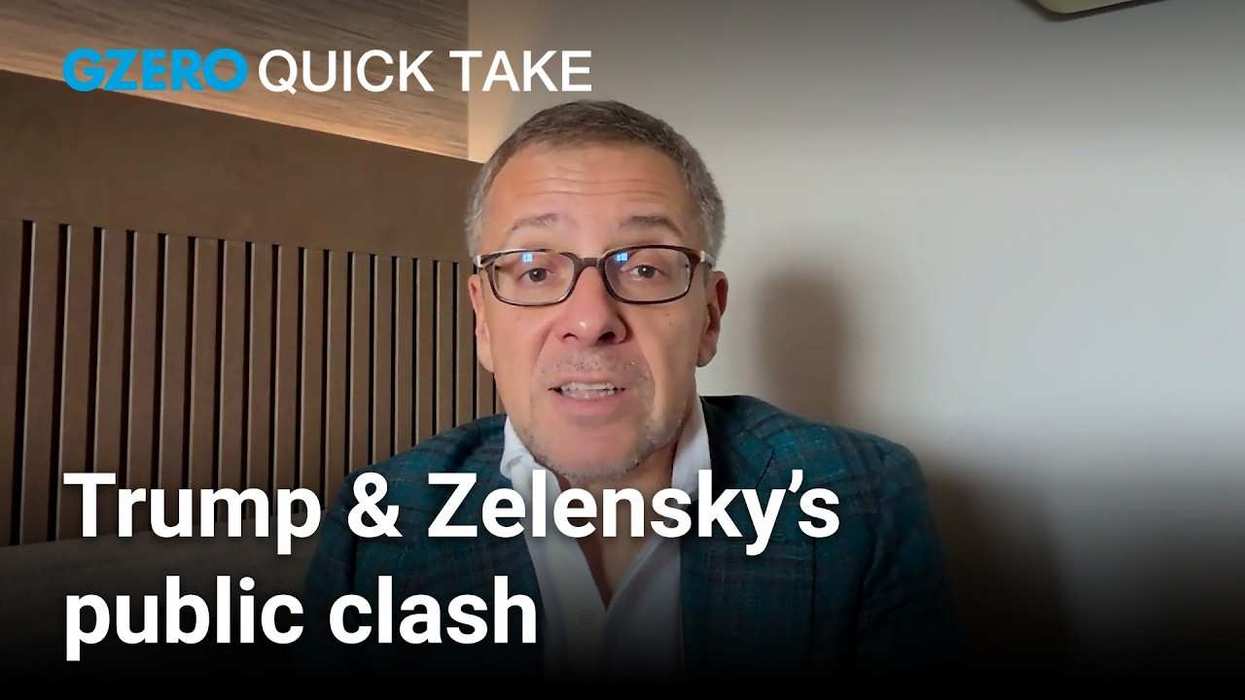
“The Chinese do not want a Cold War. The timing is bad for them,” Eurasia Group President Ian Bremmer said during a press conference on Monday.
Like Russia, he explained, China doesn't like being contained by the West. That’s why Beijing has long described the Quad as an attempt to create a NATO-style alliance against China in the Indo-Pacific.
But unlike Russia — which for years has been building a war chest to protect its economy from Western sanctions — Bremmer said that China doesn't want to completely decouple itself from the US-led global financial system. Focus more on domestic consumption, yes — but not at the expense of the trade and foreign investment the Chinese need to keep their economy growing. That’s a big deal right now, with the West committed to excluding certain Russian banks from the SWIFT network and freezing more than half of the Russian central bank’s foreign exchange reserves.
Russia’s actions have clearly put Xi in a tricky spot, according to Yun Sun, co-director of the East Asia Program at the Stimson Center.
“While China doesn’t want to oppose Russia, a position to condone Russian invasion is hardly tenable,” she says. “In the short run, China has to worry about the impact of sanctions and China’s interest. In the long run, it has to worry about its relationship with the West.”
And then there’s the elephant in the room: Taiwan. Would hypothetical Russian success in Ukraine embolden Xi to make a move on the self-governing island? Hardly — that’s a long shot anytime soon because the economic and political costs would be too high, not to mention that the US may be willing to intervene on Taiwan’s behalf. That calculation might change in a few years, but it currently doesn’t look as though Ukraine will be a deciding factor.
Still, Yun believes Xi will be closely watching the final outcome of the war.
“If Russia is successful and the fait accompli is accepted, China will be emboldened. If Russia fails and the rest of the world reacts vehemently, China will be deterred.”