It took a while and there was a lot of post-election drama, but Nigeria finally has a new president-elect: Bola Tinubu.
The ruling party candidate was declared the winner early Wednesday, five days after a vote marred by a slower-than-expected count and problems with tallying. Before the electoral commission made the call, Tinubu's rivals had demanded that officials cancel the result and redo the election because the outcome had been “manipulated” by results sheets being posted online.
While any legal challenges to his victory by opposition hopeful Atiku Abubakar and insurgent third-party candidate Peter Obi make their way through the courts, Tinubu is the president-elect and officially takes over in May. Who is he, and what are his plans for Africa's most populous nation and largest economy?
Known as Nigeria's political "Godfather," the former governor of Lagos has a lot of experience. So much, in fact, that his campaign pitch was: "It's my turn."
For his supporters, Tinubu — who wears a skullcap emblazoned with broken shackles to symbolize his freedom after dictator Sani Abacha forced him into exile — is a savvy politico who knows how to exercise power in front of and behind the scenes. He transformed Nigeria's biggest city from a chaotic asphalt jungle into a bustling metropolis by attracting foreign investment.
But his critics argue that Tinubu is just another member of the corrupt political class who can't justify his vast wealth. What's more, he's alienated Christians by picking a fellow Muslim as his running mate, and his poor health at 70 means that he might not be up to the job. (No way, says Tinubu, who during the campaign showed off his stamina by posting a video on an exercise bike.)
Fears about his fitness seem overblown to Amaka Anku, Eurasia Group’s top Africa analyst.
“Despite his health issues, Tinubu is much more assertive than [current President Muhammadu] Buhari. He follows issues, he is engaged, he is a politician. He is unlike Buhari, who doesn’t talk,” she says. “As a Nigerian president, you have to be the coach and the referee.”
Tinubu hopes to fix Nigeria's (many) problems by first curing its economic ills. He wants to massively improve revenue generation for the state, which he excelled at when he ran Lagos. Similarly, he aims to limit borrowing and draw in foreign cash.
Also, "Tinubu has a clear brain trust around him," Anku says. And as the ruling party's pick, he is "well placed to move quickly" on unpopular yet unavoidable policies such as nixing fuel subsidies, which last year cost the government $10 billion it could hardly afford.
Yet, he's the first Nigerian president to win the top job without a popular majority — and his rivals have cried foul over his victory. The opposition has 21 days to legally challenge the results, but then it could take up to eight months for the dispute to be resolved — like in 2019, when the supreme court threw out Abubakar’s contest against Buhari’s re-election.
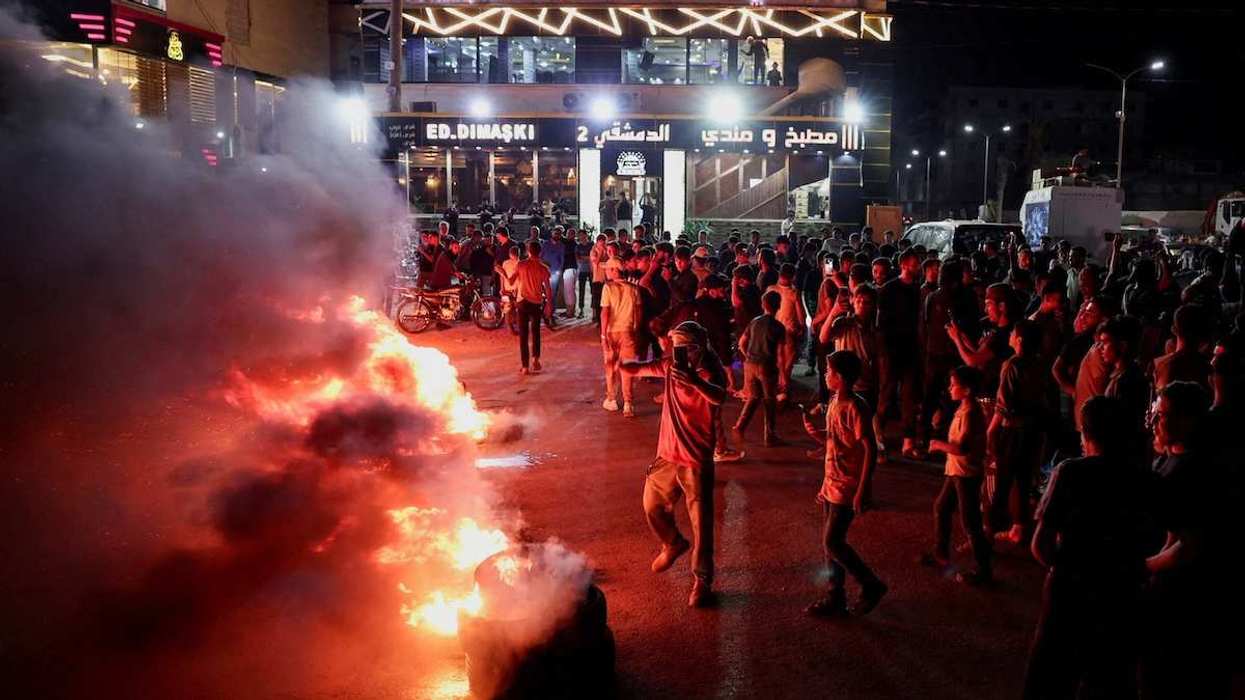
Supporters of the losing candidates have already taken to the streets of Lagos and Abuja. Whether the protests turn into widespread unrest will largely depend on what the president-elect and other politicians say and do over the next few days and weeks.
What does this outcome mean for popular confidence in elections? "Low trust in Nigerian democracy isn’t based on process issues but rather on the state's inability to deliver" things like public services or security, Anku says. The failure to do so explains why satisfaction with democracy has plummeted from 84% in 2000 to 21% in 2022.
While the process might look messy now, it has improved a lot since Nigeria ended military rule in 1999. For instance, she adds, having a competitive third-party candidate like Obi "is a huge deal.”
"This would not happen in the US today. And it's a clear expression of the people’s discontent and frustration with the political establishment," Anku says. "People just need to get used to the fact that you may not always get the candidate you want."