This week, the US Senate passed the so-called Endless Frontier Act, a $250 billion investment in development of artificial intelligence, quantum computing, the manufacture of semiconductors, and other tech-related sectors. The goal is to harness the combined power of America's public and private sectors to meet the tech challenges posed by China.
In its current form, this is the biggest diversion of public funds into the private sector to achieve strategic goals in many decades. The details of this package, and of the Senate vote, say a lot about US foreign-policy priorities and this bill's chances of becoming law.
Why did Democrats and Republicans agree to spend a quarter of a trillion dollars? The high-stakes tech competition with China is a threat both parties take seriously. Beijing is directing historic amounts of money toward development of AI and quantum computing technologies that experts say will determine the 21st century's balance of economic, political, and military power.
Just as the 1957 Soviet launch of Sputnik, the world's first artificial satellite, spurred a surge in US spending and new strategic thinking, Washington is now finally heeding warnings that China has taken a great tech leap forward. Democrats and Republicans may not agree on what aspect of China's rise worries them most, but leaders of both parties see a threat to US competitiveness and national security.
What's in the bill? It focuses mainly on tech, with $120 billion for research and development funding, $52 billion for domestic semiconductor production, and $20 billion for space programs. But it also promotes new strategies to counter China's global influence and punish its abuses at home. For example, it authorizes new sanctions in response to China's crackdown in Hong Kong, its use of forced labor in Xinjiang, its skill in cyber espionage, and its theft of intellectual property. The bill also commissions a new study about the origin of the pandemic and calls for a boycott of the 2022 Winter Olympic Games in Beijing by US officials -- though not by US athletes.
What does this bill say about the domestic politics of competition with China? President Biden heralded the news of the Senate passage with a warning for the future: "As other countries continue to invest in their own research and development, we cannot risk falling behind. America must maintain its position as the most innovative and productive nation on Earth." It's safe to assume that "other countries" mainly means China since the bill explicitly labels that country's government the "greatest geopolitical and geoeconomic threat" to US foreign policy.
But it also makes clear there is strong bipartisan support for the Biden administration's position that the era of engagement with China is over. China's growing power has Washington's attention, and its military expansion, human rights abuses, and tech capabilities, and trade practices ensure there is something for everyone on Capitol Hill to oppose.
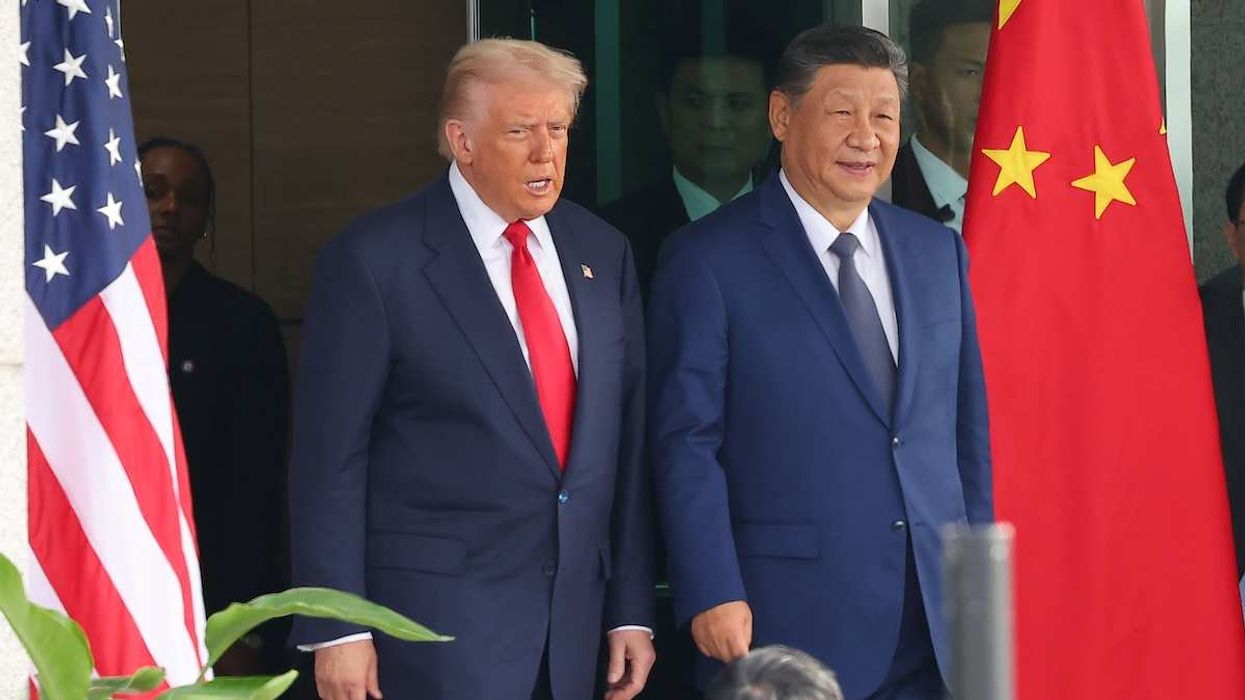
China has responded. An official statement says this bill is "full of Cold War thinking and ideological prejudice." It will now be easier for Xi to make the case at home that the US intends to stunt China's growth as a great power. US officials counter that years of unfair Chinese trade practices and President Xi Jinping's newly aggressive foreign policy are responsible for the sharp downturn in relations.
What happens next? The bill now heads for the House of Representatives where its fate is TBD. News coverage rightly focuses on the rarity of 68 Senate votes for any bill of this cost and ambition, but 32 senators voted against it, and their reasoning highlights partisan differences lurking beneath the bipartisan consensus which might force a rework in the lower house.
Thirty-one Republican senators opposed it. Some said it costs too much. Others said it should include funding for border security. Former Democratic Party presidential candidate Bernie Sanders voted no to protest the amount of money the bill would move from US taxpayers to private-sector companies without enough accountability for how the money is spent. Other Democrats warn that its aggressiveness can make Cold War fears a self-fulfilling prophecy.
We won't know until autumn just how ambitious the final legislation will be, but the bipartisan Senate bill makes clear that the US-China rivalry will only become more intense.