After weeks of devastating fighting, Qatar helped mediate a temporary truce between Israel and Hamas that opened the door for exchanges of hostages and prisoners. So how has Qatar, a nation that doesn’t have official diplomatic relations with Israel, played such an outsized role in this process?
Why Qatar: The Gulf state has repeatedly served as a mediator in conflicts across the Middle East and beyond, offering itself as a bridge of communication between historic, bitter adversaries like the US and Iran, the US and the Taliban, Ukraine and Russia, and Israel and Hamas. The tiny, gas-rich, wealthy nation has sought to boost its global profile over the past decade or so by serving in this capacity – and it’s had help from the US government along the way.
Qatar is home to the largest US military base in the Middle East – Al Udeid Air Base, which the US has been operating out of since 2001 – and its role as a mediator has “been largely a strategy pursued in coordination with Washington to deal with different regional issues,” says Ayham Kamel, head of Eurasia Group’s Middle East and North Africa research team.
But it’s also in Qatar’s DNA. Mediating conflict, says Patrick Theros, former US ambassador to Qatar, is “quite literally in Qatar’s Constitution,” and it’s seen as a key part of the country’s national security strategy.
Stability starts at home. Qatar views mediation as a vital means of maintaining regional stability and reducing its own security risks. “Qatar is, by citizen population, the smallest state in the Gulf region and, per capita, the richest in the Gulf and arguably the world. It is surrounded by predatory larger and stronger neighbors,” Theros notes.
Qatar was blockaded from 2017 to 2021 by Saudi Arabia and three other Arab countries that accused Doha of supporting terror groups and of being too close to Iran. This episode highlighted the risks that Qatar’s approach to foreign affairs can pose, but those risks have also paid off in big ways.
The US, which played a role in ending the blockade, clearly sees Qatar’s desire to be a peacemaker in a prickly region as advantageous to its interests. In October, US Secretary of State Antony Blinken lauded Qatar as a “close partner” to the US on a range of crucial issues.
Doha has secured the “protection of powerful outside powers” like the US by making itself “indispensable” with its mediation efforts, Theros said.
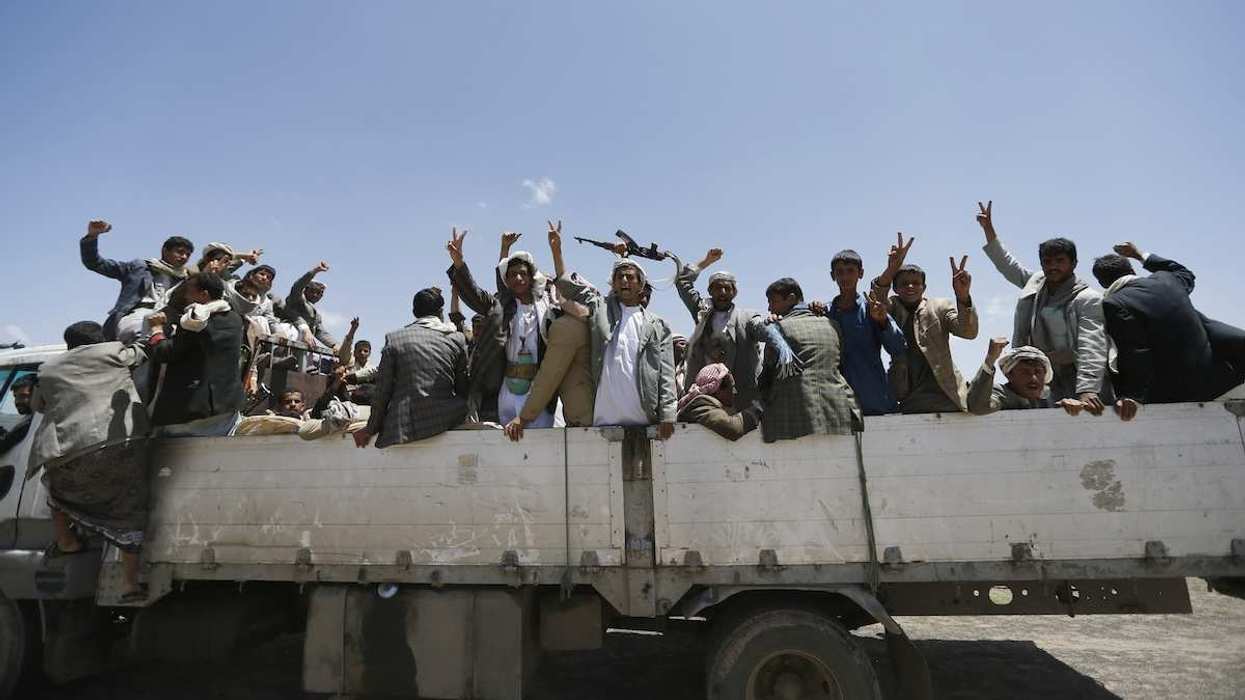
Elements of leverage: Qatar has been engaging with Israel since the 1990s, and since 2012, it has also hosted a political office for Hamas, which Doha says was opened at the request of the US. This gives Qatar a degree of influence over the militant group, and some exiled senior Hamas officials live in Qatar, which has also poured hundreds of millions of dollars of aid into Gaza.
Doha maintains “good credible relations with a lot of less than nice parties” that Washington can’t engage with directly and has hosted groups like Hamas and the Taliban “at the express request of the US,” says Theros.
Some prominent Israeli politicians are not thrilled that Qatar has been tapped as a peacemaker in the conflict given its relationship with Hamas. There has also been some pushback regarding Qatar’s ties to Hamas from pro-Israel politicians in the US. But Doha maintains that keeping the Hamas office open allows Qatar to be a channel of communication, which benefits the US and Israel, as we’ve seen this past week.
“In the Israel-Hamas conflict, Qatar has proven itself to be one of the few viable channels to pressure Hamas to conduct deals on releasing Israeli hostages,” Kamel says. “At this point, the US is leveraging Qatar's influence to release as many hostages as possible while still maintaining support for Israel's objective of eliminating the Hamas threat.”