Skip to content
Search

Latest Stories

popular

Iran unveils hypersonic missile

A new hypersonic ballistic missile called "Fattah" with a range of 1400 km, unveiled by Iran, is seen in Tehran.

A new hypersonic ballistic missile called "Fattah" with a range of 1400 km, unveiled by Iran, is seen in Tehran.

Reuters
Make us preferred on Google

The Islamic Republic of Iran claims to have developed its first hypersonic missile. At a showy military ceremony usually reserved for North Korean and Russian despots, President Ebrahim Raisi said that the new weapon proved that Iran’s “deterrent power has been formed.”


Crucially, the Iranians claim that the mid-range weapon capable of striking Gulf states can fly at 15 times the speed of sound. For context, a weapon is defined as hypersonic if it travels at between 5-25 times the speed of sound.

Tehran claims that no missile defense system can intercept its new weapon – dubbed Fattah, meaning “conqueror” in Farsi – but that depends on a range of factors, including the missile’s maneuverability. Many Gulf states use the Patriot missile defense system that are apt at targeting ballistic missiles on an unmoving trajectory. Israel, for its part, also has its own suite of missile defenses for these types of weapons.

To be sure, Iranian officials showed no proof on Tuesday that Fattah had been successfully fired, and they’ve claimed in the past to have had a similar weapon that hasn’t yet materialized.

The US and China are reportedly working on their own hypersonic arsenals, though Russia appears to already have developed them. (Ukraine, for its part, claimed in May to have shot them down with a Western-delivered Patriot battery.)

The timing of this grand reveal – that will put the US, Israel, and Gulf states on edge – is strange, coinciding with Iran reopening its diplomatic mission in Saudi Arabia after a years-long feud.


More For You

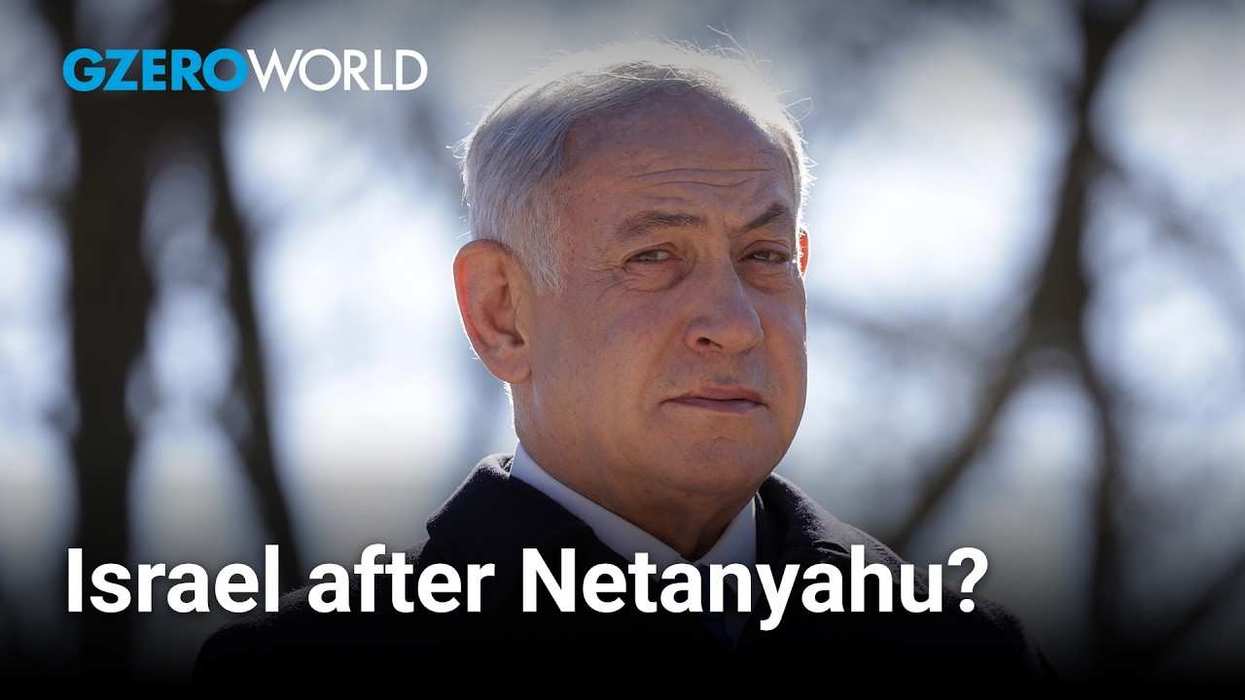
​Israel’s Prime Minister Benjamin Netanyahu attends a ceremony commemorating Israel’s Remembrance Day for fallen soldiers on Mount Herzl in Jerusalem, on April 21, 2026.

Israel’s Prime Minister Benjamin Netanyahu attends a ceremony commemorating Israel’s Remembrance Day for fallen soldiers, or Yom HaZikaron, at the Military Cemetery on Mount Herzl in Jerusalem, on April 21, 2026.

ILIA YEFIMOVICH/Pool via REUTERS
The United States and Iran seem to be moving closer to a deal to end the war, recent skirmishing and mixed signals notwithstanding. If concluded – still a big if – this agreement would reopen the Strait of Hormuz, lift the US blockade, unfreeze Iran’s frozen assets (via Qatar), and extend the ceasefire – while kicking nuclear negotiations down the [...]
You vs. the News collage
Think you know what's going on around the world? Here's your chance to prove it. [...]
The tide is turning in the Russia-Ukraine war
In the early hours of May 17, more than 500 Ukrainian drones punched through three of Moscow’s four air-defense rings. They hit oil infrastructure, military-industrial plants, and apartment buildings in and around the capital, killing at least four and wounding a dozen. Coming three days after a deadly Russian barrage that Ukrainian officials [...]
Russia's costly invasion
Eileen Zhang
Russian President Vladimir Putin heads to China this week to meet his counterpart Xi Jinping. Under the leadership of these two men, who have met dozens of times, Russia and China have forged what they call a “no limits” partnership. Russia is a major source of natural resources for China, while Beijing has helped Moscow weather increasingly harsh [...]