Jean-Marie Le Pen, whose ultranationalist and conservative views enraged millions but also shaped the contemporary French political scene, died on Tuesday at 96.
Le Pen was a far-right fixture of French politics for nearly five decades as a legislator in the French and European parliaments, and as founder and leader of the National Front party, which he founded in the early 1970s.
What were his politics? A theatrical orator and a fierce opponent of immigration – he sought the “purification” of France and a return to traditional Catholic values – Le Pen’s rhetoric often veered towards xenophobia, homophobia, racism, and antisemitism. At least half a dozen times he was convicted of either inciting racial hatred or denying the Holocaust.
And yet, beginning in the 1970s, he, along with anti-tax advocate Pierre Poujade, amassed a dedicated following among a slice of the French public who resented the governing elite, struggled with economic hardship, and viewed immigration from France’s former colonies in Africa and the Middle East as a threat to their livelihoods and French culture.
Le Pen ran for the presidency five times. He never won but he came closest to the prize in 2002, when he made it to a runoff against Jacques Chirac, taking nearly 20% of the vote.
Ultimately, his more extreme rhetoric came to cap the appeal of his party. When his daughter, Marine, inherited the organization from him 15 years ago, it was something she sought to address.
“He gave her a family business,” says Mujtaba Rahman, managing director of Europe at Eurasia Group. “But she had to change the brand.”
While she kept the focus on limiting immigration and protecting French cultural values, she distanced herself from his antisemitic and homophobic rhetoric, expelling him from the party, and changing the name to National Rally.
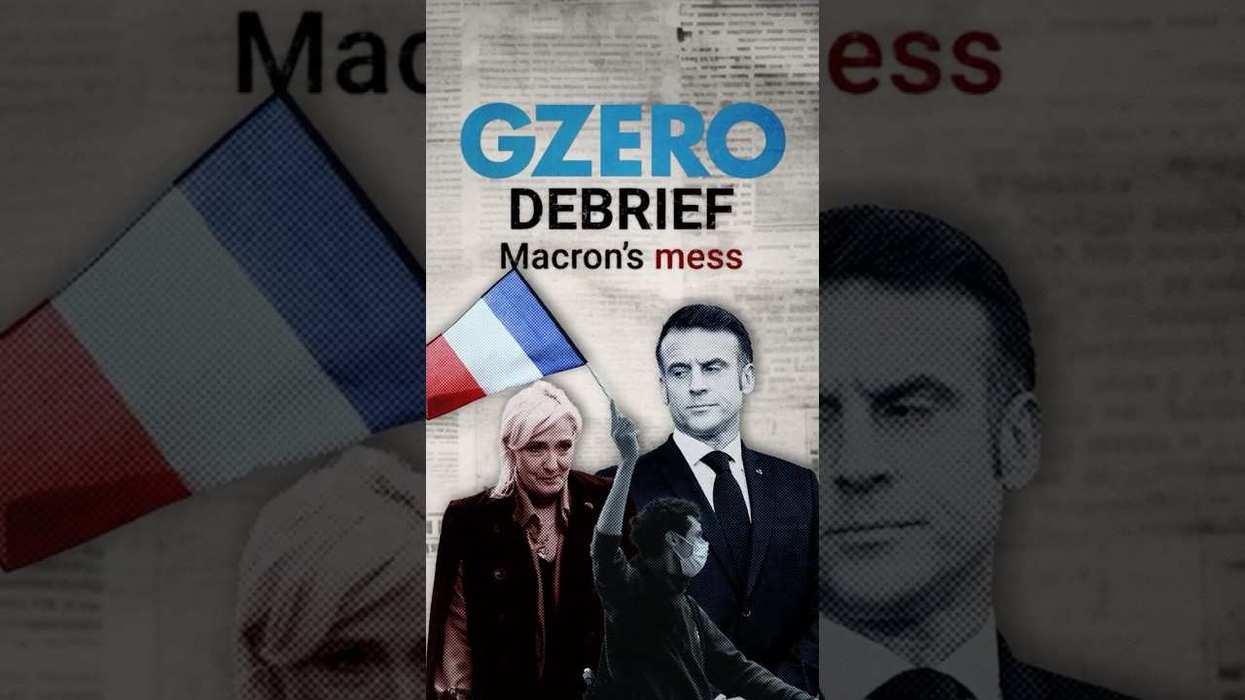
The party has surged in popularity in recent years. Politics in France – as elsewhere in Europe and the US – have shifted rightward in ways that were hard to imagine even during the height of Jean-Marie Le Pen’s polarizing influence in the early 2000s.
In 2022, Marine got more than 40% of the vote in the presidential runoff against Emmanuel Macron. And last summer, National Rally won the first round of France’s snap elections outright for the first time.
Le Pen’s legacy continues to polarize French politics. Far-right TV host and former presidential candidate Eric Zemmour said Le Pen “was among the first to alert France to the existential threats that awaited it.” Far-left leader Jean-Luc Melenchon, meanwhile, said that “the fight against the man is over” but that “the fight against the hatred, racism, Islamophobia and anti-Semitism that he spread continues.” Macron, for his part, said Le Pen’s legacy “is now a matter for history to judge."