Air defense batteries moved out of Asia. Fighting between Israel and Hezbollah. Growing domestic frustration with the Trump administration. Formula 1 races in the Gulf canceled.
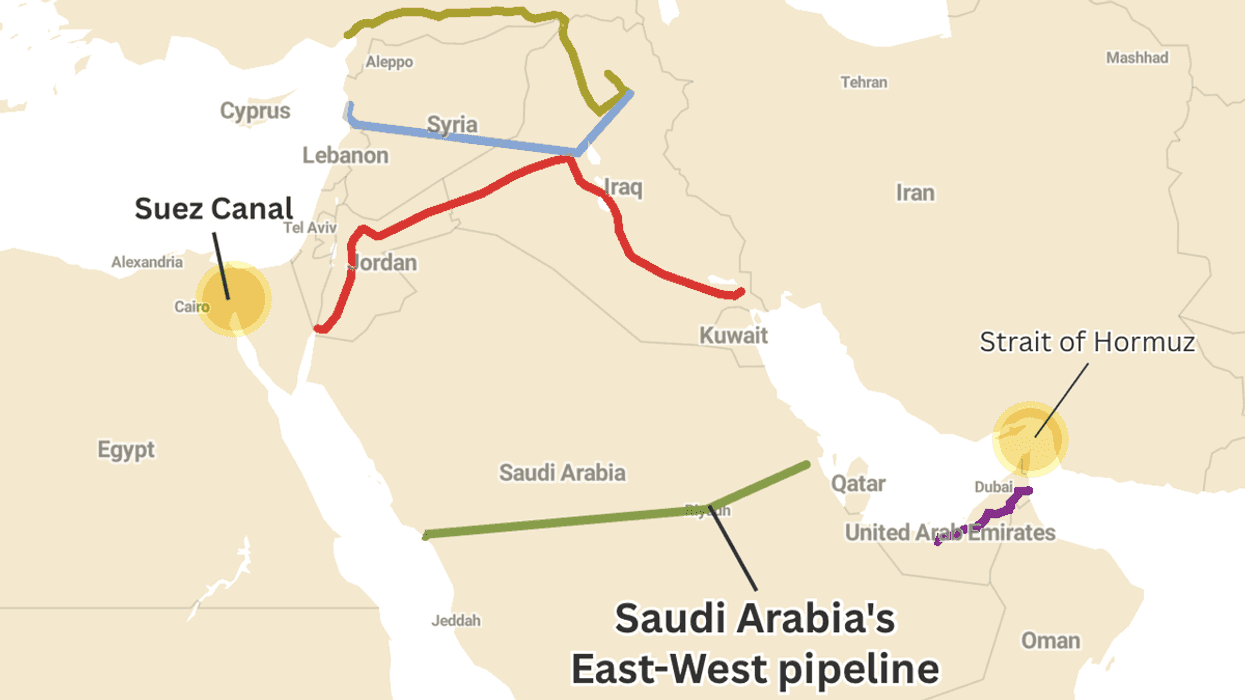
The secondary effects of the US-Israel war with Iran have been expansive. But no specific issue has perhaps been more pressing for governments than the fuel shortages prompted by the de facto closure of the Strait of Hormuz, the 30-mile-wide waterway through which roughly one fifth of the world’s oil and liquified natural gas supplies passed before the war began.
The fuel crisis deepened on Wednesday. Israel struck Iran’s South Pars gas field, while Tehran retaliated by launching missiles at several targets in the Gulf. Two waves appeared to successfully hit Ras Laffan Industrial City in Qatar, which houses the world’s largest liquefied natural gas facility, causing “extensive damage,” per Qatari officials. Oil and gas prices both shot up again, with the benchmark Brent crude topping $110 per barrel at one point on Wednesday, while Europe’s gas benchmark climbed 6%.
The energy shortages stemming from the Iran conflict, though, have helped some countries and severely hurt others. GZERO examines a trio of regions – the Gulf Peninsula, Europe, and the Indo-Pacific – to see how countries in those areas have fared.
Gulf: Pipeline-lacking Qatar hit worst
When it comes to Gulf energy exports amid the Iran conflict, it’s all about location, location, location, as the real estate adage goes. Saudi Arabia and the United Arab Emirates have access to ports outside the Persian Gulf, allowing them to export goods via sea without passing the Strait of Hormuz. Other countries on the Gulf Peninsula aren’t so lucky.
“The Saudis have a pipeline to the Red Sea, and the Emirates can get some stuff out via the Gulf of Oman. So there’s a little bit coming out [the Persian Gulf],” said Eurasia Group’s Managing Director Henning Gloystein. “Whereas Qatar has no pipelines, so they can only ship, and they’re not exporting anything.”
Iraq, Bahrain, and Kuwait face similar constraints. Their only sea access is the Persian Gulf, so their fuel production has plummeted amid the Strait’s closure. Iran has also targeted energy facilities in each of those countries, including fuel tankers that were near an Iraqi port.
But Qatar stands out as the most exposed nation in the region, per Gloystein. Exports account for the majority of the state’s GDP – nearly 69% in 2022, the latest available data, with oil and gas accounting for 85% of these exports. As such, fossil fuels comprise well over half of Qatar’s total output. With production now ground to a halt, and the state-owned energy firm QatarEnergy reporting long-term damage to LNG output, Doha faces serious economic pressures.
“Their entire economy has been taken out of their bottom,” said Gloystein. “It’s a tiny country, so if this goes on, they are royally, royally screwed.”
Indo-Pacific: The Gulf’s main energy customers seek alternatives
While the conflict is hurting energy production among Gulf states, it’s damaging consumption in Asia – and badly.
Nearly 90% of the oil and gas that passes through the Strait of Hormuz went to Asia last year, and the continent is now desperately seeking alternatives. Bangladesh, South Korea, Thailand, and Taiwan are looking to coal for their electricity production. Some are also reportedly looking to the United States.
This has raised the stakes for today’s White House meeting between Japanese Prime Minister Sanae Takaichi and US President Donald Trump. Tokyo plays a central role in the natural gas trade, acting as a middleman: it imports LNG from the Gulf, and reexports it to other countries – especially those in Southeast Asia. With Gulf exports grounded, Takaichi is turning to Trump.
“She’ll look for more energy from the US, and she’ll look for lower tariffs,” said Gloystein.
It’s not clear that the US president will be in a giving mood. Trump has been blasting his “non-responsive ‘Allies’” – including Japan – for not immediately responding to his request for help in opening the Strait of Hormuz. There was an apparent turnaround on Thursday morning, though: Japan – along with major European countries like Germany and France – said in a joint statement that they were ready to help with “appropriate efforts” to ensure safe passage through the waterway.
If there is one country in the broader Indo-Pacific that is benefiting from this energy shortage, it’s Australia. The island nation is a massive exporter of natural gas and coal products, so rising prices will bring a welcome boost for the country’s gas firms and the government’s fiscal balance. The only fear for Aussie households is that their gas bills will go up, too, as foreign buyers compete for the resource.
Europe: Continent escapes worst – until yesterday
Unlike when Russia began its full-scale invasion of Ukraine in 2022, Europe has avoided the worst of the energy price increases of this conflict. This is largely thanks to Norway’s vast supplies of oil and gas, which are easily accessible to the rest of the continent thanks to a vast pipeline network, helping to keep a lid on prices.
“Oil markets have also reacted differently,” said Gloystein. “If you look at Omani crude oil, that’s [around] $150 per barrel already, whereas Europe’s is $95 [as of Wednesday].”
However, yesterday’s strikes on energy infrastructure in Iran and the Gulf have sent prices rising further. European oil hit $116 per barrel at one point on Thursday, while European gas prices surged by 25%. The discrepancy with Omani crude appears to be holding, but the rising costs will still hurt.
If there is one country in Europe that is benefiting, as Ian Bremmer noted in his newsletter on Wednesday, it’s Russia. The Kremlin was already a “winner” from the Iran conflict, Ian wrote, with rising oil prices and a US sanctions pause helping to boost government coffers.
With prices increasing further overnight, Russia’s booming month just got better.