Skip to content
Search

Latest Stories

gene editing

DNA Helix.
GZERO AI

CRISPR gets an AI upgrade

CRISPR, the gene-editing method that won two female scientists the 2020 Nobel Prize in Chemistry, may soon get infused with artificial intelligence.

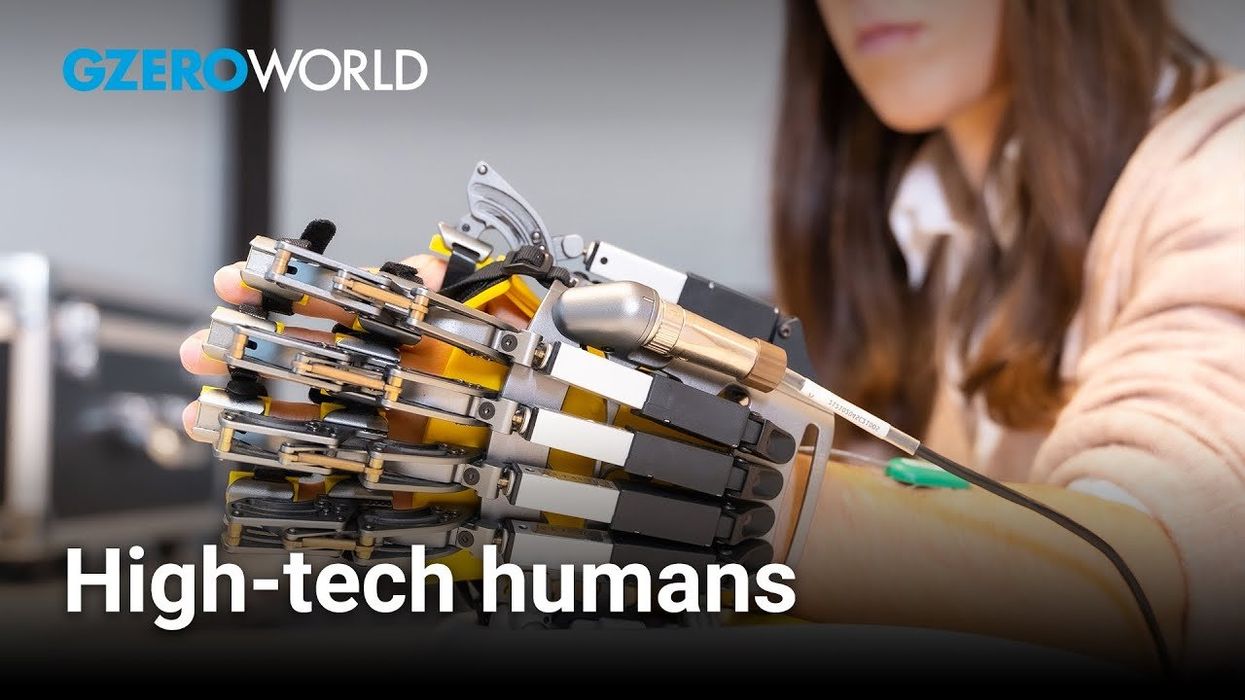
How medical technology will transform human life - Siddhartha Mukherjee
GZERO World Clips

How medical technology will transform human life - Siddhartha Mukherjee

On GZERO World, Ian Bremmer and Siddhartha Mukherjee explore the many ways medical technology will transform our lives and help humans surpass physical and mental limitations.

Siddhartha Mukherjee: CRISPR, AI, and cloning could transform the human race
GZERO World Clips

Siddhartha Mukherjee: CRISPR, AI, and cloning could transform the human race

Technologies like CRISPR gene editing, synthetic biology, bionics integrated with AI, and cloning will create "new humans," says Dr. Siddhartha Mukherjee on the latest edition of GZERO World with Ian Bremmer.

From CRISPR to cloning: The science of new humans
GZERO World with Ian Bremmer

From CRISPR to cloning: The science of new humans

On GZERO World, Ian Bremmer sits down with physician and biologist Siddhartha Mukherjee to explore the recent advances, benefits, and risks of human enhancement with technology.

A graphical representation of the human head | GZERO World with Ian Bremmer the podcast
GZERO World with Ian Bremmer Podcast

Podcast: Tracking the rapid rise of human-enhancing biotech with Siddhartha Mukherjee

Listen: Medical and biotechnologies like gene editing with CRISPR, synthetic organs, cloning, and AI-powered prosthetics that are helping to eradicate disease, and improve the human condition. But there’s also potential for misuse and ethical implications. Ian Bremmer delves into that tension on the GZERO World Podcast with physician and biologist Siddhartha Mukherjee.

Ian Explains: Will biotech breakthroughs lead to super humans?
Ian Explains

Ian Explains: Will biotech breakthroughs lead to super humans?

Medical technology could lead to a new breed of super humans. On Ian Explains, Ian Bremmer looks at the evolution of human enhancement, tracing its roots from ancient history to recent ground-breaking tools like CRISPR gene editing, AI-powered prosthetics, and brain implants.

What is CRISPR? Gene editing pioneer Jennifer Doudna explains
GZERO World Clips

What is CRISPR? Gene editing pioneer Jennifer Doudna explains

You may have heard of CRISPR, but don't know exactly what it is, or how it works. Ian Bremmer asked Jennifer Doudna, who won the 2020 Nobel Prize in Chemistry for her work on this gene-editing technology. CRISPR, she says, basically allows scientists to not only study but also make precise, targeted changes to DNA, the "code of life."

Podcast: Jennifer Doudna on the risks and rewards of CRISPR technology
GZERO World with Ian Bremmer Podcast

Podcast: Gene editing tech risks and rewards: Dr. Jennifer Doudna's perspective

Listen: In a wide-ranging interview with Ian Bremmer, Nobel Prize-winning scientist Jennifer Doudna discusses her groundbreaking work on the revolutionary gene-editing technology known as CRISPR. In their conversation she explains what CRISPR is and why it has the potential to cure diseases and fend off viruses. She also talks about the limits of this technology and advocates for a global policy consensus on what limitations there should be around gene editing. Policymakers must also factor in income inequality, Doudna argues, given how expensive CRISPR currently is and the potential it has to change so many lives.

CRISPR gene-editing tech should have limits, says Nobel laureate Jennifer Doudna
GZERO World Clips

CRISPR gene-editing tech should have limits, says Nobel laureate Jennifer Doudna

For Jennifer Doudna, who won the 2020 Nobel Prize in Chemistry for her work on CRISPR gene editing, there are some red lines we shouldn't cross (yet). The technology, she says, has "the potential to do incredible things and make incredible advances that will be beneficial to our society, but hand-in-hand with that go these large risks."

Twitter bans QAnon; CRISPR gene tech
Tech in 60 Seconds

Twitter bans QAnon; CRISPR gene tech

Nicholas Thompson, Editor-in-chief of WIRED, provides his perspective on technology news:

Twitter has said it will knockout QAnon. How will that work out?

How close are we to CRISPR agriculture?